Elemon (ELMON) x CoinMarketCap Airdrop: Details, Status & Token Analysis

Did you miss the Elemon x CoinMarketCap airdrop, or are you wondering what happened to those tokens sitting in your wallet? If you participated back in September 2021, you might be looking at a balance that feels like a relic from a different crypto era. The campaign is long over, but the questions about the project’s current status and the value of the ELMON token remain.
This isn't just a story about a missed opportunity; it's a case study in how quickly the GameFi landscape can shift. We’ll break down exactly what the Elemon platform promised, how the airdrop worked, and why the token looks so different today compared to its launch hype.
The Historical Context: What Was the Elemon Airdrop?
To understand where things stand now, we have to look back at when this all started. The Elemon x CoinMarketCap airdrop was a limited-time promotional campaign that ran for just five days, from September 24th to September 28th, 2021. This timing was crucial-it landed right in the middle of the peak NFT and GameFi boom, when every new blockchain game was fighting for attention.
CoinMarketCap is the leading cryptocurrency data aggregation website, partnering with emerging projects to give them massive visibility. By hosting this campaign, CoinMarketCap gave Elemon access to millions of active crypto users who were actively looking for their next big investment or play-to-earn opportunity.
The goal was simple: distribute the native utility token, ELMON, to build a user base for the Elemon gaming platform. Participants didn’t need to invest money upfront; they just needed to engage with the campaign during that short window. It was a classic growth hack-trade future potential for immediate community size.
Understanding the Elemon Platform and ELMON Token
What exactly did you get involved with? Elemon positions itself as a comprehensive digital monster platform inspired by the mysterious world of Elematris. It combines two major trends: Non-Fungible Tokens (NFTs) and Idle RPG mechanics.
Unlike traditional blockchain games that demand hours of daily grinding, Elemon marketed itself as a "simple, creative, and enjoyable way" to participate in crypto gaming. The core appeal was financial benefit without significant time investment. Users could own digital monsters as NFT assets and let them generate rewards passively. This "Idle RPG" model targeted people who wanted exposure to the play-to-earn economy but had full-time jobs or other commitments.
| Attribute | Details |
|---|---|
| Project Name | Elemon |
| Native Token | ELMON |
| Gaming Genre | Idle RPG / Digital Monster Collection |
| Technology | Blockchain / NFT Integration |
| Airdrop Partner | CoinMarketCap |
| Campaign Duration | September 24-28, 2021 |
The ELMON token served as the fuel for this ecosystem. It was used for transactions within the game, staking mechanisms, and potentially governance. However, the success of any utility token depends heavily on the sustained engagement of the player base-a metric that has proven challenging for many early GameFi projects.
Current Market Status: Where Is ELMON Now?
If you check the charts today, the picture is starkly different from the excitement of late 2021. As of mid-2026, the ELMON token trades at approximately $0.000710 USD on CoinMarketCap. While this represents a slight recent uptick of 1.82%, it pales in comparison to historical highs.
Let’s look at the hard numbers:
- All-Time High (ATH): $3.322508. This peak occurred shortly after the initial hype cycle.
- Current Price: ~$0.000710 USD (CoinMarketCap) vs ~$0.000677 USD (Binance).
- Market Cap: Approximately $449,840 USD.
- Circulating Supply: 644.9 million out of 2 billion total supply (about 32.25%).
- Ranking: #2571 on CoinMarketCap, indicating low relative market prominence.
The drop from an ATH of over $3 to less than one-tenth of a cent is dramatic. In percentage terms, the token has lost more than 99% of its peak value. This decline is not unique to Elemon; it reflects a broader trend in the crypto industry where thousands of tokens launched during the 2021 bull run failed to maintain liquidity or user interest as the market corrected.
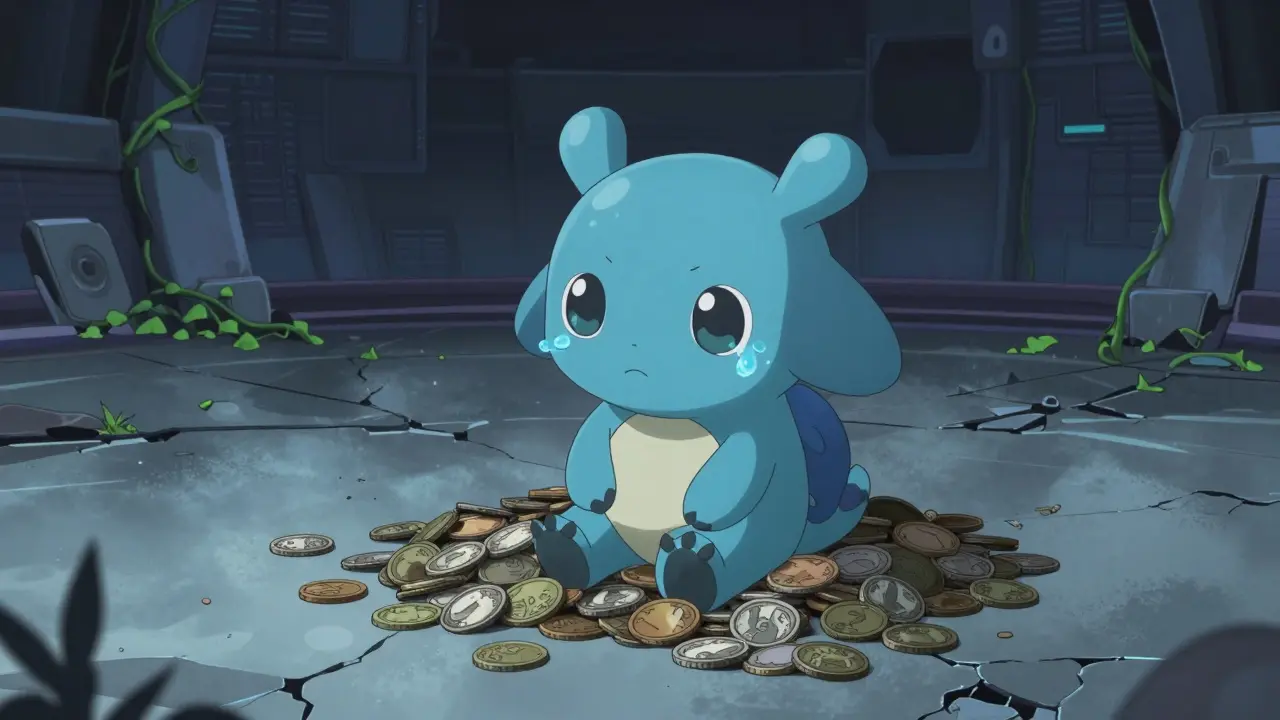
The Liquidity Problem: Why Volume Matters
One of the most concerning metrics for any trader holding ELMON is the trading volume. Both CoinMarketCap and Binance report $0 in 24-hour trading volume for the token. This zero-volume status is critical to understand.
When a token has no trading volume, it means there are no buyers and sellers actively exchanging hands in the market. For holders, this creates a significant exit risk. Even if the price appears stable, you may find it impossible to sell larger amounts without crashing the price further due to thin order books. The volume-to-market cap ratio is effectively 0%, suggesting minimal daily market movement.
Despite the lack of trading activity, the project still lists 37.93K holders according to CoinMarketCap. This discrepancy highlights a common phenomenon in airdrops: many participants claim the tokens but never trade them. They sit dormant in wallets, waiting for a recovery that hasn't materialized. This "dead hand" supply can sometimes stabilize prices artificially, but it also indicates a lack of organic market demand.
Why Did Early GameFi Projects Struggle?
The fate of Elemon serves as a cautionary tale for the entire GameFi sector. During the 2021 boom, platforms promised high returns with minimal effort. However, sustainable gaming economies require a balance between emission rates (new tokens created) and burn rates (tokens removed via gameplay fees). Many projects, including Elemon, struggled to maintain this equilibrium.
As new players stopped joining, the inflow of capital dried up. Existing players cashed out their earnings, creating selling pressure. Without fresh revenue from new users or successful monetization strategies outside of token speculation, the economic model collapsed. The idle nature of the game meant that retention relied heavily on passive income promises, which became unsustainable as token values plummeted.
Furthermore, the partnership with CoinMarketCap provided a burst of visibility, but it couldn't guarantee long-term product viability. Marketing can bring users to the door, but only engaging gameplay and a sound economic model can keep them inside. For Elemon, the gap between marketing promise and technical execution appears to have widened over time.

What Should You Do With Your ELMON Tokens?
If you hold ELMON from the 2021 airdrop, you face a decision. Here are the practical steps to consider:
- Check Wallet Compatibility: Ensure your wallet supports the specific blockchain network ELMON resides on. Some older tokens may require specific extensions or hardware wallet updates.
- Assess Trading Feasibility: Given the $0 volume, try placing a small limit order on Binance or other supported exchanges to see if any liquidity exists. Do not expect instant fills.
- Monitor Official Channels: Follow Elemon’s official social media and development blogs. Look for signs of active development, such as new game features, partnerships, or token burns. Silence often indicates abandonment.
- Consider Opportunity Cost: Evaluate whether keeping these tokens ties up mental energy or storage space that could be better utilized elsewhere. While the nominal value is low, the emotional attachment to "free money" can be strong.
There is no guaranteed path to recovery. In the crypto world, many airdropped tokens become permanently illiquid. Treat the remaining balance as a speculative experiment rather than a reliable asset.
Lessons for Future Airdrop Participants
The Elemon case offers valuable lessons for anyone participating in future airdrops. First, always research the underlying utility of the token beyond the free distribution. Does the project solve a real problem? Is the team transparent? Second, be wary of "idle" earning models that rely solely on new user influxes. Sustainable games must be fun first and profitable second.
Finally, understand that an airdrop is a marketing expense for the company, not necessarily a gift of lasting value. Companies distribute tokens to create liquidity and community, but they rarely commit to maintaining the token price indefinitely. As a participant, your due diligence should extend well past the claim date.
Is the Elemon x CoinMarketCap airdrop still active?
No, the Elemon x CoinMarketCap airdrop concluded on September 28, 2021. It was a limited-time campaign that lasted only five days. There are no current indications of a renewed airdrop campaign.
What is the current price of ELMON?
As of July 2026, ELMON trades at approximately $0.000710 USD on CoinMarketCap. This represents a significant decrease from its all-time high of $3.32.
Why is the trading volume for ELMON zero?
Zero trading volume indicates a lack of active buyers and sellers. This is common for older, lower-ranked tokens where market interest has waned significantly since launch.
Can I still play the Elemon game?
The gaming platform may still operate independently of the token's market performance. However, given the low trading activity, the economic incentives for playing may be minimal compared to newer GameFi titles.
How many ELMON tokens are in circulation?
There are approximately 644.9 million ELMON tokens in circulation out of a total supply of 2 billion tokens.


19 Comments
Write a comment





Josephine Finlayson
July 10, 2026 AT 08:59I still have those tokens sitting in my wallet from 2021, and it is honestly quite surreal to see them listed here with such low activity. It feels like a relic of a different era entirely. I suppose we all learned something about the volatility of GameFi back then. It is interesting to read this breakdown because it validates what many of us suspected but never fully articulated. The zero volume is particularly striking when you look at the historical context.
It makes me wonder if there will ever be a revival or if this is just digital dust now. I tend to hold onto things for sentimental reasons more than financial ones these days. Perhaps that is foolish, but it is my way of processing the rapid changes in this industry. We should perhaps reflect on how quickly trends can evaporate.
Tuan Nguyen
July 11, 2026 AT 23:27The sheer incompetence displayed by the Elemon team is staggering to anyone with even a modicum of economic literacy. This project was a classic pump-and-dump scheme disguised as 'innovation.' The fact that they partnered with CoinMarketCap only highlights their desperation for legitimacy rather than any actual utility. Most retail investors are too lazy to do basic due diligence, which is why they end up holding bags of worthless tokens like ELMON.
The idle RPG model was fundamentally flawed from day one because it relied entirely on new user inflow to sustain payouts. That is not a business model; it is a Ponzi structure. Anyone who fell for the marketing hype without analyzing the tokenomics deserves exactly what they got: a total loss of capital. It is pathetic that people still check these wallets hoping for a miracle.
Hazel Fruitman
July 13, 2026 AT 14:49i mean its kinda sad really.. i claimed mine back then thinking it was gonna be the next big thing. now its basically worth nothing. but hey, at least i tried right? maybe ill just leave it there as a reminder not to trust every shiny new crypto game that pops up. its a harsh lesson but i guess thats how we learn in this space. no point crying over spilled milk or whatever the saying is lol.
Autumn Story
July 14, 2026 AT 06:19Oh my goodness, reading this brings back so many memories!! I remember being so excited about the airdrop back in September. It felt like everyone was talking about it! I know it didn't work out financially, but I truly believe that every experience teaches us something valuable. Maybe we can look at this as a learning opportunity for future projects? There are definitely some really innovative teams out there now who are doing things differently. Let's keep our eyes open for those positive developments! 😊
Mark Tuason
July 14, 2026 AT 07:18It is important to approach this situation with a level head. While the financial outcome was unfortunate for many participants, it serves as a critical case study in market dynamics. The data presented here regarding the liquidity crisis is accurate and concerning. Investors must understand that zero trading volume effectively renders an asset illiquid, regardless of its nominal price.
We should respect the boundaries of our own risk tolerance and avoid emotional decision-making based on sunk costs. The recommendation to monitor official channels is prudent, although silence often indicates abandonment. Proceed with caution and conduct thorough research before engaging with similar opportunities in the future.
Ella Collinson
July 15, 2026 AT 19:13The fundamental issue lies in the unsustainable emission schedule coupled with a lack of genuine burn mechanisms. When you analyze the tokenomics, it becomes evident that the supply inflation rate far exceeded the demand generation capacity. This resulted in a severe downward pressure on the asset price. The concept of 'idle' gaming fails to create sticky user retention because there is no skill-based engagement loop.
Furthermore, the reliance on CoinMarketCap for visibility was a superficial growth hack that did not translate into organic community building. The current state of ELMON is a direct consequence of poor economic modeling and inadequate product-market fit. Retail investors were essentially used as exit liquidity for early insiders who understood the mathematical inevitability of this collapse.
Ray Arney
July 17, 2026 AT 09:27Yeah, I remember that time well. It was crazy how fast everything moved. I think a lot of us just got swept up in the hype. Looking back, it's pretty clear that the game itself wasn't very engaging. Just letting monsters sit there didn't feel like much of a game to me. I guess we all learned that free stuff usually comes with a catch. It's probably best to just move on and focus on projects that actually have working products now.
Kat Barr
July 17, 2026 AT 14:54Aww, don't be so hard on yourselves guys!! 🥺 It was such a fun experiment at the time. I still love collecting digital pets, even if they don't pay out anymore. Maybe one day the devs will surprise us with a comeback story? You never know in crypto! ✨ Keep your heads up and stay positive. There's always hope for a rebound, right? 🙌💖
Logan Edmison
July 18, 2026 AT 21:31the nature of value is purely subjective isnt it? we assign worth to things based on collective belief. when that belief crumbles so does the price. elmon is just a symbol of our fleeting attention spans in the digital age. its philosophical really. we chase the next big thing forgetting that the present moment is all we have. maybe the tokens arent worthless if we view them as art pieces of a failed utopia. just food for thought. no need to get mad at math.
Michelle Walker
July 20, 2026 AT 00:47Stop making excuses. It was a scam. Pure and simple. The team knew exactly what they were doing. They pumped the token during the airdrop and dumped it on unsuspecting retail holders. Zero volume means dead project. Don't waste your time checking charts. Cut your losses and move on. Next.
Shay Thomson
July 20, 2026 AT 14:59WOW! Can you imagine the drama behind the scenes?! I bet the founders were panicking when the volume dropped to zero. It’s like a soap opera but with blockchain technology! 😱 I feel for everyone who lost money though. It’s heartbreaking to watch your portfolio vanish. But hey, at least we have stories to tell now! Right? Let’s hope the next project doesn’t end in tears!
DJ Maleko
July 21, 2026 AT 03:43Let me tell you something, buddy. I dug deep into the blockchain data for this one. 🕵️♂️ The insider wallets sold off massive amounts within weeks of the airdrop. It’s not a coincidence; it’s a coordinated rug pull. You’re all holding the bag while the smart money cashed out. Wake up! Stop pretending this is a 'learning experience.' It’s theft. And if you think otherwise, you’re part of the problem. 📉💀
Erika Pozzetto
July 22, 2026 AT 15:21Upon careful consideration of the aforementioned metrics and historical data, it becomes increasingly apparent that the Elemon project has suffered from significant structural deficiencies in its economic framework. The absence of active trading volume is indicative of a broader market disinterest, which cannot be remedied through mere marketing efforts or partnerships with data aggregation platforms. Furthermore, the reliance on passive income models without corresponding utility-driven demand creates an inherent instability that ultimately leads to depreciation. It is imperative that stakeholders recognize these realities and adjust their expectations accordingly, acknowledging that the current valuation reflects the true market consensus regarding the project's viability.
Russ Fincham
July 23, 2026 AT 23:58Look, I’m not going to sugarcoat it. This project failed because the fundamentals were weak. The team promised a revolution in GameFi but delivered a mediocre idle game with terrible tokenomics. The drop from $3 to less than a cent is a testament to the market’s efficiency in pricing in risk. If you’re still holding, you’re either stubborn or ignorant. Time to accept reality and stop looking for silver linings where there are none. The data speaks for itself.
Linda Hilliard
July 25, 2026 AT 14:14Oh, please. Spare me the tears. :P If you can’t handle the volatility of crypto, you shouldn’t be playing in the first place. This isn’t a charity; it’s a cutthroat arena. The weak get eaten. The strong survive. Elemon was a test, and most of you failed miserably. Learn to code, learn economics, and stop blaming the 'system' for your own lack of diligence. The market doesn’t care about your feelings. Deal with it. :D
Kristine Lawson
July 26, 2026 AT 11:55I must respectfully disagree with the notion that this was merely a 'missed opportunity.' In fact, I would argue that participating in such speculative ventures is morally questionable given the predatory nature of many GameFi projects. These companies exploit the hopes of everyday individuals for their own gain. It is crucial that we hold ourselves accountable for supporting ecosystems that prioritize profit over player welfare. The ethical implications of 'play-to-earn' models are deeply troubling, and we should perhaps reconsider our involvement in such schemes altogether.
Tawny Holmes
July 27, 2026 AT 08:26Fact: ELMON is dead. Volume is zero. Price is near zero. No recovery coming. Sell or forget it. Simple as that.
Jessie Smith
July 28, 2026 AT 02:13its funny how we treat these tokens like lottery tickets. scratch em off and see if u win. most dont. elmon was just another scratcher. the philosophy of gambling is built on the house always winning. crypto is just the new casino. we dress it up in tech jargon but its the same old greed. maybe we should embrace the absurdity instead of fighting it. laugh at the chart. dance with the dip. life goes on.
Drew M
July 29, 2026 AT 16:33Hey everyone! 👋 Just wanted to chime in and say that while this might seem bleak, it’s all part of the journey! 🚀 I’ve seen bigger crashes and comebacks. Stay strong, stay curious, and keep learning! 💪✨ Who knows what the future holds? Maybe ELMON will make a surprising return! 🎢😄