Shambala (BALA) Airdrop: What's Real, What's Not, and How to Avoid Scams

There’s no such thing as a "Shambala X CoinMarketCap airdrop." That name is a red flag. If you saw it on a tweet, Telegram group, or YouTube video promising free BALA tokens from CoinMarketCap, you’re being targeted. CoinMarketCap doesn’t run airdrops. It doesn’t partner with obscure tokens to hand out free crypto. It’s a price tracker - not a giveaway platform.
Shambala (BALA) is a real token on the Binance Smart Chain, with a contract address you can check: 0x34ba3af693d6c776d73c7fa67e2b2e79be8ef4ed. But that doesn’t mean it’s legitimate. The token’s market cap is under $1,000. Its 24-hour trading volume? Just $29.80. That’s not a project. That’s a ghost town with a token attached.
Here’s what’s actually happening: a group behind Shambala is running a Kickstarter-style campaign on MEXC Global. They’re asking people to stake MX tokens - not BALA - to vote for their token to get listed. If enough people vote, MEXC lists BALA. If not, they cancel it and return your MX. Sounds fair? Not quite.
Here’s the catch: every time you send BALA, 12% of it gets burned as a transaction fee. So if you deposit 1,000,000,000,000 BALA into an exchange, only 880,000,000,000 arrive. That’s not a feature. That’s a trap. It makes the token nearly impossible to use. No one wants to pay 12% just to move their coins. No exchange wants to list a token that eats itself on every transfer.
And the price? It’s $0.00000000008. That’s eight ten-trillionths of a dollar. To make $1, you’d need to hold 12.5 trillion BALA. The total supply? One quadrillion tokens. That’s not scarcity. That’s inflation on steroids. You’re not buying value. You’re buying a number that could drop to zero tomorrow.
People still chase it because they remember Uniswap. In 2020, Uniswap gave away 400 UNI tokens to every wallet that had used the DEX before September 1. Those tokens were worth $15,000 at their peak. That’s the dream. But here’s the truth: real airdrops don’t ask for your money. They don’t require you to pay gas fees to "claim" your free tokens. They don’t come from anonymous Telegram admins. They’re announced on official websites, backed by teams with public identities, and distributed based on on-chain activity - not hype.
Shambala’s whole model is built on hope. They promise you’ll get rich if you just join their Kickstarter, vote, and wait. But if you look at the numbers, the odds are worse than a lottery. The token’s daily growth rate? 0.014%. That means if you invested $100 today, you’d make $5 by the end of 2026. That’s not a return. That’s pocket change after fees, taxes, and time.
And here’s the kicker: CoinMarketCap doesn’t list Shambala as having any active airdrop. Their airdrop calendar is empty. Zero upcoming. Zero active. Not one. If a project was running a CoinMarketCap airdrop, it would be front and center. It would be trending. It would be verified. It’s not. Because it doesn’t exist.
So why does this scam keep popping up? Because it’s cheap to run. All you need is a fake website, a Twitter account with 500 followers, and a Discord server full of bots. You post screenshots of fake profits. You say "limited spots." You pressure people to act now. Then you disappear when the money flows in.
Real airdrops in 2025 are coming from Layer 2 networks like Arbitrum, Optimism, and zkSync. They reward early users who interacted with their testnets. Solana has had dozens of legitimate airdrops for DeFi users and NFT holders. But they’re never announced through spammy DMs. They’re posted on official blogs, verified Twitter accounts, and community forums.
If you want to find real airdrops, go to CoinMarketCap’s airdrop page - not for Shambala, but for the real ones. Or check AirdropAlert, Earnifi, or the official channels of projects you already use. Look for projects with audits, clear team profiles, and active development. If the website looks like it was built in 2017 with a free template? Walk away.
And if someone tells you to send BNB or ETH to "unlock" your BALA airdrop? That’s not a step. That’s a robbery. No legitimate project will ever ask you to send crypto to claim free tokens. Ever. That’s the oldest trick in the book.
Shambala isn’t a crypto project. It’s a gambling machine. And the house always wins.
What to Do If You Already Sent Money
If you sent BNB, ETH, or MX tokens to join the MEXC Kickstarter for Shambala, you’re not alone. Thousands have. But here’s the hard truth: you can’t get it back. Once you stake your tokens, you’re locked in until the campaign ends. If the project gets listed, you might get BALA - but it’s worth pennies. If it fails, your MX tokens are returned. But you’ve already paid gas fees. You’ve lost time. You’ve lost trust.
Don’t throw more money at it. Don’t try to "double down" hoping to recover your loss. That’s how people lose everything.
Instead, do this:
- Stop following Shambala on social media.
- Block any Telegram or Discord groups pushing it.
- Check your wallet history. Write down exactly what you sent and to which address.
- Use a blockchain explorer like BscScan to verify if your tokens are still in your wallet or if they were transferred out.
- If you sent funds to a wallet that isn’t MEXC’s official address, report it to your local financial crime unit.
There’s no magic fix. But you can stop the bleeding.
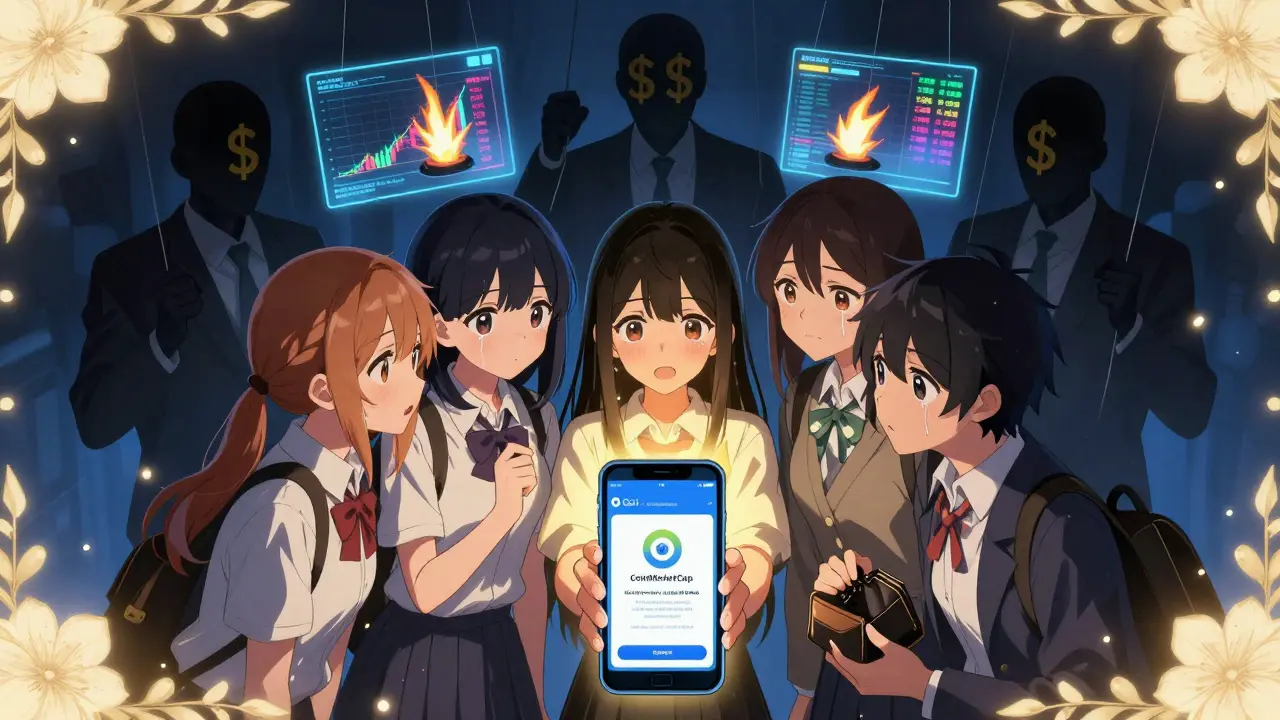
How to Spot a Fake Airdrop in 2026
Here’s the cheat sheet:
- Real: Airdrop announced on the project’s official website and verified Twitter/X account.
- Fake: Airdrop only mentioned in a DM or Telegram group with no link to the official site.
- Real: You need to complete simple tasks like following social accounts or holding a token in your wallet.
- Fake: You’re asked to send crypto to claim your reward.
- Real: The token has a live, audited contract on BscScan or Etherscan.
- Fake: The contract address isn’t listed anywhere, or it’s a random string of letters.
- Real: The token has trading volume over $100,000 and is listed on at least one major exchange.
- Fake: The token trades for less than $0.000000001 and has $50 in daily volume.
If it sounds too good to be true, it is. And if it’s being pushed by someone who’s never heard of blockchain before - it’s definitely fake.
What You Should Be Doing Instead
Forget Shambala. There are better ways to earn crypto in 2026.
Use decentralized apps you already trust - like Uniswap, Curve, or Aave - and interact with them regularly. Many Layer 2 networks give retroactive airdrops to users who’ve been active since launch. You don’t need to chase new tokens. Just use the ones you already know.
Join the Solana ecosystem. It’s the most active airdrop hub right now. Projects like Jito, Raydium, and Meteora regularly reward early users.
Or try earning through verified platforms like Brave Browser (BAT tokens), Helium (HNT), or Polygon’s own rewards program. These aren’t flashy. They won’t make you rich overnight. But they’re real.
And if you’re still tempted by a "free token" pitch? Ask yourself: why would someone give away something valuable for free? The answer is never "to help you." It’s always to take your money, your data, or your trust.
Is there a Shambala X CoinMarketCap airdrop?
No. CoinMarketCap does not run airdrops. It doesn’t partner with tokens like Shambala (BALA) to distribute free crypto. Any claim of a "Shambala X CoinMarketCap airdrop" is a scam. CoinMarketCap’s official airdrop page shows zero active or upcoming airdrops related to Shambala.
What is the Shambala (BALA) token?
Shambala (BALA) is a token on the Binance Smart Chain with a total supply of one quadrillion tokens. It has a 12% transaction fee, meaning 12% of every transfer is burned. Its market cap is under $1,000, and its 24-hour trading volume is around $30. It’s listed on MEXC Global as part of a Kickstarter campaign, not as a legitimate project.
How does the MEXC Kickstarter for BALA work?
Users stake MX tokens to vote on whether MEXC should list BALA. If enough votes are reached, BALA gets listed and participants receive free tokens. If not, MX tokens are returned. But even if listed, BALA’s value is near zero, and the 12% transaction fee makes it nearly unusable.
Can I make money from the Shambala airdrop?
Unlikely. Even if you get BALA tokens, their value is $0.00000000008. To make $1, you’d need over 12 trillion tokens. Projected growth suggests a $100 investment might earn $5 by 2026 - after fees, taxes, and time. The risk far outweighs the reward.
Should I send crypto to claim a Shambala airdrop?
Never. No legitimate airdrop requires you to send crypto to claim rewards. If someone asks you to send BNB, ETH, or any token to unlock your BALA, it’s a scam. You will lose your funds with no chance of recovery.
Where can I find real airdrops in 2026?
Check CoinMarketCap’s airdrop calendar, AirdropAlert, Earnifi, or official project websites. Focus on Layer 2 networks like Arbitrum, Optimism, and zkSync, or ecosystems like Solana. Real airdrops reward on-chain activity - not social media hype.
Is Shambala a scam?
Yes. Shambala (BALA) exhibits classic scam traits: extreme token inflation, a 12% transaction fee that destroys usability, zero real utility, near-zero trading volume, and no credible team. It relies on hype and false promises of riches. It is not a legitimate cryptocurrency project.

Next Steps
If you’re still curious about crypto airdrops, start here: pick one DeFi protocol you already use - like Uniswap or PancakeSwap - and interact with it once a week for a month. That’s how you earn real future rewards. Not by chasing ghosts.
Keep your wallet safe. Don’t connect it to random websites. Don’t click on links in DMs. And never, ever send crypto to claim free tokens.
The market moves fast. But the scams? They never change.

15 Comments
Write a comment




Alison Hall
January 2, 2026 AT 02:17Amy Garrett
January 3, 2026 AT 13:52Mike Reynolds
January 4, 2026 AT 04:46dayna prest
January 4, 2026 AT 11:34Jacky Baltes
January 4, 2026 AT 20:08Willis Shane
January 6, 2026 AT 13:15Jake West
January 7, 2026 AT 12:00Gavin Hill
January 9, 2026 AT 09:34SUMIT RAI
January 11, 2026 AT 05:30Andrea Stewart
January 11, 2026 AT 23:50rachael deal
January 13, 2026 AT 10:02Steve Williams
January 14, 2026 AT 04:28nayan keshari
January 15, 2026 AT 09:09Jack and Christine Smith
January 15, 2026 AT 18:31Jackson Storm
January 16, 2026 AT 11:22