How NFT Ticket Authenticity Verification Works: A Complete Guide
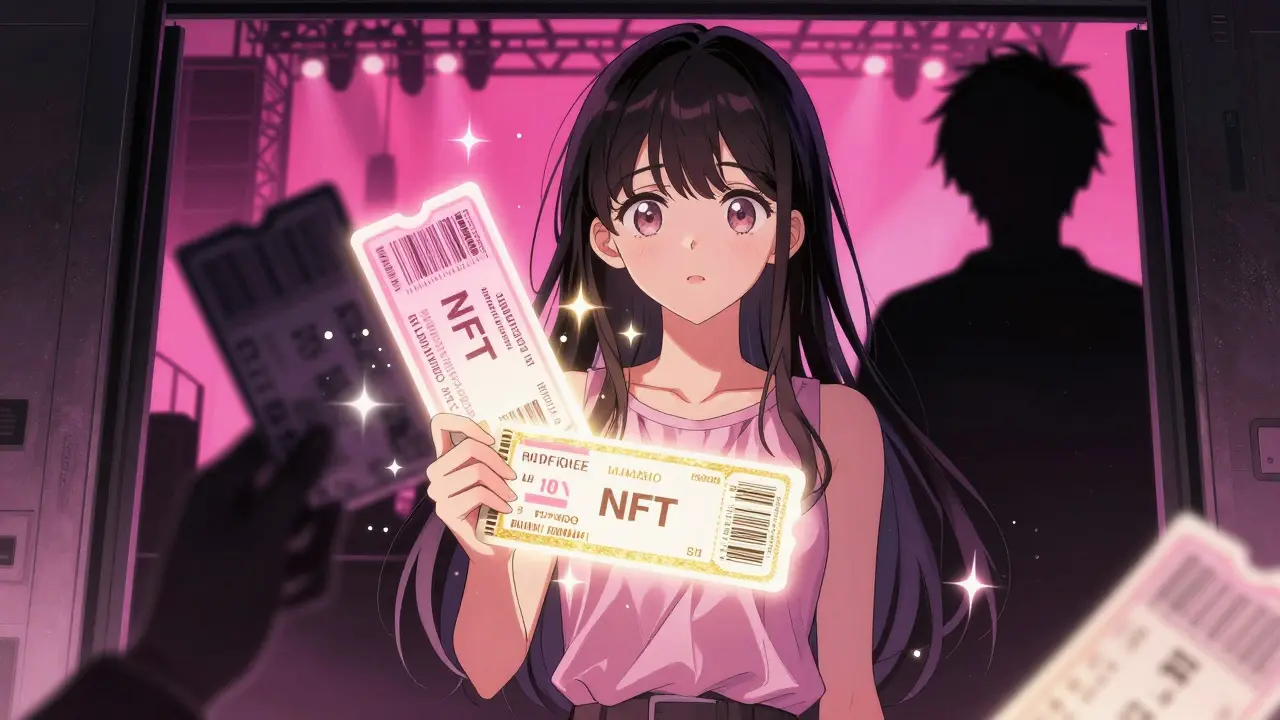
Imagine arriving at a sold-out concert, only to find your ticket is fake. You’ve paid full price, but the scanner says otherwise. This nightmare scenario has plagued the ticketing industry for decades, costing organizers millions and leaving fans frustrated. But what if every ticket came with an unbreakable digital fingerprint that couldn’t be forged, duplicated, or altered? That’s exactly what NFT ticket authenticity verification offers. By leveraging blockchain technology, this system creates tamper-proof digital passes that verify ownership in real-time, eliminating fraud without needing a centralized database.
This isn’t just about replacing paper tickets with QR codes. It’s a fundamental shift in how we prove who owns what. Traditional tickets rely on servers controlled by companies like Ticketmaster or Eventbrite. If those servers fail, or if hackers intercept data, chaos ensues. NFTs change the game by storing ownership records on a decentralized ledger. Once a ticket is minted, its history is permanent and transparent. You can check it yourself, anytime, anywhere. Let’s break down how this works, why it matters, and what you need to know before buying your next show pass as an NFT.
The Core Problem: Why Traditional Tickets Fail
To understand why NFTs are gaining traction, you first need to see where old systems break. Traditional ticketing relies on centralized databases. When you buy a ticket, a server logs your purchase. The physical or digital ticket contains a unique code-usually a QR code or barcode-that links back to that server. At the venue, scanners ping the server to confirm the code hasn’t been used yet.
This model has three major flaws:
- Fraud vulnerability: Criminals can forge high-quality replicas of physical tickets or clone digital QR codes using screen captures. Since the server only sees the code, not the person holding it, duplicates often slip through until they’re scanned multiple times.
- Single point of failure: If the central server goes offline due to a crash or cyberattack, entry stops completely. No backup exists outside the company’s control.
- Lack of transparency: Buyers have no way to verify if a reseller actually owns the ticket. They must trust the platform or the seller, leading to scams on secondary markets.
In 2023 alone, the global ticketing industry lost over $1 billion to counterfeit tickets and unauthorized resale. Fans bore the brunt of these losses, while organizers struggled to recoup revenue. NFTs address each of these issues head-on by removing the middleman from the verification process entirely.
How NFT Ticket Verification Actually Works
An Non-Fungible Token (NFT) is a unique digital asset stored on a blockchain. Unlike Bitcoin or Ethereum, which are interchangeable (fungible), each NFT has distinct metadata that makes it one-of-a-kind. For tickets, this metadata includes the event name, seat number, date, and owner’s wallet address.
Here’s the step-by-step flow of how verification happens:
- Minting: The event organizer creates a smart contract on a blockchain (like Ethereum or Polygon). Each ticket is “minted” as a unique NFT with specific attributes.
- Purchase: You buy the ticket using cryptocurrency or fiat via a supported platform. The NFT is transferred to your digital wallet.
- Storage: Your wallet holds the private key that proves ownership. The public blockchain records this transfer permanently.
- Verification at Entry: At the venue, you open your wallet app and display the NFT. Staff scan a code or use a reader that queries the blockchain directly.
- Validation: The system checks two things: Does the wallet hold the valid NFT? Has this NFT already been marked as “used”?
The magic lies in step five. Because the blockchain is immutable, no one can alter the record after the fact. If someone tries to sell you a screenshot of an NFT, it won’t work. Only the person controlling the private key associated with the wallet can present the token. This cryptographic proof replaces trust with math.
For example, when SeatlabNFT deployed its scanning tech at a music festival, staff didn’t need internet access to validate tickets locally. Their devices cached recent block data, allowing instant verification even in crowded areas with poor connectivity. This hybrid approach combines blockchain security with practical usability.

Smart Contracts: The Brain Behind the Ticket
You can’t talk about NFT tickets without mentioning smart contracts. These are self-executing programs stored on the blockchain that enforce rules automatically. In ticketing, they do heavy lifting that humans or servers used to handle.
Consider resale. On traditional platforms, if you sell your ticket, the original buyer might get nothing, and the organizer loses control. With smart contracts, you can program royalties into the NFT. Say an artist sets a 5% royalty rate. Every time the ticket changes hands, 5% of the sale price goes directly to the artist’s wallet. This happens instantly, without intermediaries taking cuts.
Smart contracts also prevent scalping. Organizers can set maximum resale prices or restrict transfers until closer to the event date. Some contracts even require ID verification linked to the wallet, ensuring tickets go to real fans rather than bots. This level of control was impossible before blockchain made programmable money possible.
| Feature | Traditional Ticketing | NFT Ticketing |
|---|---|---|
| Ownership Proof | Centralized server record | Cryptographic wallet signature |
| Fraud Resistance | Low (QR cloning common) | High (immutable ledger) |
| Resale Control | Limited (platform-dependent) | Programmable (royalties, caps) |
| Transparency | Opaque (no public history) | Full audit trail visible |
| Downtime Risk | High (server dependency) | Low (decentralized nodes) |
Real-World Challenges and Solutions
NFT ticketing isn’t perfect yet. Critics point out valid concerns that keep many venues hesitant. Let’s address them honestly.
Gas fees and speed: Early Ethereum transactions were slow and expensive. During peak events, users faced delays waiting for confirmations. Today, most ticketing platforms use Layer 2 solutions like Polygon or Optimism. These networks process thousands of transactions per second at fractions of a cent. Most users never notice the difference.
Used ticket tracking: Here’s the tricky part. Blockchains don’t naturally “delete” tokens. So how does a venue mark a ticket as used? The answer is a flag within the smart contract. After entry, the contract updates the NFT’s status to “redeemed.” Future scans reject it. However, this requires coordination between the venue’s hardware and the blockchain node. If that link breaks, re-entry could theoretically occur. Reputable providers solve this with local caching and post-event reconciliation scripts.
User experience: Not everyone wants to manage crypto wallets. To bridge this gap, new platforms offer “custodial wallets.” You sign up with email and password, and the backend handles the blockchain interaction. You still benefit from NFT security without learning about seed phrases. Companies like TicketSwap and Yellow Heart lead this charge, making adoption smoother for mainstream audiences.

Who Should Use NFT Tickets Right Now?
If you’re an event organizer, NFTs make sense if you prioritize long-term fan engagement and revenue retention. High-value concerts, conferences, and exclusive club nights benefit most. The ability to embed perks-like backstage access or merchandise discounts-into the ticket adds value beyond entry.
If you’re a buyer, consider NFT tickets when:
- You plan to resell later and want guaranteed royalties or fair pricing.
- You attend premium events where counterfeits are common.
- You already use a crypto wallet and want seamless integration.
For casual moviegoers or small local gigs, traditional tickets may still suffice. The overhead of setting up wallets doesn’t always justify the benefits for low-cost, single-use events. But as infrastructure improves, that line will blur.
The Road Ahead: What’s Next for Blockchain Ticketing?
We’re seeing rapid innovation. Hybrid models combine physical NFC cards with NFT backing. Scan the card at the door, but the ownership lives on-chain. This gives tactile comfort to older demographics while preserving digital integrity. Another trend is dynamic NFTs that change appearance based on attendance history. Go to three shows? Your ticket evolves visually. Collectors love this; marketers find it brilliant.
Regulation is catching up too. Governments are clarifying tax rules for secondary sales. Clear guidelines help businesses adopt confidently. Expect more mainstream payment processors to integrate crypto rails by late 2026, reducing friction further.
The bottom line? NFT ticket authenticity verification solves real problems. It cuts fraud, empowers creators, and gives buyers peace of mind. While hurdles remain around UX and scalability, progress is steady. Whether you’re organizing a festival or attending one, understanding this tech puts you ahead of the curve.
Is NFT ticket verification safe for everyday users?
Yes, provided you use reputable platforms. Modern services hide complex blockchain steps behind familiar interfaces. As long as you guard your login credentials and avoid sharing private keys, your ticket remains secure. Always download apps from official sources to prevent phishing attacks.
Can I lose my NFT ticket if my phone dies?
No. The NFT lives on the blockchain, not your device. Your phone merely accesses it. If your phone breaks, log in again on another device using your recovery phrase or email account. Custodial wallets simplify this process significantly.
Do I need to pay gas fees every time I transfer a ticket?
Not necessarily. Many platforms subsidize transaction costs for users. Others operate on low-fee chains like Polygon where transfers cost less than a penny. Check the platform’s fee structure before purchasing to avoid surprises.
How do venues handle large crowds with blockchain verification?
They use optimized readers that cache recent blockchain data locally. Instead of querying the network for every scan, devices validate against preloaded blocks. Updates sync periodically. This ensures fast throughput even during peak entry periods.
Are NFT tickets environmentally friendly?
Most modern ticketing uses energy-efficient consensus mechanisms like Proof-of-Stake. Ethereum transitioned to this model in 2022, cutting energy consumption by over 99%. Newer chains like Solana and Polygon are even lighter. Environmental impact is minimal compared to older blockchain iterations.


19 Comments
Write a comment


H F
May 16, 2026 AT 20:11Oh my god, this is exactly what we needed! I was so stressed about getting scammed on that Taylor Swift ticket last year and reading this just made me feel like everything is going to be okay now. It’s actually brilliant how the blockchain handles the ownership part without needing some big server farm to keep track of it all. The idea that you can just check the history yourself is super empowering for fans who have been burned before. I really hope more venues start adopting this soon because the frustration of standing outside with a fake QR code is just unacceptable. This guide is such a relief to read.
Michael Berggren
May 17, 2026 AT 02:54The philosophical shift here is profound 🤔 We are moving from trust-based systems to truth-based systems. In traditional ticketing, you must trust the vendor, the scanner, and the network infrastructure. With NFTs, you verify the cryptographic signature directly. It removes the 'black box' nature of corporate databases. The immutability of the ledger ensures that once a transaction is recorded, it cannot be altered by any central authority or malicious actor. This aligns perfectly with the concept of self-sovereign identity in digital spaces. We are essentially giving users back their agency in the transaction process. It is not just about tickets; it is about data ownership 😊
Kiran CS
May 18, 2026 AT 13:33How utterly tedious. One would assume that by 2024, humanity had evolved beyond the need for digital collectibles to prove one attended a concert. The notion that a 'smart contract' solves the inherent human propensity for deceit is laughably naive. These so-called experts fail to realize that technology does not cure stupidity; it merely provides new avenues for it. The average consumer lacks the intellectual capacity to manage private keys, let alone understand the nuances of blockchain verification. It is a solution looking for a problem, wrapped in pretentious jargon designed to impress those who do not know better. Truly, the decline of common sense is evident in every word of this article.
Bijan Das
May 20, 2026 AT 01:33I mean sure, if you want to make buying a ticket harder than defusing a bomb, go ahead. Why should I care about 'immutable ledgers' when I just want to see the band? You guys are making it sound like saving money on gas fees is some kind of Olympic sport. Spoiler alert: it isn't. Most people don't have time to learn crypto just to get into a club. It's lazy design disguised as innovation. Just give me a paper ticket like they did in the good old days when things were simple and didn't require a computer science degree to use.
Ashley Rodriguez
May 21, 2026 AT 18:05i think this is really interesting because i always worry about losing my tickets or having them stolen online so knowing that there is a way to prove i own it without trusting a website feels safer even though i dont fully understand how the blockchain works yet but maybe if more people use it then it will become easier for everyone to handle and i hope that companies make it simpler so we dont have to deal with confusing apps just to buy something we paid for already which seems unfair
Bridget Coogle
May 23, 2026 AT 11:51It’s great to see solutions that prioritize security for fans. I’ve seen too many friends get scammed on secondary markets and it’s heartbreaking. This tech could really level the playing field if implemented well. Let’s hope platforms focus on user experience so no one gets left behind.
Zara Zaman
May 23, 2026 AT 19:14This is another example of foreign tech trying to invade our local event culture. American venues should stick to proven methods that work for our citizens. We do not need these complicated digital schemes that only benefit tech giants overseas. Keep it simple and keep it domestic. No thanks to the blockchain nonsense.
Larry Port
May 24, 2026 AT 22:21I’m curious about the scalability aspect mentioned in the post. Layer 2 solutions like Polygon are definitely promising, but has anyone tested this under extreme load conditions similar to a Super Bowl ticket drop? The theoretical benefits are clear, but real-world performance during high-traffic events is where the rubber meets the road. If the caching mechanism fails, what is the fallback? That seems like a critical detail for organizers to consider before full adoption.
Jocelyn Garcia
May 26, 2026 AT 18:40The interoperability between different wallet standards is still a major bottleneck. Most venues are pushing proprietary custodial wallets which defeats the purpose of decentralization. Until we have open standard protocols for ticket minting and verification across chains, this remains a walled garden rather than a true public utility. The metadata schema needs to be standardized too.
Amit Varpe
May 26, 2026 AT 20:05Finally some sense in the industry! 👍 India is leading the way in digital adoption and this tech fits perfectly with our growing tech-savvy population. No more fake tickets ruining our festivals. Great initiative!
Bronwen Butler
May 27, 2026 AT 01:24Actually this doesn't solve anything because scammers will just find new ways to phish your seed phrase. The problem isn't the ticket format it's human gullibility. Also carbon footprint of blockchains is still an issue despite what they say. Don't believe the hype.
Pauline Larocco71
May 27, 2026 AT 16:43I tried using an nft ticket once and it was kinda confusing at first but then it got easier. I liked that I could resell it easily without worrying about scams. Hope more places start doing this so its normal for everyone to use. My mom still struggles with regular websites so maybe this helps her too if they make it simple enough.
beti macedo
May 27, 2026 AT 19:43It is indeed a significant development in the realm of digital commerce. The transparency offered by blockchain technology is commendable and aligns with modern expectations of accountability. However, one must remain cautious of the learning curve associated with such advanced systems. Proper education is key to widespread acceptance.
Michelle Bonahoom
May 29, 2026 AT 18:53Ugh why do we need more tech in our lives. Just buy the ticket and show up. All this extra step stuff is annoying and probably a waste of time. I bet most people just ignore it anyway.
Albert Lee
May 31, 2026 AT 10:00You guys are missing the bigger picture here! This is about empowerment and fairness for artists. Imagine getting royalties every time your ticket is resold. That changes the entire economic model of touring. It’s inspiring to see technology used to support creators directly. We need more of this kind of innovation in every industry!
Ankush Pokarana
May 31, 2026 AT 15:42The underlying philosophy of decentralized verification resonates with the broader movement towards autonomous systems. By removing the central point of failure we not only enhance security but also promote resilience in critical infrastructure. The smart contract functionality allows for dynamic pricing and royalty distribution which creates a more equitable ecosystem for all stakeholders involved in the event lifecycle. This is a step towards a more transparent society.
Bianca Vilas Boas Lourenço
May 31, 2026 AT 21:28Oh please 🙄 Another day another crypto bro solution to problems that don't exist. I spent three hours trying to connect my wallet just to see a meme show and the app crashed twice. Not impressed. Save your breath and just give us a PDF like normal humans do. Drama much?
Yash Lodha
June 2, 2026 AT 10:13They claim it is secure but who controls the nodes? Is it truly decentralized or just a few large corporations running the validators while pretending it is open source? The metadata could be manipulated at the source before minting. Always question the narrative provided by the tech elites. They want you dependent on their ecosystem for basic transactions. Wake up.
Jesse Alston
June 3, 2026 AT 06:45If you're worried about losing access, remember that custodial wallets are basically just email logins now. You don't need to be a crypto expert to use them. The UX has improved massively in the last year. Give it a try for your next gig, you might be surprised by how smooth it is 😊