What Is the Blockchain Creator Economy? A Guide to Fair Monetization
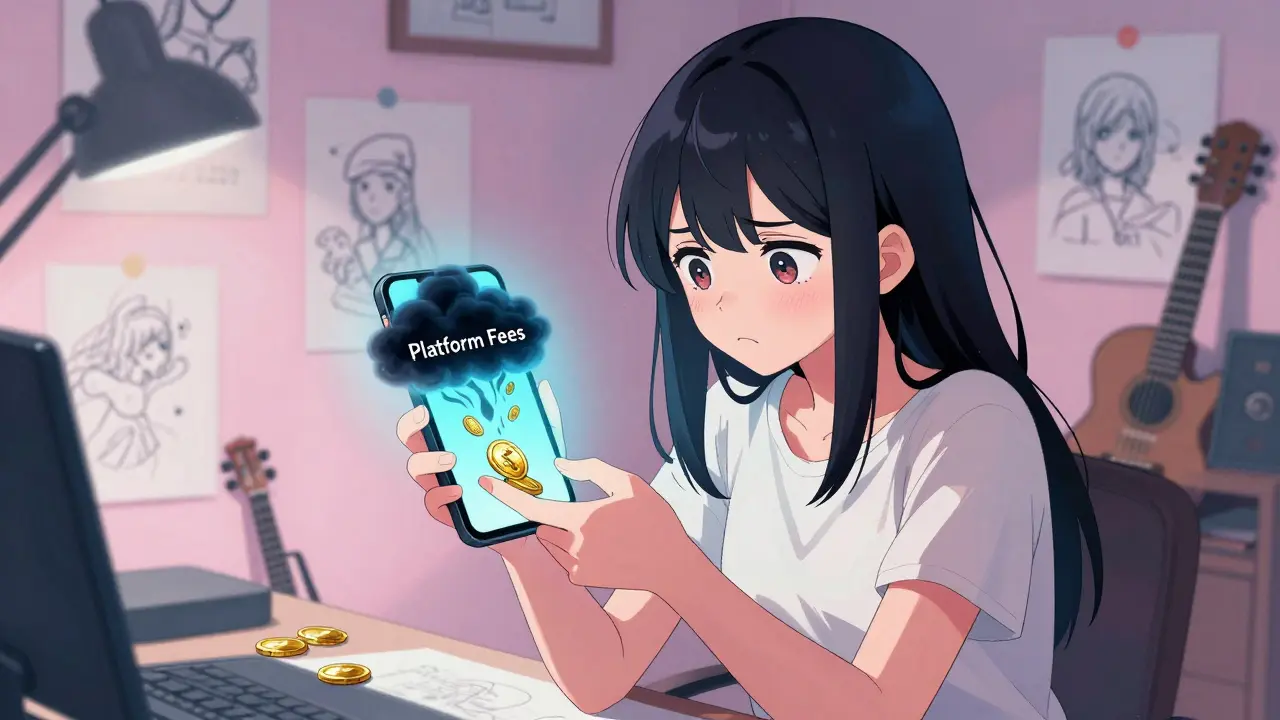
The traditional internet has a hidden tax on your creativity. When you post a video, write an article, or release music on mainstream platforms, you are often fighting for scraps while the platform keeps the lion's share. Instagram and X (formerly Twitter) can retain up to 97.5% of the revenue generated by their users, leaving creators with minimal direct earnings from their audience. This is the problem that the blockchain creator economy is designed to solve.
This new economic model isn't just about cryptocurrency speculation. It is a fundamental restructuring of how value moves between creators and fans. By using blockchain technology, this system eliminates middlemen, encodes ownership rights directly into digital files, and ensures that when someone pays for your work, you actually get paid. As we move through 2026, this shift is moving from niche experiments to a viable alternative for millions of independent artists, writers, and developers worldwide.
How the Blockchain Creator Economy Works
To understand why this matters, you need to look at the mechanics behind the scenes. The blockchain creator economy operates on three core pillars: true ownership, permissionless participation, and automated revenue distribution. Unlike traditional platforms that rent you access to an audience, blockchain gives you infrastructure you control.
Here is the breakdown of the key components:
- Cryptocurrency Wallets: Think of these as your personal bank accounts for the digital world. They aggregate all your income streams-tips, sales, royalties-into one place. You hold the keys, meaning no platform can freeze your funds arbitrarily.
- Smart Contracts: These are self-executing codes stored on the blockchain. They act as impartial referees. When a fan buys your content, the smart contract automatically sends the payment to your wallet. There is no invoice waiting period, no accounting department, and no risk of non-payment.
- NFTs (Non-Fungible Tokens): These tokens represent proof of ownership for digital items. An NFT doesn't just copy a file; it certifies that you own the original. This creates "digital scarcity," which allows creators to sell limited editions of their work, much like physical art prints but without shipping costs.
The beauty of this system is its simplicity in execution, even if the setup feels technical at first. You don't need a record label or a publishing deal. You just need a smartphone and an internet connection. This lowers the barrier to entry significantly, especially for creators in regions where traditional banking infrastructure is weak or nonexistent.
Fees and Revenue: The Numbers Don't Lie
If there is one metric that makes the blockchain creator economy compelling, it is the take rate-the percentage of money the platform keeps versus what the creator earns. In the traditional web, these fees are steep and often opaque.
| Platform Type | Typical Take Rate | Creator Retention | Payment Speed |
|---|---|---|---|
| Social Media (Instagram/X) | 97.5% - 99% | 1% - 2.5% | Indirect (Ads only) |
| Video Platforms (YouTube) | ~45% | ~55% | Monthly (Delayed) |
| Blockchain Platforms | 1% - 2.5% | 97.5% - 99% | Near Instant |
As entrepreneur Samir ElKamouny notes, blockchain platforms operate with take rates as low as 1-2.5%. This drastic difference exists because blockchain platforms are often open-source protocols rather than centralized corporations. They don't have massive server bills or executive salaries to cover from your ad revenue. Instead, they generate value through token appreciation and network growth.
For a creator earning $1,000 a month, the difference is stark. On a traditional platform taking 45%, you keep $550. On a blockchain platform taking 2%, you keep $980. That extra $430 can mean the difference between treating content creation as a hobby and turning it into a sustainable career.
Real-World Applications for Creators
The theory sounds good, but how does it play out in practice? By mid-2026, several sectors have seen significant adoption. Here is how different types of creators are leveraging this technology.
Musicians and Audio Artists
Music has historically been plagued by royalty delays. Major labels often take months, sometimes years, to distribute payments accurately. With blockchain, musicians can tokenize their song royalties. Every time a fan resells a collectible album or samples a track, the smart contract triggers an automatic payment. Warner Music Group implemented such systems in late 2024, reducing payment processing time from 90 days to near real-time and increasing artist payouts by 32%.
Writers and Journalists
Independent writers are using NFTs to sell "collectible articles." Instead of relying on ad networks that pay pennies per view, they sell exclusive access or signed editions of their work. One writer documented earning 98% of sales on a blockchain platform compared to the 70% typical on traditional publishing platforms. This model rewards direct support from readers who value the content enough to pay for it directly.
Visual Artists and Designers
For visual artists, the ability to create digital scarcity is revolutionary. They can mint a series of ten unique digital paintings. Each buyer gets a verifiable certificate of authenticity. More importantly, many smart contracts include "secondary sale royalties." If a fan sells that digital painting to someone else for a higher price, the original artist automatically receives a percentage of that resale profit. This ensures creators benefit from the long-term appreciation of their work.
Challenges and Barriers to Entry
It is not all smooth sailing. The blockchain creator economy faces significant hurdles that prevent mass adoption. Ignoring these challenges would be irresponsible.
The Learning Curve: Setting up a cryptocurrency wallet, understanding private keys, and navigating gas fees (transaction costs) is intimidating for non-tech-savvy users. A Q2 2024 report noted that 68% of surveyed creators struggled to set up their first wallet. Another 42% experienced transaction errors in their first month. This friction kills momentum for many potential adopters.
Volatility and Stability: While cryptocurrencies like Bitcoin and Ethereum offer high upside, their prices swing wildly. No creator wants to get paid in a currency that loses 20% of its value overnight. To combat this, 87% of major blockchain platforms now support stablecoins like USDC, which are pegged to the US dollar. This reduces volatility concerns by 76%, according to recent surveys, but it still requires users to trust the stability mechanisms behind these tokens.
Regulatory Uncertainty: Laws vary wildly by region. The European Union’s MiCA framework provides clearer guidelines, but the US regulatory environment remains fragmented. Creators must navigate complex tax implications and compliance rules that change frequently. This legal gray area scares off larger enterprises and cautious individuals alike.
Getting Started: A Practical Roadmap
If you are ready to dip your toes into the blockchain creator economy, here is a realistic step-by-step guide based on current best practices in 2026.
- Choose Your Wallet: Start with a user-friendly non-custodial wallet like MetaMask or Phantom. Spend 15-30 minutes setting it up. Write down your seed phrase and store it offline. Never share this phrase with anyone.
- Select a Platform: Look for platforms that align with your medium. For artists, consider OpenSea or specialized art chains. For writers, look at Substack alternatives built on blockchain or dedicated writing DAOs. Ensure the platform supports stablecoins if you want predictable income.
- Mint Your First Asset: Minting is the process of uploading your content to the blockchain. Costs vary depending on network congestion, typically ranging from $0.50 to $5.00. Start with a small batch to test the process.
- Educate Your Audience: Your biggest challenge won't be technology; it will be convincing your fans to buy. Create simple guides explaining how they can purchase your work using crypto. Emphasize the benefits: supporting you directly, owning a piece of history, and getting exclusive access.
- Join Communities: Discord and Telegram groups are vital. Most major platforms have communities of 5,000-10,000 members. Engage here to learn troubleshooting tips, find collaborators, and stay updated on protocol changes.
Expect a learning period of 2-3 weeks to become proficient in basic operations. Mastery may take 2-3 months. Be patient with yourself and your audience.
The Future: AI Integration and Market Growth
Looking ahead, the blockchain creator economy is converging with artificial intelligence. As of Q3 2025, 63% of major platforms integrated AI tools. These tools help automate content generation, manage smart contract terms, and even analyze market trends for pricing. This combination enables entirely new business models, such as AI-generated content with automatic royalty distribution to human curators.
Market projections are optimistic. Gartner predicts that blockchain platforms will capture 18-22% of the overall creator economy market share by 2028. The Global South is seeing explosive growth, with creator participation increasing by 227% year-over-year in areas with limited banking infrastructure. This suggests that the blockchain creator economy is not just a trend for tech enthusiasts but a critical tool for financial inclusion globally.
The infrastructure is becoming the "universal library of media" that developers can build upon. We are moving away from renting audiences on walled gardens to building owned assets on open ledgers. The transition is messy and technical, but the reward is autonomy.
Is the blockchain creator economy safe for beginners?
It can be, but it requires caution. The technology itself is secure, but user error is the biggest risk. If you lose your wallet seed phrase, you lose access to your funds forever. Additionally, scams targeting new creators are common. Always verify platform URLs, never share private keys, and start with small amounts until you are comfortable with the interface.
Do I need to know coding to participate?
No. Most modern blockchain creator platforms provide user-friendly interfaces that handle the complex code behind the scenes. You simply upload your content, set your price, and click mint. However, understanding basic concepts like wallets, gas fees, and blockchain networks will make the experience smoother.
How do I pay taxes on blockchain earnings?
Tax laws vary by country. In most jurisdictions, cryptocurrency earnings are treated as taxable income or capital gains. You are responsible for tracking every transaction. Many blockchain platforms provide exportable CSV files of your transaction history to help with reporting. Consult a local tax professional familiar with crypto regulations.
What are gas fees, and why do they matter?
Gas fees are the transaction costs paid to the blockchain network for processing your data. They fluctuate based on network congestion. High gas fees can eat into profits for small transactions. Using Layer 2 solutions or blockchains with lower base fees (like Solana or Polygon) can significantly reduce these costs compared to the main Ethereum network.
Can I switch back to traditional platforms later?
Yes, you can use both simultaneously. Many successful creators maintain a presence on YouTube or Instagram for discovery while directing superfans to blockchain platforms for direct purchases. This hybrid approach leverages the reach of traditional media with the monetization power of blockchain.

17 Comments
Write a comment

AP Fisher
May 2, 2026 AT 21:27So you are saying the middlemen are basically stealing our work? That sounds pretty harsh to me. I always thought platforms helped us get seen by more people. But if they keep ninety seven percent of the money, that is not much help at all. It makes me wonder why anyone stays on those sites.
Wayne Gillis
May 3, 2026 AT 03:14Dude this is huge 🚀🔥 Finally someone is talking about real ownership! I am tired of renting my audience from Instagram and Twitter. They can ban you for no reason and take your money too 😡 This blockchain stuff seems like the only way to go now. Who else is ready to mint their first NFT? 👇💸
Noel Mandotah
May 5, 2026 AT 02:54Please. Another tech bro dream. You think artists care about smart contracts? They care about getting paid in dollars they can spend on rent. Not some volatile token that crashes while they sleep. The learning curve alone will kill this before it starts. Typical hype cycle garbage. Boring.
edie rosa
May 6, 2026 AT 11:05I find it deeply unsettling how this entire narrative ignores the human cost of such a drastic shift. You speak of efficiency and automated revenue distribution as if these are virtues rather than cold, mechanical processes that strip away the nuance of artistic exchange. The idea that we should trust code over community feels inherently toxic to the spirit of creation. It reduces art to a commodity and fans to mere data points in a ledger. Where is the empathy in this so-called revolution?
Michael Repak
May 7, 2026 AT 09:59This is actually a really great point! I have been looking into wallets myself and it does seem complicated at first. But once you get the hang of it, it is quite empowering. I think the key is just taking it slow and finding a good community to ask questions. We should support each other through the learning process!
Livvy Cooper
May 9, 2026 AT 01:02I don't see what the big deal is. It is just another way for rich people to buy digital pictures. The rest of us are still going to be broke. Why bother with all this crypto nonsense when you could just write a good book? Seems like a waste of time and energy to me. Just ignore it.
Rain Richardsson
May 10, 2026 AT 22:59I hear you on the complexity side. It is definitely intimidating. But I think the potential for direct connection with fans is worth exploring. Have you tried any specific wallet yet? I would love to know which one you found easiest to use. Let us share tips.
Iestyn Lloyd
May 11, 2026 AT 18:01In the UK, we are seeing similar discussions regarding digital rights. The MiCA framework mentioned in the article is indeed providing some clarity, though implementation remains tricky. It is interesting to observe how different regions approach this regulatory uncertainty. Perhaps there is value in cross-border collaboration on best practices.
April D Thompson
May 12, 2026 AT 16:24Oh wow! This changes everything we thought we knew about creativity! Imagine a world where you truly own your voice! No more gatekeepers deciding who gets heard! It is like breaking chains! The power is in your hands now! Embrace the chaos and create freely! The future is bright and bold!
Kara Spadone
May 13, 2026 AT 05:48The universe demands balance. When you remove the middleman, you also remove the buffer against failure. Is it truly freedom if you must become your own bank, lawyer, and marketer? The soul of the artist craves connection, not just transaction. Consider the deeper implications of this digital scarcity. :)
Arun Prabhu
May 13, 2026 AT 18:46Ah, the quaint notion of 'fairness' in a system built on speculative mania. How utterly pedestrian. The masses flock to these shiny new toys, oblivious to the fact that they are merely exchanging one form of servitude for another. The elite will always find a way to skim the cream. Your blockchain is just a fancy ledger for the same old greed. Do try to keep up.
Jehan ZA
May 14, 2026 AT 08:46It is important to acknowledge the technical challenges presented herein. The volatility of cryptocurrency markets poses a significant risk to creators seeking stable income streams. While the theoretical benefits are compelling, practical application requires careful consideration of financial stability. One must proceed with caution.
debra hoskins
May 15, 2026 AT 14:17I remain skeptical. The promise of autonomy often masks the reality of isolation. Without the shared spaces of traditional platforms, do we not fragment our communities further? The allure of direct monetization is strong, but the cost might be our collective cultural dialogue. Let us not rush into silos.
Pramendra Singh
May 15, 2026 AT 14:57I appreciate the detailed breakdown here. It gives hope that things might improve for independent creators. I will probably wait a bit longer until things settle down. But it is good to know options exist. Thanks for sharing this information. Stay positive everyone.
Amanda Macy
May 16, 2026 AT 04:04The intersection of technology and art raises profound questions about value. If ownership is encoded in a file, does the meaning of the art change? We are moving from appreciation to possession. This shift alters the relationship between creator and consumer fundamentally. It warrants deep reflection.
Chloe Fletcher
May 16, 2026 AT 22:35You can totally do this! 💪 Start small and learn as you go. The community is here to help. Don't let the fear stop you from trying something new. Every expert was once a beginner. Keep going and believe in yourself! ✨
Mitali Rajvanshi
May 16, 2026 AT 23:39This is a very balanced view. I agree that patience is key. The technology is evolving fast, but the human element remains constant. It is nice to see thoughtful discussion rather than just hype. Let us continue to learn together.