What is Poppy (POPPY) Crypto? A Guide to the Meme Token

You might have seen Poppy (POPPY) pop up on a chart or in a chat group and wondered what it actually is. It’s not a revolutionary tech protocol, nor is it backed by a major corporation. Instead, POPPY is a classic example of a low-cap meme cryptocurrency. But here is the catch that trips up most new investors: there isn't just one POPPY token. There are at least two distinct versions living on different blockchains, both using the same ticker symbol, which creates a confusing mess of data for anyone trying to figure out its real value.
If you are looking to understand what this asset is, how risky it is, and where to find accurate information about it, you need to look past the hype and dig into the specifics. This guide breaks down the two main versions of POPPY, explains why the numbers you see online often contradict each other, and helps you decide if this microcap asset belongs in your portfolio-or if it's best left alone.
The Two Faces of POPPY
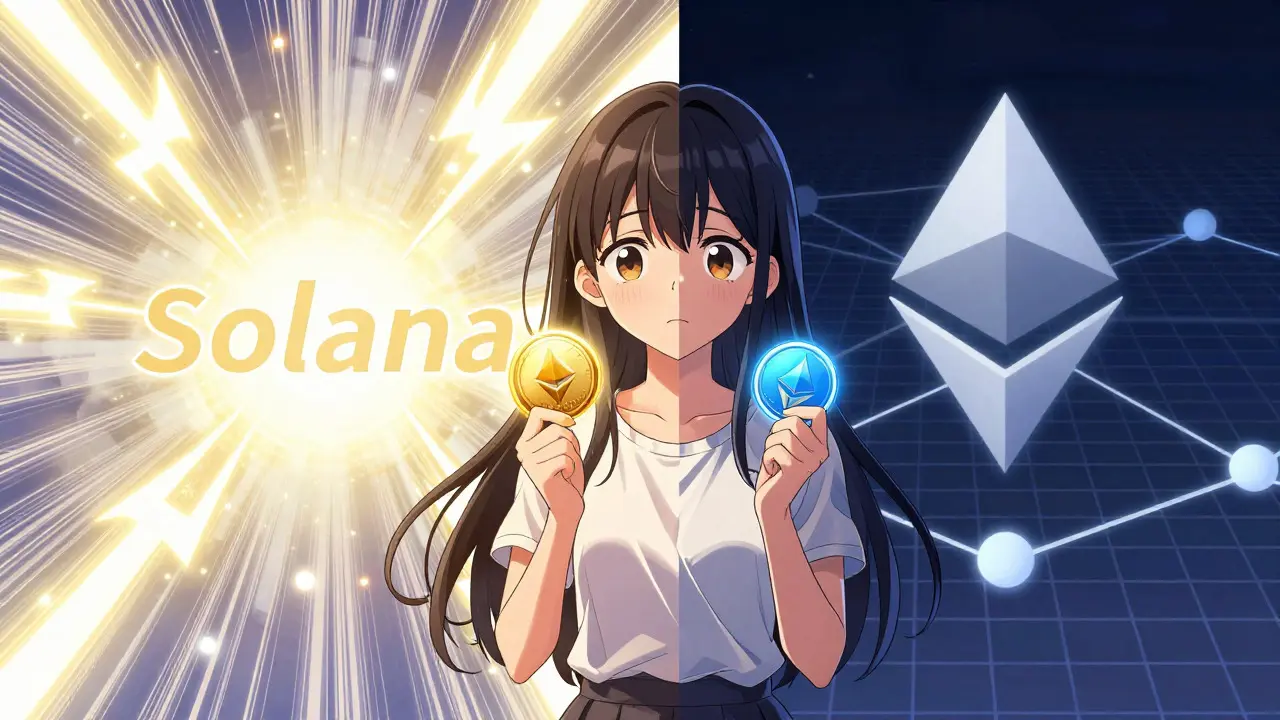
The first thing you need to know is that "POPPY" is not a single, unified project with one clear roadmap. When you search for it on major aggregators like CoinMarketCap or CoinGecko, you will likely find two separate listings. This duplication is common in the world of meme coins, where developers can deploy similar tokens on different networks with minimal effort.
The first version is built on the Solana blockchain. This specific token has a fun backstory: it represents a baby pygmy hippo named Poppy who lives at the Metro Richmond Zoo in Virginia. It is positioned explicitly as an animal-themed meme asset. The supply for this version is massive, hovering around 1 billion tokens (specifically reported as 999.99 million or 999,997,172 depending on the source). Because it lives on Solana, it benefits from that network's reputation for fast transactions and low fees, but it doesn't offer any special technical utility beyond being a tradable token.
The second version exists on the Ethereum blockchain. This implementation follows the standard ERC-20 format used by thousands of other tokens. Unlike the Solana version, this one has a much smaller total supply of exactly 100 million tokens. It trades primarily on decentralized exchanges like Uniswap V2. While it shares the name and ticker, it operates independently of the hippo-themed Solana token. Confusingly, many data sites mix these statistics together, leading to the wild discrepancies you see in price and market cap figures.
Why the Data Looks Broken
If you check the price of POPPY on three different websites, you might get three completely different answers. This isn't necessarily because one site is lying; it's because they are tracking different things, or their calculation methods vary wildly for such a tiny asset.
| Feature | Solana POPPY | Ethereum POPPY |
|---|---|---|
| Blockchain | Solana | Ethereum |
| Total Supply | ~1 Billion (999.99M) | 100 Million |
| Primary Theme | Baby Pygmy Hippo (Metro Richmond Zoo) | Generic Meme / Community |
| Typical Trading Venue | Raydium (DEX) | Uniswap V2 (DEX) |
| Estimated Market Cap Range | $17k - $106k | $7k - $10k |
For instance, Coinbase might list a price based on the larger Solana supply, while CoinPaprika might show a market cap of zero because it treats the token as effectively uncapitalized due to lack of reliable volume. Launchpad.meme, another tracker, showed a market cap of just $2,360 at one point. Meanwhile, CoinStats listed a live market cap closer to $99,000. These aren't minor differences; they represent orders of magnitude. For a retail investor, this means you cannot trust a single number. You must identify which chain you are buying and then verify the liquidity on that specific decentralized exchange.
Liquidity: The Real Risk Factor
The biggest danger with POPPY isn't just that the price goes down-it's that you might not be able to sell it at all. Liquidity refers to how easily you can buy or sell an asset without moving its price drastically. For top-tier coins like Bitcoin or Ethereum, billions change hands daily. For POPPY, the numbers are startlingly small.
Data from mid-2025 through mid-2026 shows that the 24-hour trading volume for the Solana version often sits below $10. Yes, single digits. On Raydium, the primary venue for the Solana POPPY, some days saw less than $8.50 in total trade volume. The Ethereum version fares slightly better but still struggles, with volumes typically under $200 per day on Uniswap. Even when CoinPaprika reported higher volumes of over $2,300, that is still considered extremely thin for a public asset.
Why does this matter? Imagine you want to buy $100 worth of POPPY. If the daily volume is only $8, your purchase would likely spike the price artificially, giving you a bad entry rate. Worse, if you try to sell that $100 later, you might crash the price because there are no buyers waiting in the queue. This extreme illiquidity makes POPPY highly susceptible to manipulation. A single trader with a few hundred dollars could swing the price by hundreds of percent, as seen in historical spikes where prices jumped over 350% in a day before falling back down.
No Utility, Just Speculation
Unlike tokens that power a specific application-like Chainlink providing oracle data or MakerDAO managing stablecoins-POPPY offers no inherent utility. It has no governance rights, no staking rewards, and no integration with major financial products. Its value is derived entirely from community sentiment and speculative interest.
This classification places it firmly in the "meme coin" category. Meme coins thrive on virality, humor, and community bonding. The Solana version leans heavily into its cute hippo mascot. However, without a whitepaper, a known founding team, or a published roadmap visible on major aggregators, the project relies solely on the goodwill of its current holders. There are no formal audits, partnerships, or institutional backers listed for POPPY. Major centralized exchanges like Binance and Crypto.com either list it with zero volume, mark it as inactive, or state it is not yet tradable on their platforms.
This absence of structure is typical for microcap tokens. They are easy to create and hard to sustain. Without a continuous influx of new attention or capital, the community tends to dissipate, leaving the token dormant. As of July 2026, POPPY remains live and trackable, but it shows no signs of evolving into a more substantial protocol. It remains a niche asset for those willing to gamble on micro-market movements.

How to Trade POPPY Safely
If you decide to proceed despite the risks, you need to approach it differently than you would a mainstream crypto investment. Since major exchanges largely ignore it, you will need to use decentralized tools.
- Identify the Correct Contract Address: Never rely solely on the ticker "POPPY." Go to CoinGecko or CoinMarketCap, find the specific listing for the chain you want (Solana or Ethereum), and copy the exact contract address. Pasting this address into your wallet ensures you are buying the right token and not a fake duplicate.
- Use a Compatible Wallet: For the Solana version, you'll need a wallet like Phantom or Solflare. For the Ethereum version, MetaMask is the standard choice. Ensure your wallet has enough native currency (SOL or ETH) to pay for gas fees, which can sometimes exceed the value of the trade itself for tiny amounts.
- Connect to a Decentralized Exchange (DEX): Use Raydium for Solana POPPY and Uniswap for Ethereum POPPY. These platforms allow you to swap tokens directly from your wallet without going through a central authority.
- Check Slippage Tolerance: Because liquidity is so low, you may need to increase your slippage tolerance setting in the DEX interface (often to 1-5%) to ensure your transaction goes through. Be aware this means you might receive fewer tokens than expected if the price moves against you during the execution.
- Start Small: Given the volatility and potential for total loss, treat any money put into POPPY as entertainment expense. Do not invest funds you need for rent or bills.
Is POPPY Worth Your Attention?
Whether POPPY is "worth it" depends entirely on your goals. If you are looking for long-term growth driven by technology adoption, POPPY is likely not the answer. It lacks the fundamental drivers that support sustainable value appreciation. There is no evidence of enterprise usage, payment processing integrations, or developer activity beyond the initial deployment.
However, if you enjoy the thrill of high-risk speculation and have a keen eye for spotting viral trends in niche communities, POPPY fits that profile. It ranks outside the top 5,000 cryptocurrencies on most lists, placing it in the deep end of the market where surprises-both positive and negative-can happen quickly. The key is to manage expectations. Understand that you are buying a digital collectible with a story, not a share in a growing business.
Always remember that in the world of microcap meme coins, the exit strategy is as important as the entry. With daily volumes often measured in single-digit dollars, getting your money out can be harder than putting it in. Keep an eye on the liquidity charts, stay updated on any community announcements, and never let greed override caution.
Which blockchain is the official POPPY token on?
There is no single "official" POPPY token recognized by a central authority. There are two primary versions: one on the Solana blockchain (associated with a pygmy hippo theme) and one on the Ethereum blockchain. Both use the POPPY ticker, so you must check the contract address to distinguish between them.
Can I buy POPPY on Binance or Coinbase?
As of mid-2026, POPPY is not actively traded on major centralized exchanges like Binance or Coinbase. While these platforms may display reference prices or list the token, trading volumes are often zero, and the tokens are marked as inactive or not yet tradable. Most trading occurs on decentralized exchanges like Raydium (for Solana) and Uniswap (for Ethereum).
Why do different websites show different prices for POPPY?
Price discrepancies arise because there are multiple POPPY tokens on different chains, and data aggregators calculate market caps differently. Some sites may track the Solana version while others track the Ethereum version. Additionally, due to extremely low liquidity, a single small trade can cause significant price swings, leading to inconsistent snapshots across platforms.
Does POPPY have any utility or real-world use case?
No, POPPY is classified as a meme coin with no inherent utility. It does not offer governance rights, staking rewards, or access to specific services. Its value is purely speculative, driven by community interest and its thematic connection to a zoo animal in the case of the Solana version.
What is the total supply of POPPY tokens?
The supply depends on the version. The Solana-based POPPY has a supply of approximately 1 billion tokens (often cited as 999.99 million). The Ethereum-based POPPY has a significantly smaller supply of 100 million tokens. Always verify which version you are viewing when checking supply metrics.
Is POPPY a safe investment?
POPPY is considered a high-risk, speculative asset. It has a very low market capitalization (ranging from roughly $2,000 to $100,000 depending on the source) and extremely low trading volume. This illiquidity makes it vulnerable to sharp price crashes and manipulation. It should only be purchased with funds you can afford to lose entirely.