Tornado Cash and Transaction Mixing: How It Works, The Sanctions Lift, and Privacy in 2026

Imagine walking into a crowded bank. You hand your cash to the teller, who mixes it with thousands of other bills before handing you back the same amount from a different stack. No one can trace which specific bill came from where. That is the core promise of Tornado Cash, a decentralized protocol that uses cryptography to break the link between your deposit address and your withdrawal address on the blockchain.
For years, Tornado Cash was the most controversial name in cryptocurrency. In August 2022, the U.S. government sanctioned it, claiming it was primarily used for money laundering. But by March 2025, those sanctions were lifted following a landmark court ruling. Today, as we navigate 2026, understanding how transaction mixing works-and whether Tornado Cash is still a viable tool for privacy-is crucial for anyone serious about digital asset sovereignty.
How Transaction Mixing Actually Works
To understand Tornado Cash, you first need to understand why blockchains like Ethereum are transparent by design. Every transaction is recorded on a public ledger. If someone sends you ETH, anyone can look up that address and see exactly where the funds came from and where they went. This transparency is great for auditing but terrible for privacy.
Tornado Cash solves this using a technique called zero-knowledge proofs (specifically zk-SNARKs). Here is the step-by-step process:
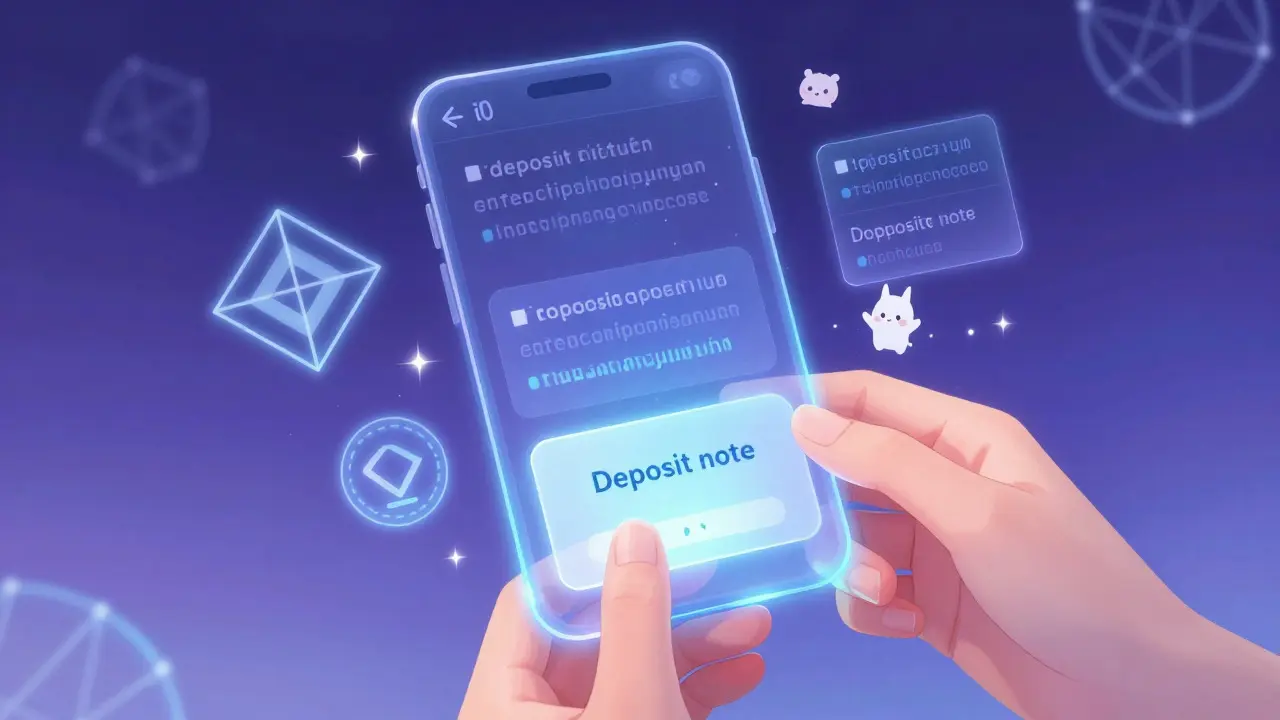
- The Deposit: You send cryptocurrency (like ETH or USDC) to a smart contract pool. Crucially, you generate a "deposit note" on your local device. You only share an encrypted hash of this note with the network, not the note itself. Think of this like getting a claim check at a coat closet, but the claim check is encrypted so no one else can read it.
- The Pooling: Your funds join a large pool of identical assets. Tornado Cash has separate pools for different amounts: 0.1, 1, 10, or 100 ETH. The larger the pool, the harder it is to trace your specific contribution.
- The Withdrawal: When you want your money back, you use your secret deposit note to prove to the smart contract that you have a right to withdraw funds. Thanks to zero-knowledge proofs, the math proves you own a deposit without revealing which deposit it was. You then send the funds to a completely new wallet address.
Because the protocol is non-custodial, Tornado Cash never actually holds your money. The smart contracts do. And because the code is immutable, even the developers cannot freeze your assets or change the rules after deployment.
The Regulatory Rollercoaster: From Ban to Liberation
The history of Tornado Cash is inseparable from its legal battles. On August 8, 2022, the U.S. Department of the Treasury’s Office of Foreign Assets Control (OFAC) sanctioned the protocol. This was unprecedented. Usually, governments sanction people or companies. Sanctioning open-source software code was a new frontier.
The justification? Data showed that malicious actors, including the North Korean hacking group Lazarus, had laundered hundreds of millions of dollars through the mixer. At the time, over $7 billion had flowed through Tornado Cash since its inception.
But the ban created chaos. GitHub removed the repository. Developers faced arrest warrants. Users feared their wallets would be frozen if they interacted with the contracts. Yet, the protocol kept running because it was decentralized. No central server could be shut down.
Then came the turning point. In November 2024, Judge Katherine Failla ruled that OFAC had overstepped its authority. She noted that sanctioning purely decentralized, open-source software set a dangerous precedent for free speech and code. By March 2025, the sanctions were officially lifted.
The market reacted immediately. Within the first month post-lift, ETH deposits into Tornado Cash pools surged by 37%. As of early 2026, the protocol holds approximately 1.2 million ETH across its pools, valued at billions of dollars. This massive liquidity creates a huge "anonymity set," making it statistically difficult to link inputs to outputs.

Is Tornado Cash Still Safe to Use?
With the sanctions gone, many users are asking: Is it safe? The answer depends on what you mean by "safe."
Technically, yes. The code has been audited extensively. Version 3.1.2, released in March 2025, introduced gas optimizations that reduced withdrawal fees by 22% and added support for Layer 2 networks like Arbitrum and Optimism. The protocol remains robust.
Legally, it varies by jurisdiction. While the U.S. lift was a major victory, other regions remain cautious. The European Union’s Markets in Crypto-Assets (MiCA) regulation includes provisions that could effectively restrict mixing services by requiring strict travel rule compliance. If you are in the EU, consult a local expert before using any mixer.
Operationally, you must be careful. The biggest risk isn’t hackers; it’s user error. Because Tornado Cash is non-custodial, there is no customer support. If you lose your deposit note, your funds are gone forever. There is no "forgot password" button. One Reddit user reported losing 2.5 ETH simply by deleting their JSON file. Always encrypt and back up your notes securely.
Comparing Privacy Solutions
| Solution | Type | Trust Required | Privacy Strength | Best For |
|---|---|---|---|---|
| Tornado Cash | App-layer Mixer | None (Non-custodial) | High (with proper timing) | Ethereum users needing strong anonymity |
| Monero | Privacy Coin | Network Consensus | Very High (Default) | Users wanting privacy out-of-the-box |
| Zcash | Privacy Coin | Network Consensus | High (if using shielded pools) | Selective privacy transactions |
| Centralized Mixers | Service | High (Third-party) | Medium (Operator can steal/trace) | Beginners uncomfortable with tech |
Unlike Monero or Zcash, which build privacy into the base layer of the blockchain, Tornado Cash operates as an application on top of Ethereum. This means you get Ethereum’s security and ecosystem benefits while adding a privacy layer. However, it requires more effort than just sending a coin.
Common Pitfalls and Pro Tips
Even with the best technology, human behavior can compromise privacy. Here is how to avoid common mistakes:
- Avoid Timing Attacks: Don’t withdraw immediately after depositing. If you deposit 1 ETH and withdraw 1 ETH ten minutes later, analysts can likely link the two. Wait days or weeks. Let the anonymity set grow. Academic research suggests waiting until the pool volume significantly exceeds your deposit size.
- Use Relayers Wisely: Tornado Cash allows "relayers"-third-party services that execute withdrawals for a small fee (0.05% to 0.2%). Using a relayer adds another layer of separation between your deposit and withdrawal addresses. It’s worth the cost for high-value transfers.
- Stick to Standard Denominations: Only deposit 0.1, 1, 10, or 100 ETH. Trying to mix arbitrary amounts breaks the anonymity set logic. If you have 1.5 ETH, split it into 1 ETH and 0.5 ETH (using a standard swap first) to fit the pools.
- New Wallets Only: Never withdraw to an address linked to your identity (like your Coinbase account). Always withdraw to a fresh, unassociated wallet. Then, slowly move funds to your desired destination.
The Future of Crypto Privacy
Tornado Cash is evolving. The DAO is planning integrations with Ethereum’s account abstraction (ERC-4337), which could allow social recovery of deposit notes. Imagine if you lost your key, but trusted friends could help you recover access without compromising the privacy of the funds. That’s the direction the tech is heading.
Despite regulatory headwinds in Europe and ongoing scrutiny elsewhere, Tornado Cash controls roughly 89% of the total value locked in cryptocurrency mixers as of late 2025. Its dominance stems from its simplicity, decentralization, and the sheer size of its liquidity pools.
As blockchain adoption grows, the demand for financial privacy will too. Whether through mixers, privacy coins, or new zero-knowledge technologies, the ability to transact without exposing every detail of your life to the public ledger remains a fundamental right for many users. Tornado Cash, despite its rocky past, remains the gold standard for Ethereum-based privacy today.
Are Tornado Cash sanctions fully lifted in 2026?
Yes, the U.S. Treasury lifted sanctions against Tornado Cash in March 2025 following a court ruling that deemed the original sanctions unconstitutional. However, regulations in other jurisdictions, such as the EU's MiCA framework, may still impose restrictions on mixing services.
What happens if I lose my Tornado Cash deposit note?
Your funds are permanently lost. Since Tornado Cash is non-custodial and trustless, there is no central authority to contact for recovery. The deposit note is the only proof of ownership for your withdrawal rights. Always store it securely and encrypted.
Is Tornado Cash anonymous or pseudonymous?
It provides strong pseudonymity and potential anonymity depending on usage. While the blockchain records the transaction, zero-knowledge proofs hide the link between input and output. If you follow best practices (waiting periods, relayers, new wallets), achieving practical anonymity is highly effective.
Does Tornado Cash work on Layer 2 networks?
Yes. Recent updates have expanded support to Layer 2 solutions like Arbitrum and Optimism. This reduces gas fees significantly and makes smaller denomination mixes more economically viable compared to mainnet Ethereum transactions.
Why did the government originally sanction Tornado Cash?
The U.S. government cited evidence that malicious actors, particularly the Lazarus Group from North Korea, had used the protocol to launder hundreds of millions of dollars stolen from crypto bridges and exchanges. They argued it was primarily used for illicit activity.