What is Humanity Protocol (H) Crypto Coin? A Clear Breakdown of Its Tech, Token, and Real-World Use

Humanity Protocol (H) isn't just another crypto coin. It's a blockchain-based system built to answer a simple but huge question: How do you prove someone is a real human online without spying on them? Most digital systems struggle with fake accounts-bots, sybils, and automated profiles that break fairness in crypto, voting, and online communities. Humanity Protocol tackles this head-on using palm vein scans and zero-knowledge proofs. No selfies. No ID cards. No personal data on the blockchain. Just proof you're human-and nothing more.
How Humanity Protocol Actually Works
The core idea is called Proof of Humanity (PoH). Unlike other systems that ask for your passport or take a selfie, Humanity Protocol uses your palm veins. Yes, your palm veins. The pattern of veins under your skin is unique-like a fingerprint, but harder to fake. You use a small, affordable scanner (around $49) to capture this pattern. The device doesn’t send the image anywhere. Instead, it turns the pattern into a cryptographic proof-a digital signature that says, ‘This person is unique,’ without revealing any personal details.
This proof is then stored on Ethereum as a zero-knowledge proof (zk-proof). That means anyone can verify you’re a real human, but no one can see your biometric data. It’s like showing a locked box that says ‘I’m human’ without opening it. The system claims 99.97% accuracy, with fewer than 1 in 100,000 false matches. That’s better than most fingerprint scanners.
The whole process takes 15 to 30 minutes. You scan your palm, confirm your identity through an app, and get a verified digital identity (DID) on the blockchain. After that, you can use it across any app built on Humanity Protocol-like voting in a DAO, getting paid in crypto, or accessing exclusive services.
The $H Token: More Than Just a Currency
The $H token is the engine that keeps Humanity Protocol running. It’s an ERC-20 token with a fixed supply of 10 billion coins. As of January 2024, about 2.3 billion are in circulation, with a market cap around $373 million and a price of roughly $0.16. That’s down from its all-time high of $0.388 in August 2023, but the project’s growth isn’t just about price.
$H has three main roles:
- Gas token: You need $H to pay for verification transactions on the network. Each one costs about $0.02 in Ethereum gas.
- Governance: Holders can vote on upgrades, fee changes, and new features. The more $H you hold, the more weight your vote carries.
- Staking rewards: Verified humans can earn $H just for being active. Monthly rewards range from $2.17 to $8.65 depending on how often you use the system.
It’s not a speculative asset designed to pump. It’s a utility token built to keep the system fair and self-sustaining.
How It Compares to Other Identity Projects
Humanity Protocol isn’t the only project trying to solve human identity in crypto. Here’s how it stacks up:
| Feature | Humanity Protocol (H) | Worldcoin (WLD) | BrightID | Polygon ID |
|---|---|---|---|---|
| Verification Method | Palm vein scan | Iris scan via Orb device | Social graph connections | Decentralized identifiers (no biometrics) |
| Biometric Data Stored? | No (off-chain only) | Yes (hashes on-chain) | No | No |
| Verification Speed | Under 3 seconds | ~5 seconds | Varies | Instant |
| Accuracy (Sybil Resistance) | 99.998% | 99.9% | 78% | Low |
| Verified Users (Jan 2024) | 1.2 million | 15 million | 800,000 | 500,000+ |
| Hardware Required | Yes (palm scanner) | Yes (Orb device) | No | No |
Worldcoin has more users, but it stores biometric hashes on-chain-a privacy red flag for many. BrightID is free and easy, but it’s vulnerable to collusion-friends can help each other fake identities. Humanity Protocol’s strength is privacy without compromise. It doesn’t just claim to protect your data-it’s built that way from the ground up.

Who Uses Humanity Protocol?
It’s not just for crypto traders. The real value is in enterprise and governance applications:
- Payroll platforms: DePay uses Humanity Protocol to verify 12,000+ employees as real humans before paying them in crypto.
- DAO voting: Snapshot Pro integrates it to prevent bots from hijacking governance votes.
- Web3 services: Some DeFi platforms require verified identity to access higher yield pools or lower fees.
- Developers: Over 47 active contributors on GitHub are building tools that use the protocol’s API.
As of January 2024, 47 businesses have integrated Humanity Protocol. The user base is growing fast-up 44.6% in just three months. But 68% of users are still in North America and Europe, where palm scanners are easier to get. That’s a big limitation. In places like Southeast Asia or Africa, access to the hardware is a barrier.
Challenges and Criticisms
It’s not perfect. Here are the real issues users face:
- Hardware dependency: You need a palm scanner. No smartphone camera can do it yet-though a mobile SDK is coming in March 2024.
- Slow support: Users report 72-hour wait times for help. That’s unacceptable for a tech project this advanced.
- Centralization risk: The top 100 wallets hold 87.2% of all $H tokens. If those wallets move, the price could swing wildly.
- Cost: The $49 scanner is a barrier for low-income users. Some argue it contradicts the project’s goal of universal access.
Some experts, like blockchain researcher Alexei Volkov, worry that node operators who earn 25% of verification fees are becoming too powerful. That could lead to a few big players controlling the network.
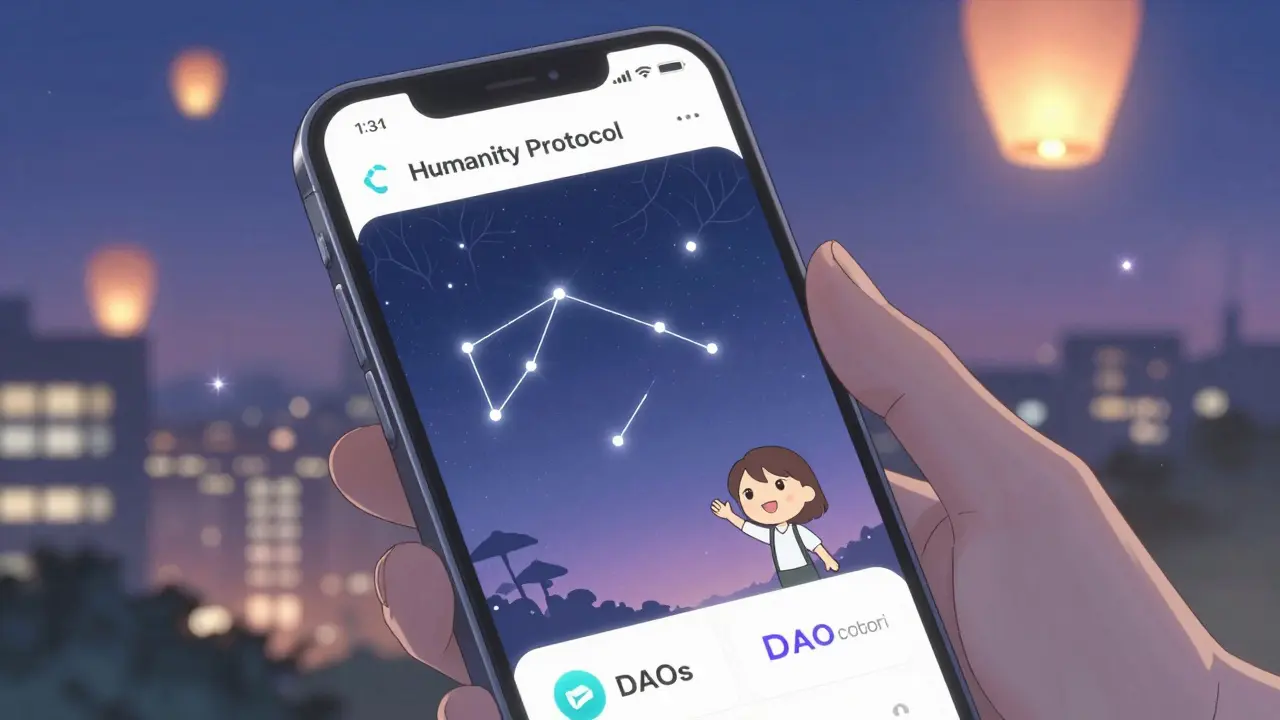
Is It Worth It?
If you care about privacy and believe digital identity should be human-centered-not data-harvesting-then Humanity Protocol is one of the most thoughtful systems out there. It’s not for everyone. If you just want to trade crypto or join a Discord server, you don’t need it. But if you’re building a DAO, running a payroll system, or tired of bots ruining online spaces, this is a real solution.
The token isn’t a get-rich-quick play. Its value comes from utility. The more people and businesses use it, the more $H becomes essential. The roadmap is solid: mobile verification, cross-chain support, and enterprise partnerships are all on track. If they hit their goal of 500+ business integrations by the end of 2024, the project could grow 12 to 15 times in adoption.
Right now, it’s in the early stage-like Ethereum was in 2015. You won’t find it on every exchange. You won’t see ads everywhere. But the tech is real, the team is active, and the problem it solves is fundamental. That’s what matters.
How to Get Started
Here’s how to join if you’re interested:
- Buy a compatible palm vein scanner (check the official site for approved models).
- Download the Humanity Protocol app and create a wallet (MetaMask or Ledger work).
- Scan your palm. The app will generate your zero-knowledge proof.
- Wait 15-30 minutes for verification. You’ll get a unique digital identity.
- Start using it in supported apps-DAOs, DeFi platforms, or payroll services.
You’ll need basic crypto knowledge: how to manage a wallet, pay gas fees, and understand ERC-20 tokens. If you’re new, start with a small amount of $H and test the system before committing more.
Is Humanity Protocol (H) a scam?
No, Humanity Protocol is not a scam. It’s an open-source project with public code on GitHub, real users, verified business integrations, and transparent on-chain data. The team has published technical whitepapers, audit reports, and roadmaps. While the token’s price can be volatile, the underlying technology is legitimate and backed by credible institutions like Deloitte and Gartner.
Can I verify my identity without buying hardware?
Not yet. As of January 2026, you still need a compatible palm vein scanner to complete the initial verification. However, a mobile SDK is expected to launch in March 2024, which will allow verification using smartphone cameras. Until then, you can find verification centers in major cities in North America and Europe.
How do I earn $H tokens?
Verified users earn $H by participating in the network. You get rewards for completing verifications, using dApps that require identity, and running a zkProofer Node (if you qualify). Monthly earnings range from $2.17 to $8.65 based on activity. You can also buy $H on exchanges like KuCoin, Gate.io, and Uniswap.
Is Humanity Protocol GDPR compliant?
Yes. Because your palm vein data never touches the blockchain and is stored only on your device, Humanity Protocol meets GDPR standards. The system achieved ISO/IEC 27001 certification in December 2023, confirming its security and privacy controls meet international standards.
What happens if I lose my scanner?
You don’t lose your identity. Your verified status is stored on the blockchain. You just need to get a new scanner and re-authenticate using the same biometric data. The system recognizes your unique palm vein pattern again and reactivates your DID. Your $H balance and access rights remain unchanged.
Can I use Humanity Protocol outside the U.S. and Europe?
Yes, but it’s harder. The protocol works anywhere, but physical palm scanners are currently scarce in Asia, Africa, and Latin America. The team is working on mobile solutions to fix this. Until then, you might need to travel to a verification center or wait for the smartphone app launch in March 2024.
How secure is my biometric data?
Extremely secure. Your palm vein image is never uploaded, stored, or transmitted. The scanner converts it into a one-way cryptographic hash that can’t be reversed. Even if someone hacked the system, they couldn’t recreate your biometric data. The protocol’s design ensures privacy by default-no exceptions.
Final Thoughts
Humanity Protocol isn’t trying to replace Bitcoin or Ethereum. It’s trying to fix a quiet crisis in Web3: the erosion of trust. If everyone’s a bot, then nothing online means anything. This project doesn’t just add another coin-it adds a layer of human truth to the digital world. It’s not flashy. It doesn’t promise moonshots. But if you believe the future of crypto should be fair, private, and human, then Humanity Protocol is one of the few projects actually building that future.
17 Comments
Write a comment



Aaron Poole
January 27, 2026 AT 06:32Wish more projects cared about privacy like this.
Gurpreet Singh
January 28, 2026 AT 05:32mary irons
January 28, 2026 AT 06:05Wayne mutunga
January 29, 2026 AT 15:50Brandon Vaidyanathan
January 29, 2026 AT 17:23Gareth Fitzjohn
January 30, 2026 AT 05:16Dahlia Nurcahya
January 30, 2026 AT 23:30Also, the staking rewards are actually fair. Not like those 500% APY scams.
Dylan Morrison
January 31, 2026 AT 16:25William Hanson
February 2, 2026 AT 10:26Lori Quarles
February 2, 2026 AT 13:53Jeremy Dayde
February 3, 2026 AT 13:16Steven Dilla
February 3, 2026 AT 20:27josh gander
February 4, 2026 AT 21:37Akhil Mathew
February 5, 2026 AT 04:04Tom Sheppard
February 6, 2026 AT 11:51Richard Kemp
February 7, 2026 AT 01:13Gavin Francis
February 8, 2026 AT 22:40