What is Enjin Coin (ENJ)? A Guide to Gaming and NFT Blockchain
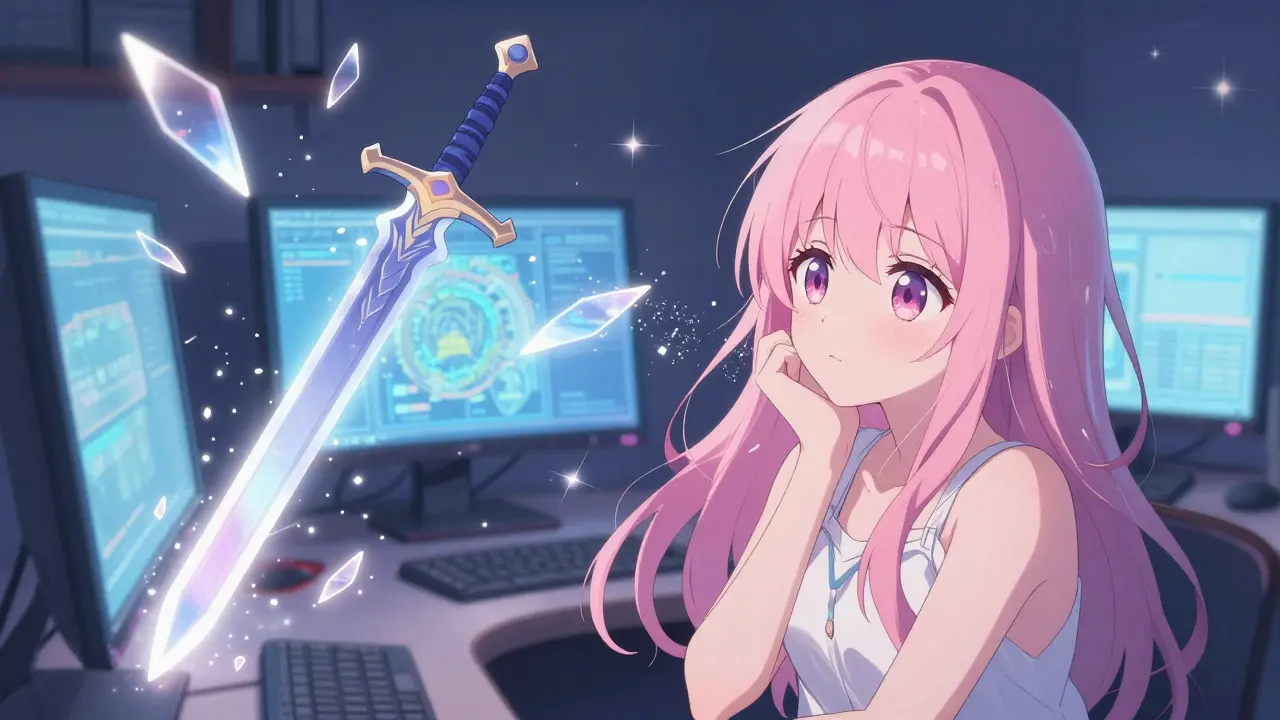
Imagine spending hundreds of hours grinding for a legendary sword in a video game, only for the developers to shut down the servers or change the game rules, leaving your prized possession worthless. For decades, this was the reality of gaming: you didn't actually own your digital items; you just rented them from the developer. Enjin Coin is a utility token designed to flip this script by giving gamers true ownership of their digital assets through blockchain technology. Known by its ticker ENJ, this asset powers an entire ecosystem where in-game items become real-world assets that you can trade, sell, or even move between different games.
| Attribute | Value/Detail |
|---|---|
| Launch Date | June 2018 (Ethereum mainnet) |
| Current Network | Enjin Blockchain (since Sept 2023) |
| Consensus Mechanism | Nominated Proof-of-Stake (NPoS) |
| Primary Use Case | NFT Minting & Gaming Governance |
| Compatibility | ERC-20 (Ethereum) and Native Enjin Chain |
How Enjin Coin Actually Works
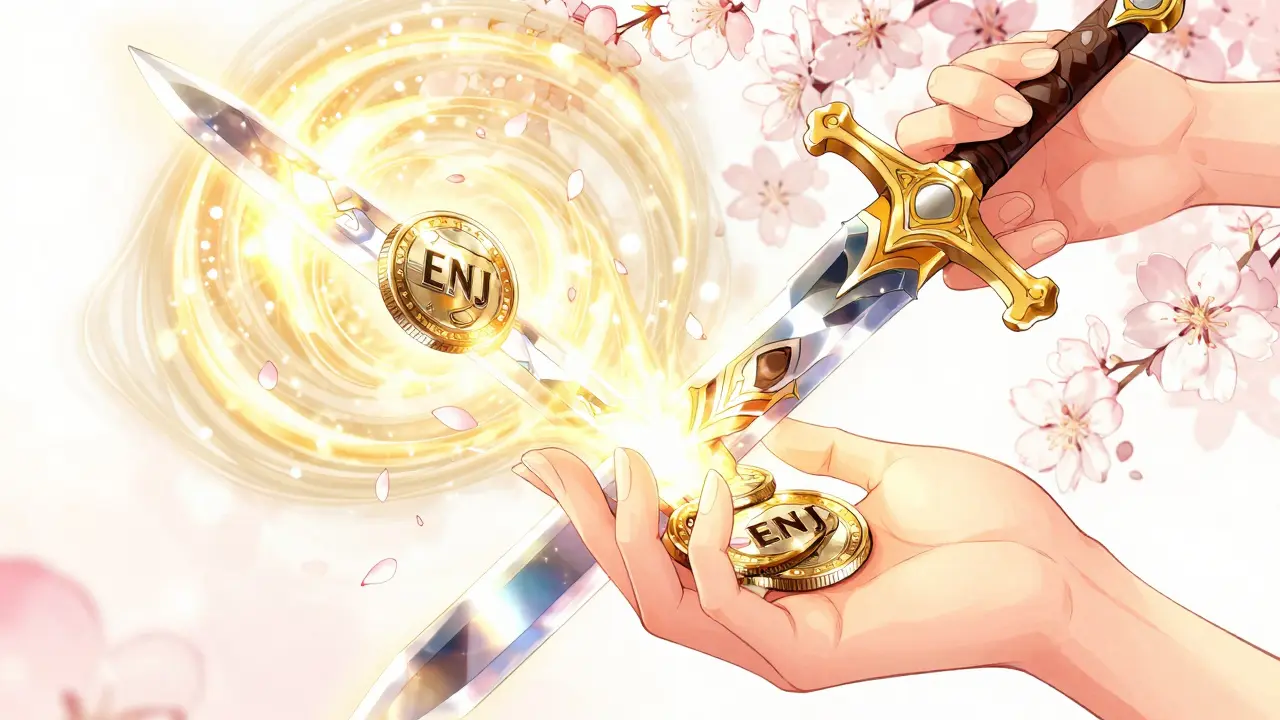
To understand Enjin Coin, you have to look past the price charts and look at the "minting" process. Unlike most cryptocurrencies that you just hold in a wallet to hope for a price increase, ENJ is used as a raw material. When a developer wants to create a digital item-like a skin, a weapon, or a piece of virtual land-they use ENJ to "mint" it into an NFT.
Here is the clever part: the ENJ tokens aren't just spent; they are often embedded directly into the NFT itself. This creates a "backed" asset. If you own an ENJ-backed sword, that sword has a floor value because it contains a specific amount of ENJ. If the game loses popularity or you simply get bored of the item, you can "melt" the NFT. Melting is the process of burning the digital item to recover the underlying ENJ tokens, ensuring you never walk away with zero value.
While it started as an ERC-20 token a technical standard used for all tokens on the Ethereum blockchain ], the project evolved. In September 2023, it migrated to the Enjin Blockchain a custom-built Substrate-based blockchain optimized specifically for NFT transactions ]. This move was necessary because Ethereum's high gas fees and congestion made it nearly impossible for gamers to trade small items without paying more in fees than the item was worth.
The Ecosystem: More Than Just a Token
A token is useless without a place to use it. Enjin has built a full suite of tools to make blockchain integration seamless for people who aren't programmers. Instead of forcing a game developer to write complex smart contracts from scratch, Enjin provides SDKs (Software Development Kits) that act like a bridge between the game engine and the blockchain.
- NFT.io: The native marketplace where players can discover and trade their ENJ-powered items without needing to navigate clunky external exchanges.
- Enjin Wallet: A specialized digital vault that manages not only your ENJ and other cryptos but also displays your digital items as a gallery.
- Efinity: A parachain within the Polkadot ecosystem designed to boost transaction speeds and interoperability for NFTs.
By bundling these tools, Enjin solves the "onboarding problem." Most gamers don't want to deal with seed phrases and hexadecimal addresses; they just want to play. These tools hide the complexity, making the blockchain act as a silent backend for ownership.
Governance and Staking: Who Controls the Network?
Since moving to its own chain, ENJ has taken on a role in network security. The system uses a Nominated Proof-of-Stake (NPoS) a consensus mechanism where token holders nominate validators to secure the network in exchange for rewards ].
If you hold ENJ, you aren't just a speculator; you're a stakeholder. You can stake your coins to help validate transactions. This doesn't just earn you governance rewards; it gives you a vote in how the ecosystem evolves. Whether it's changing fee structures or adding new features, the community of ENJ holders decides the direction. This prevents a single corporate entity from controlling the virtual economy, mirroring the decentralized ethos of the broader crypto world.

The Dream of Cross-Game Interoperability
The most ambitious goal of the Enjin project is interoperability. Currently, if you buy a skin in Fortnite, it stays in Fortnite. If you buy a sword in World of Warcraft, it stays there. Enjin wants to change that. Because the assets are stored on an independent blockchain rather than a private company server, other games can recognize and interact with those assets.
Imagine earning a "Warrior's Badge" in a fantasy RPG and then importing that badge into a different strategy game, where it grants you a special title or a small stat boost. While this requires game developers to agree on standards, the technical foundation is already there. The blockchain serves as a universal ledger of ownership that exists outside the walls of any single game studio.
Risks and Realities
It's not all sunshine and legendary loot. The biggest hurdle for ENJ is adoption. For this vision to work, major game studios (the ones with the millions of players) need to integrate the Enjin SDK. Most big studios are still hesitant to give up control of their internal economies because they make a lot of money selling items they fully control.
Additionally, the volatility of the crypto market can affect the perceived value of "backed" NFTs. If the price of ENJ swings wildly, the base value of the items minted with it also fluctuates, which can be jarring for players who just want a stable in-game economy. However, the ability to melt assets back into the native token provides a safety net that most other NFT projects completely lack.
Can I really get my money back from an Enjin NFT?
Yes, if the NFT is "ENJ-backed." This means the developer locked a specific amount of Enjin Coin into the asset during creation. You can "melt" the NFT, which destroys the item and releases the embedded ENJ back to your wallet. Note that not all NFTs on the platform are backed; some are just standard digital collectibles without a reserve value.
What is the difference between ENJ and Ethereum?
Ethereum is a general-purpose blockchain that can do almost anything. ENJ started as a token on Ethereum, but it now has its own specialized blockchain. While Ethereum is like a giant city where everything happens, Enjin Blockchain is like a dedicated gaming district-optimized specifically for the high-speed, high-volume needs of NFT trading and game asset management.
Is Enjin Coin safe for long-term holding?
Like all cryptocurrencies, ENJ carries risk. Its value is tied heavily to the adoption of blockchain gaming. If more games use the Enjin SDK, demand for the token likely increases. However, you should be aware of market volatility and the competitive landscape of other gaming chains like ImmutableX or Solana.
How do I start using Enjin Coin?
The easiest way is to download the Enjin Wallet. From there, you can buy ENJ through an exchange or use the wallet's built-in features to explore the NFT.io marketplace. Once you have some tokens, you can look for games that support Enjin assets or try staking your coins to earn rewards.
What happens if a game using Enjin shuts down?
In a traditional game, your items disappear. With Enjin, the NFT remains in your wallet because it exists on the blockchain, not the game server. If the item was ENJ-backed, you can still melt it to recover the tokens, meaning you don't lose everything just because a studio went out of business.
16 Comments
Write a comment
Robert Preston
April 19, 2026 AT 00:29The melting mechanism is actually a huge game changer for risk management in digital assets.
Most people don't realize how many NFTs are basically just glorified JPEGs with zero intrinsic value, so having a floor price backed by the native token provides a necessary safety net for early adopters.
Joshua Salwen
April 19, 2026 AT 12:11Ugh, typical!! Everyone always forgets that the gas fees on Ethereum were literally a nightmare before the migration!! Like, why would anyone pay 50 bucks to trade a 5 dollar skin?? It was totaly insane and honestly just a joke at this point!!
Nishant Goyal
April 20, 2026 AT 07:20Solid overview. Very helpful.
Ian Chait
April 22, 2026 AT 04:54Typical globallist push for digital IDs and controll. They want us in a "gaming district" so they can track every single move we make with this NPoS nonsense. It's just another layer of the surveillance state wrapped in fancy jargon to trick the masses into thinking they own something while the central banks just laugh at us from their bunkers. Totaly a scam to move us away from real hard assets and into a virtual cage where they can just flip a switch and delete your life savings whenever you step out of line with the narrative. Wake up people before the blockchain becomes your digital leash and you're just another node in their twisted social credit experiment.
Sandeep Bhoir
April 22, 2026 AT 09:04Oh yeah, because we all know how much big studios love the idea of losing their monopoly on skins and loot boxes. Totally expecting EA and Activision to jump on this any second now.
Abhinav Chaubey
April 23, 2026 AT 22:15The technical infrastructure provided by the Enjin SDK is far superior to the clunky implementations we see in most Western-led projects. It is a matter of fact that this approach to interoperability is the only logical path forward for the industry if it wants to survive beyond the current hype cycle.
Mark Pfeifer
April 25, 2026 AT 18:29The concept of cross-game assets is fascinating. It would be interesting to see how a combat-focused item from one game translates its stats into a completely different genre without breaking the balance of the second game.
Alex Long
April 27, 2026 AT 01:19whatever. just another coin that'll go to zero.
siddharth narula
April 27, 2026 AT 08:06One must ponder the ethical implications of attaching monetary value to the very act of play. By transforming a leisure activity into a speculative marketplace, we risk eroding the purity of the gaming experience in favor of raw avarice. 🧐
Chintu Parikh
April 27, 2026 AT 21:36I absolutely agree with the points made regarding the onboarding problem! It is truly commendable that the project focuses on hiding the complexity for the end user, as this is the only way to achieve mainstream adoption in the gaming community.
Gaurav Undirwade
April 28, 2026 AT 07:07It is profoundly disappointing that the masses are so easily swayed by the allure of "ownership" when they fail to recognize the moral vacuum of such digital pursuits. You pursue virtual swords while your real-world character remains undeveloped and spiritually bankrupt.
Keri Pommerenk
April 29, 2026 AT 16:51really love how this simplifies the whole process for people who just want to game without the tech headache
Yuhan Mo
May 1, 2026 AT 16:45The shift to a Substrate-based chain is a smart move for optimizing throughput. Using a dedicated parachain like Efinity helps mitigate the latency issues that usually plague general-purpose L1s when handling high-frequency NFT minting events.
Adam Mann
May 1, 2026 AT 18:32This is such a wonderful step forward for everyone involved in the creative arts and gaming! Imagine the possibilities for independent artists who can finally get a fair cut of the secondary market sales without some giant corporation taking 50% of the profit just for hosting the item on their server. It opens up a world of inclusivity where a kid in a small village could potentially create a digital asset that becomes a global hit and actually build a life from that success, which is just so inspiring to think about when you consider the current state of the industry.
Andrew Southgate
May 3, 2026 AT 04:36For those wondering about the long-term outlook, you really have to look at the utility of the SDK. If the development tools are easy enough for a small indie team to plug into Unity or Unreal Engine, the organic growth will happen regardless of what the AAA studios do, because the indie scene is where the most innovation in blockchain gaming is actually happening right now and they are much more open to decentralization than the big guys who are scared of losing their grip on the economy.
Evan Iacoboni
May 4, 2026 AT 08:48Wait, if the tokens are embedded in the NFT, does the melting process happen instantly or is there a cooldown period to prevent market manipulation?