Tokenize Xchange Crypto Exchange Review: What Went Wrong and Why It Collapsed
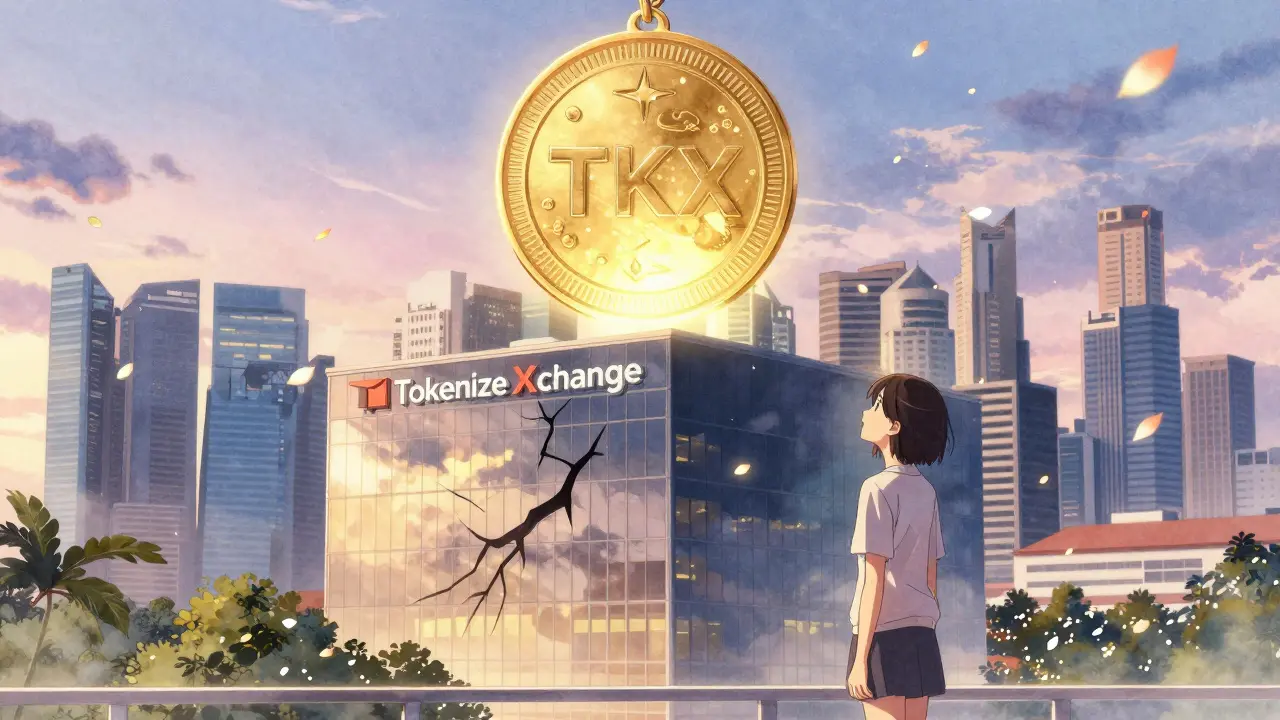
Tokenize Xchange wasn’t just another crypto exchange. For years, it marketed itself as a safe, regulated, and user-friendly platform built for Southeast Asia. It promised fiat on-ramps in SGD, USD, and MYR, staking rewards, and a loyalty program called Solitaire. Its native token, TKX, was everywhere - used for fees, governance, and even in-game rewards. It had partnerships with big names like Animoca Brands and claimed to be backed by BitGo insurance. But by July 17, 2025, it was gone. All trading. All withdrawals. All access. And over S$266.3 million in user funds vanished with it.
How Tokenize Xchange Sold Itself as Safe
Before it collapsed, Tokenize Xchange looked like a model crypto exchange. It was headquartered in Singapore, operated under a MAS exemption, and had applied for a full digital payment token license. That alone gave it credibility. Unlike many offshore exchanges, it claimed to follow strict financial controls. Its interface was clean, easy to navigate, and designed for beginners. You could set up dollar-cost averaging (DCA), use Tokenize Express for fast trades, and earn interest on over 126 cryptocurrencies.Its biggest selling point? The TKX token. Holders got fee discounts, exclusive campaigns, and higher rewards through the Solitaire program. The exchange even launched a $100 million Titan Lab Grant to lure developers to build on its Titan Chain - an EVM-compatible blockchain with low fees. It wasn’t just a trading platform. It was a whole ecosystem. And that ecosystem depended entirely on TKX staying valuable.
The TKX Token: A House of Cards
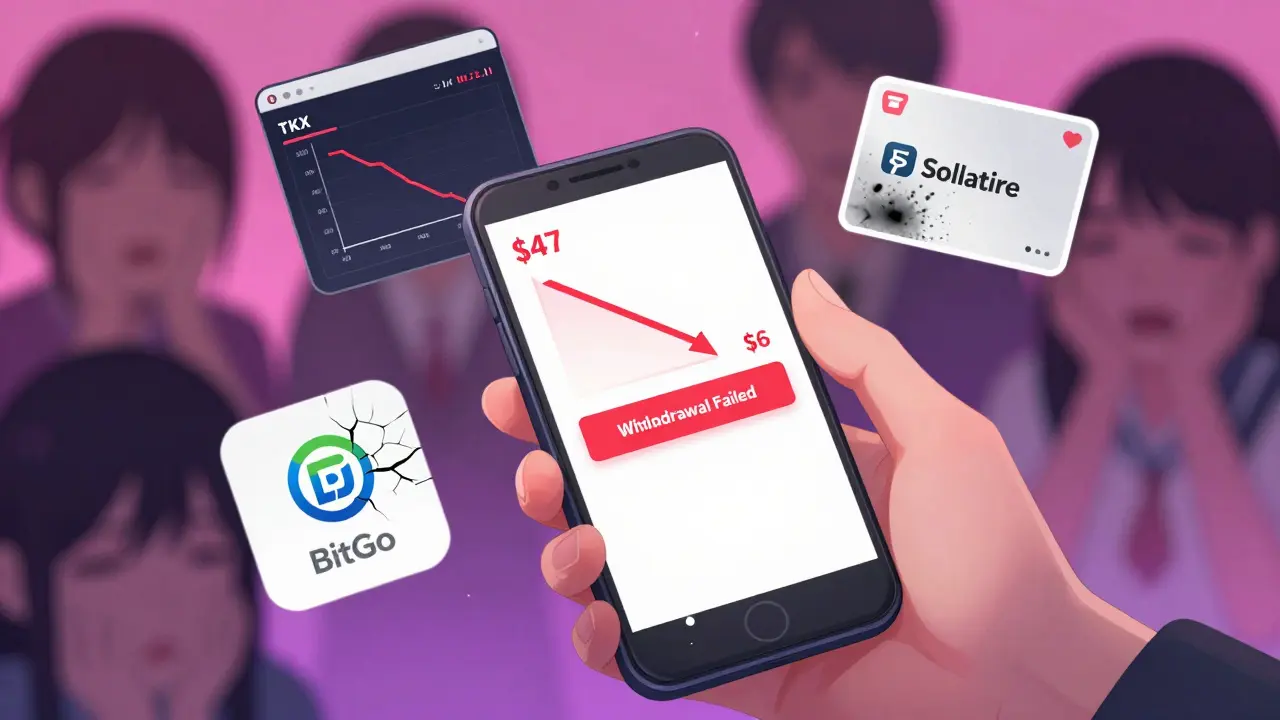
TKX wasn’t just a utility token. It was the engine of Tokenize Xchange. Every feature, every reward, every discount tied back to it. When TKX hit its peak of $47.97 on January 4, 2025, everything looked perfect. Trading volume was high. New users signed up daily. The Solitaire program grew. But behind the scenes, the foundation was cracking.By June 30, 2025, TKX had already dropped to $24.85 - nearly half its peak. That’s a red flag. In crypto, when a platform’s native token crashes like that, it usually means one thing: the company is running out of money. Tokenize didn’t warn users. It didn’t explain. It kept pushing the same marketing: “Earn more with TKX.”
Then, in mid-July, the plunge got worse. TKX crashed from $24.85 to $6 in less than two weeks. That’s an 87.5% drop from its peak. At this point, anyone paying attention should have been pulling their money out. And some did. One user, Mr. Tan, tried to withdraw funds on July 17 after noticing the crash. He managed to get out $500. Then, the platform shut down.
The Shutdown: No Warning, No Mercy
On July 17, 2025, at 9:00 PM Singapore time, users got an email. “We are winding down operations.” That’s it. No explanation. No timeline. No next steps. By the time the email landed, trading and withdrawals were already disabled. Your money? Trapped.Over 2,200 users lost funds. The total? S$266.3 million. That’s not a typo. That’s nearly $200 million in real money. People had staked their life savings. Some had taken out loans to buy TKX. Others had invested their bonuses. Now, they had nothing. No access. No answers. No refunds.
The Monetary Authority of Singapore (MAS) launched an investigation. Police opened a case. Interim judicial managers were appointed to track assets. But here’s the brutal truth: most of the money is gone. The exchange’s balance sheet didn’t match its user deposits. The TKX token’s collapse wasn’t just a price drop - it was a sign that the company had been using customer funds to prop up its own token, a classic Ponzi-style move.
What Made Tokenize Xchange Different (and More Dangerous)
Most crypto scams are obvious. They promise 100% returns. They use fake influencers. They vanish overnight. Tokenize Xchange was different. It looked legitimate. It had offices in Singapore. It had compliance claims. It had partnerships. It had insurance. It even had a social feed, Tokenize Y, where users chatted like it was a real community.That’s what made it dangerous. People trusted it because it looked like it should be trusted. It wasn’t a shady offshore site. It was a platform that claimed to be regulated. And in a market where trust is everything, that trust was weaponized.
Its infrastructure was real - Titan Chain, BitGo insurance, DCA tools - but none of it mattered when the core business model was broken. The exchange wasn’t making money from trading fees. It was making money from TKX hype. And when the hype died, so did the company.
Lessons from the Collapse
Tokenize Xchange didn’t fail because of a hack. It failed because it was built on a lie. It pretended to be a regulated exchange while operating like a high-risk casino. Its entire value depended on keeping TKX’s price up - not through real revenue, but through user deposits.Here’s what you need to remember:
- Never trust a crypto exchange that relies on its own token to stay alive. If the token crashes, so does your money.
- Regulation doesn’t mean safety. Tokenize had MAS exemptions - not full licensing. That’s a gray zone. Always check if an exchange has a licensed status, not just an application.
- Watch the token price. If a platform’s native token drops 50% in a few months, run. Don’t wait for 80%.
- Withdraw before you stake. If you’re using a platform for staking or earning, keep a portion of your funds outside it. Don’t lock everything in.
The collapse of Tokenize Xchange isn’t just a story about a failed exchange. It’s a warning. In crypto, even the most polished, professional-looking platforms can be fronts. The tools, the branding, the compliance claims - they’re all smoke and mirrors if the underlying economics don’t add up.
What Happened After the Collapse?
As of October 2025, Tokenize Xchange remains defunct. The interim judicial managers are still trying to recover assets. They’ve found some cryptocurrency wallets, a few server logs, and partial transaction records. But the bulk of the S$266.3 million is untraceable. Some funds may have been moved offshore. Others may have been spent on salaries, marketing, or token buybacks.Users have formed online groups to share information and pressure regulators. Some have filed lawsuits. But recovery is slim. The legal process in Singapore is slow. And without a clear paper trail, most users won’t get back more than a fraction - if anything at all.
Meanwhile, the TKX token trades on decentralized exchanges for pennies. It’s a ghost. A symbol of what happens when trust is exploited.
Where Do You Go Now?
If you’re looking for a reliable crypto exchange in Southeast Asia, don’t look for the flashy ones. Look for the ones with:- Full MAS licensing (not just an application)
- Transparent ownership and audits
- No reliance on a single token for revenue
- Proven track record of withdrawals during market stress
Platforms like Bybit, Binance, and Kraken - while not perfect - have shown they can survive market crashes without vanishing. They don’t need you to believe in their token. They make money from trading.
Tokenize Xchange didn’t make money from trading. It made money from hope. And hope doesn’t pay bills - or return your crypto.
Was Tokenize Xchange regulated?
Tokenize Xchange operated under a MAS exemption, not a full license. It had applied for a digital token payment license but had not received it before collapsing. This meant it was in a legal gray area - not fully regulated, but not illegal either. That ambiguity gave users false confidence.
Can I get my money back from Tokenize Xchange?
As of late 2025, recovery is extremely unlikely. Interim judicial managers are working to trace assets, but over 90% of the S$266.3 million in claims remains unaccounted for. Most users are expected to recover only a small fraction, if anything. The platform’s collapse was caused by financial mismanagement, not a hack, making asset recovery nearly impossible.
Why did the TKX token crash so hard?
TKX crashed because Tokenize Xchange was using customer deposits to prop up its token price. When new deposits slowed down and existing users started withdrawing, the system collapsed. The token had no real utility beyond the exchange’s own ecosystem. Once trust vanished, demand evaporated - and the price followed.
Did Tokenize Xchange get hacked?
No, it wasn’t hacked. The collapse was internal. The exchange’s leadership likely misused funds, failed to maintain adequate reserves, and prioritized token price manipulation over user safety. The shutdown was a controlled exit, not a breach.
Are there any safer alternatives to Tokenize Xchange?
Yes. Exchanges like Binance, Kraken, and Bybit are fully licensed in multiple jurisdictions and have proven resilience during market downturns. They don’t rely on their own tokens to survive. Look for platforms with transparent audits, real revenue from trading fees, and a history of allowing withdrawals even when markets crash.
19 Comments
Write a comment




Carol Lueneburg
March 20, 2026 AT 09:41Brenda White
March 21, 2026 AT 08:43Tobias Wriedt
March 22, 2026 AT 11:11sai nikhil
March 22, 2026 AT 18:50Sahithi Reddy
March 23, 2026 AT 14:57George Hutchings
March 25, 2026 AT 08:42Henrique Lyma
March 26, 2026 AT 01:55Steph Andrews
March 27, 2026 AT 10:06Prakash Patel
March 29, 2026 AT 09:06Zachary N
March 31, 2026 AT 07:10Elizabeth Kurtz
April 1, 2026 AT 19:23john peter
April 2, 2026 AT 13:16Marc Morgan
April 3, 2026 AT 06:29Anastasia Thyroff
April 4, 2026 AT 05:37Kira Dreamland
April 4, 2026 AT 21:57Shreya Baid
April 5, 2026 AT 07:39Christopher Hoar
April 6, 2026 AT 11:42Billy Karna
April 7, 2026 AT 16:14Cheri Farnsworth
April 9, 2026 AT 11:04