OKX Crypto Access Limitations by Country: Who Can and Cannot Trade in 2026

You open the OKX app, ready to trade Bitcoin or Ethereum, but instead of a dashboard, you see a cold, hard message: "Service unavailable in your region." It’s frustrating. You might be sitting in a perfectly normal city with stable internet, yet the platform blocks you because of where your IP address says you are. This isn’t a glitch; it’s a deliberate compliance strategy.
As of mid-2026, OKX is one of the world's largest cryptocurrency exchanges, processing billions in daily volume while navigating a complex web of international laws. The exchange serves users in roughly 160 countries, but that number comes with heavy caveats. Some nations are completely off-limits. Others allow spot trading but ban derivatives like futures. And then there are the gray areas where local entities operate under different rules than the global platform. Understanding these layers is crucial if you want to use the platform without losing your funds or getting your account banned.
The Three Tiers of OKX Restrictions
Not all bans are created equal. OKX structures its geographic limitations into three distinct tiers based on regulatory pressure and legal risk. Knowing which tier your country falls into determines whether you can create an account at all, or if you’re just missing out on specific features.
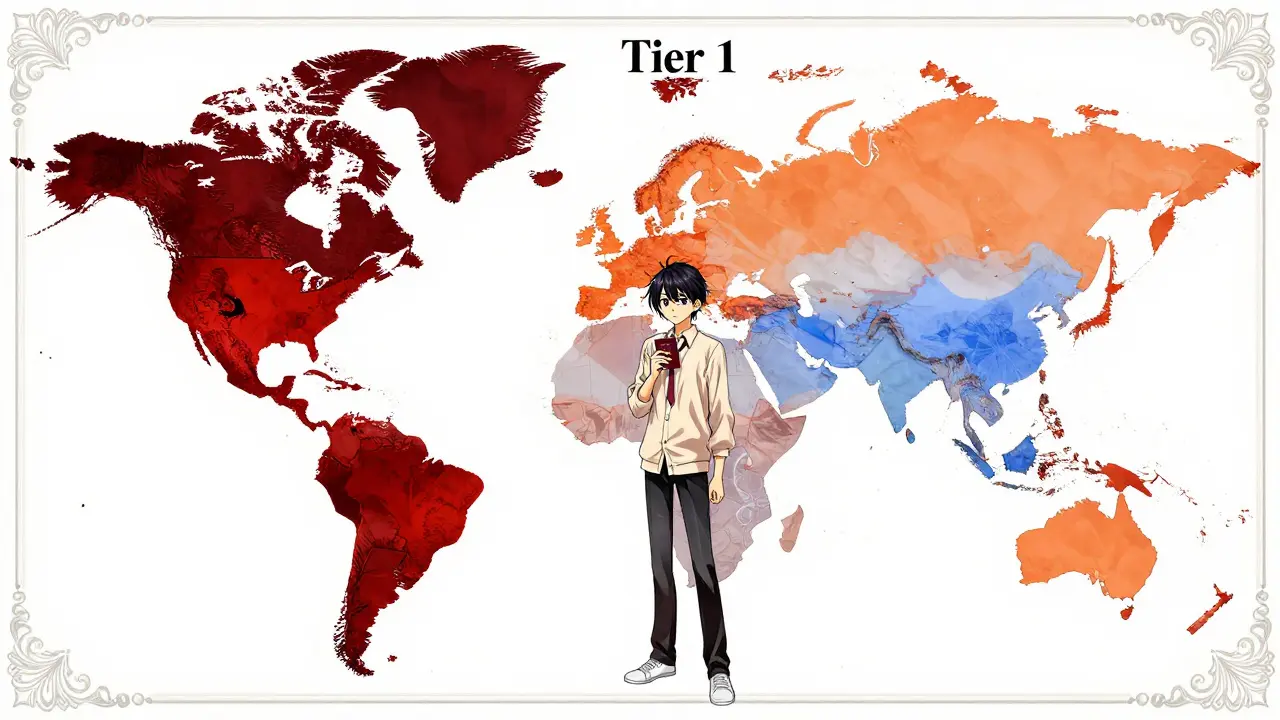
Tier 1: Complete Service Bans
In these jurisdictions, OKX does not offer any services. You cannot register, deposit, or trade. If you try to sign up from an IP address in these regions, the system will reject you immediately. The list includes major economies and sanctioned territories:
- United States: Due to strict SEC enforcement and the Bank Securlity Act, US residents are fully blocked.
- Canada: Recent regulatory shifts have led to a total ban for Canadian IPs.
- United Kingdom: While spot trading was previously available, recent updates have tightened restrictions significantly, often blocking new registrations entirely depending on the specific entity used.
- Singapore: A confusing case. The global OKX platform blocks Singaporean IPs. However, a separate, locally regulated entity exists (see below).
- Malaysia, Bahamas, Cuba, Iran, North Korea, Syria: These countries face complete bans due to sanctions or local financial laws.
- Crimea, Donetsk, Luhansk: Sanctioned regions are strictly prohibited.
Tier 2: Partial Feature Limits
In some countries, you can create an account and buy/sell crypto (spot trading), but you cannot engage in leveraged trading or derivatives. This tier often includes:
- Australia: Spot trading is allowed, but futures and perpetual contracts are banned to comply with local consumer protection laws.
- Brazil: Similar to Australia, derivatives are restricted while spot markets remain open.
- South Korea: Users can trade spot assets, but high-leverage products are disabled.
- European Union: Under the MiCA regulations (fully effective since late 2024), most EU residents lose access to derivatives, though spot trading remains functional via OKX Europe.
Tier 3: Enhanced Verification & Monitoring
In other regions, access is granted but with stricter Know Your Customer (KYC) hurdles. Countries like India and Nigeria may allow full access, but users often face longer verification times and lower initial transaction limits until their identity is thoroughly vetted against local tax databases.
| Region/Country | Access Level | Key Restrictions | Entity Used |
|---|---|---|---|
| United States | Banned | No registration, no trading | N/A |
| Canada | Banned | No registration, no trading | N/A |
| United Kingdom | Limited/Banned* | New accounts often blocked; existing users may retain spot only | OKX Global / Local Entity |
| Singapore | Limited | Global site blocked; must use MAS-regulated OKX Singapore | OKX Singapore |
| Australia | Partial | Spot trading OK; Derivatives/Futures banned | OKX Global |
| European Union | Partial | Spot trading OK; Derivatives banned per MiCA | OKX Europe |
| Japan | Partial | Restricted derivatives; enhanced monitoring | OKX Japan |
The Confusion of Separate Entities
One of the biggest headaches for users is that OKX isn’t just one company. It operates multiple legal entities to satisfy local regulators. This means your experience depends heavily on which version of the site you land on.
OKX Europe is regulated under EU frameworks. If you live in Germany or France, you are likely routed here. You get SEPA bank transfers and fiat on-ramps, but you won’t find the same derivative products available to users in Asia.
OKX Singapore is a separate beast. While the main OKX website blocks Singaporean IPs, the Monetary Authority of Singapore (MAS) has approved a local subsidiary. Residents who meet specific residency criteria can use this local entity. However, the product lineup is narrower, focusing on compliant spot trading and custody solutions rather than the high-frequency trading tools found on the global platform.
OKX Japan operates under the Financial Services Agency (FSA). After warnings issued in August 2025, OKX Japan tightened its offerings further, ensuring strict separation of customer assets and limiting promotional incentives that were deemed too aggressive by Japanese standards.
This fragmentation creates a "compliance gap" for travelers. If you verify your account in London (if allowed) and then travel to New York, your account may freeze instantly when your IP changes. The system detects the jurisdiction shift and locks features to avoid violating US law.
How OKX Enforces These Rules
You might think you can bypass these restrictions using a Virtual Private Network (VPN). Many users try this, but it’s a dangerous game. OKX employs a multi-layered detection system that goes far beyond simple IP checking.
- IP Geolocation: The first line of defense. OKX uses data providers with over 99% accuracy to determine your physical location. If your IP matches a banned country, the request is dropped before you even see the login screen.
- Device Fingerprinting: Even if you change your IP, your device leaves a digital trail. Browser cookies, hardware IDs, and operating system details are analyzed. If the system sees a known device previously associated with a banned region, it flags the account.
- KYC Document Analysis: When you upload your passport or driver’s license, AI tools scan the document for issuing authority. A Texas driver’s license uploaded from a UK IP address triggers an immediate manual review and likely rejection.
- Behavioral Analytics: Unusual trading patterns combined with inconsistent location data raise red flags. For example, logging in from Lagos, Nigeria, and then five minutes later from Toronto, Canada, is impossible for a single user and indicates VPN usage.
The consequences for trying to cheat the system are severe. In Q3 2025 alone, OKX reported closing over 14,000 accounts for "geolocation fraud." These closures aren’t just warnings; they result in the permanent freezing of funds until the user proves legitimate residency in a permitted country-a process that often takes months and involves submitting utility bills and tax records.
Real-World User Experiences
Data from community forums and review sites paints a clear picture of how these policies affect everyday traders.
On Reddit’s r/OKX, a common thread from July 2025 showed a user from Texas attempting to verify with a US passport. Despite having a valid ID, the system rejected the application with a generic "country restriction" error. This highlights that the block happens at the identity verification stage, not just the IP stage.
Conversely, users in permitted European zones report smoother experiences. A verified review on CryptoSlate from September 2025 noted that using OKX Europe in Germany allowed for seamless SEPA deposits and fast withdrawals, provided the user completed Level 2 KYC. However, the same user complained about the inability to trade leveraged positions, a feature they missed from previous platforms.
Trustpilot data reveals a split sentiment. Reviews mentioning "country restrictions" average a low 2.1/5 rating. Common complaints include "false positives," where users in allowed countries (like certain African nations) get incorrectly flagged as being in banned regions due to shared IP ranges with neighboring restricted states. Another frequent issue is inconsistent enforcement across mobile apps versus desktop browsers, causing confusion about what features are actually available.
What’s Changing in 2026?
The regulatory landscape is shifting rapidly. Here’s what you need to watch for as we move through 2026.
US Market Entry Attempts: Rumors persist that OKX is exploring a US-compliant entity. Discussions with regulators have been ongoing since late 2025. However, given the SEC’s aggressive stance on non-US exchanges (seen in the Binance lawsuit), experts predict this will take years, if it happens at all. Do not expect US access anytime soon.
Expansion in Asia: OKX has been actively seeking licenses in Thailand and Vietnam. By late 2025, they expanded derivatives access to these markets after securing provisional approvals. This suggests a trend of "carve-out" strategies, where OKX negotiates specific permissions in emerging markets rather than facing blanket bans.
Stricter EU Enforcement: With MiCA fully in effect, expect more uniform restrictions across Europe. Any remaining loopholes for derivatives trading are likely to be closed by early 2027. If you rely on futures trading, you may need to look outside the EU or accept spot-only trading.
New Bans Emerging: Regulatory bodies in Bangladesh and Nepal issued directives in late 2025 that forced OKX to restrict services. Keep an eye on news from your local financial authority. If your government announces a ban on crypto exchanges, OKX will likely comply within weeks to protect its global license status.
Practical Steps for Users
If you’re unsure about your access, follow these steps to ensure compliance and protect your funds.
- Check the Official List: Before signing up, visit OKX’s official Risk & Compliance Disclosure page. Look for Section 3, which lists prohibited jurisdictions. This document is updated quarterly.
- Use Your Real Identity: Never use a VPN to mask your location. The risk of fund seizure is too high. If you are in a banned country, do not attempt to create an account.
- Complete Full KYC: Partial verification limits your withdrawal amounts. Submitting clear, color scans of your government ID and proof of address (utility bill less than 3 months old) speeds up the process.
- Monitor Local News: Regulations change overnight. Follow local financial news outlets for announcements regarding crypto exchange bans. If your country moves from Tier 2 to Tier 1, you may have a grace period to withdraw funds.
- Consider Alternatives: If OKX is banned in your region, research other exchanges that hold local licenses. For example, Canadians may find better support on platforms licensed by IIROC, while Australians might prefer CoinJar or Swyftx for local compliance.
Navigating crypto regulations is part of the job. OKX provides a powerful trading engine, but it comes with strict geographic boundaries. Respecting those boundaries ensures you keep control of your assets and avoid the headache of frozen accounts.
Can I use OKX in the United States?
No. OKX is completely banned in the United States. Residents cannot register, deposit, or trade on the platform. Attempting to bypass this restriction using a VPN or foreign IP address violates OKX's terms of service and can result in the permanent freezing of your funds.
Why is OKX banned in Canada?
OKX restricts access in Canada due to evolving regulatory requirements and compliance costs associated with Canadian financial laws. Unlike some competitors that maintain limited operations, OKX has chosen a complete ban to mitigate legal risk. Canadian users should look for locally licensed exchanges.
Is OKX legal in Singapore?
It is complicated. The global OKX platform blocks Singaporean IPs. However, a separate entity, OKX Singapore, is regulated by the Monetary Authority of Singapore (MAS). Eligible residents can use the local entity, but it offers a more limited range of products compared to the global site, focusing on spot trading and custody.
What happens if I use a VPN to access OKX?
Using a VPN to bypass geo-restrictions is prohibited. OKX uses advanced device fingerprinting and behavioral analysis to detect VPN usage. If detected, your account will likely be terminated, and your funds may be frozen pending a lengthy investigation. Over 14,000 accounts were closed for this reason in Q3 2025 alone.
Does OKX require KYC verification?
Yes. Since January 2023, OKX has required mandatory KYC (Know Your Customer) verification for all core features, including trading and deposits. Without completing identity verification, you cannot withdraw funds or execute trades. Verification levels determine your daily transaction limits.
Which countries have partial restrictions on OKX?
Countries like Australia, Brazil, South Korea, and most of the European Union have partial restrictions. In these regions, users can typically perform spot trading (buying and selling crypto directly) but are prohibited from trading derivatives such as futures and perpetual contracts due to local consumer protection regulations.