How Blockchain Bridges Work: A Guide to Cross-Chain Asset Transfers
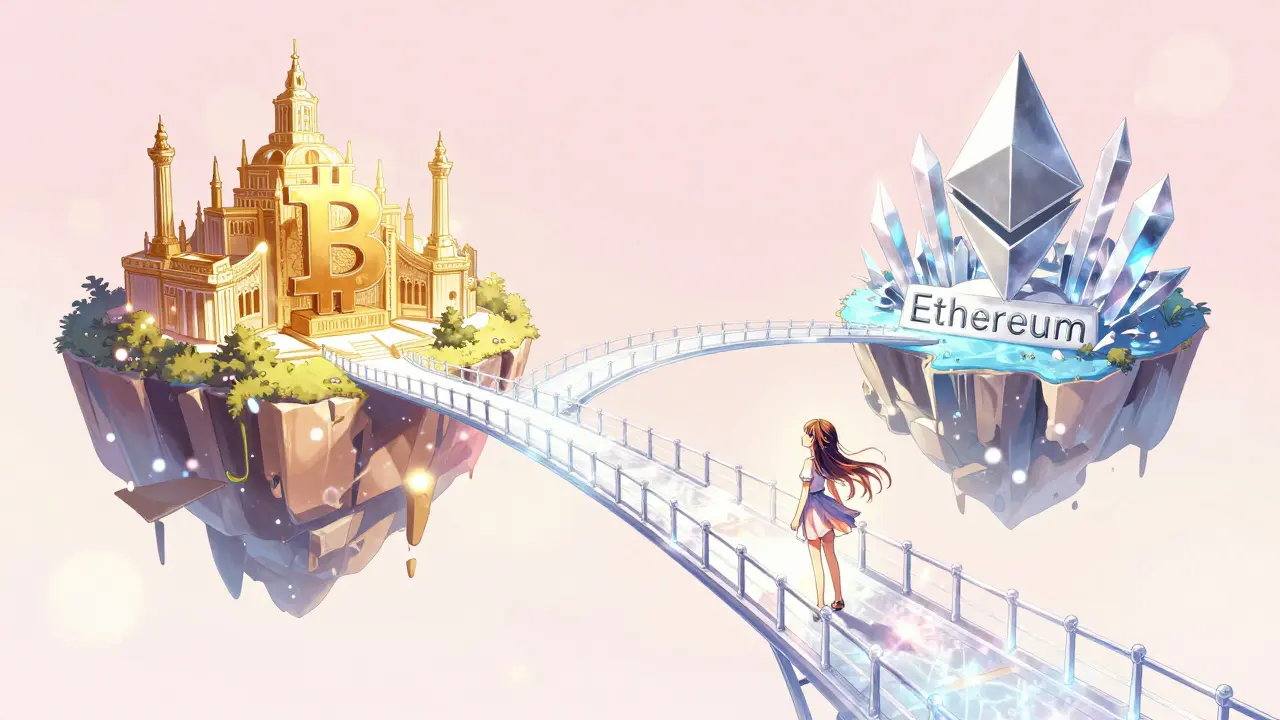
Key Takeaways
- Bridges don't actually "move" coins; they lock them on one chain and mint a representative version on another.
- Wrapped tokens allow you to use the value of one coin (like Bitcoin) within the ecosystem of another (like Ethereum).
- Interoperability lets users access better DeFi yields and lower fees without abandoning their favorite network.
- Security is the biggest risk, as the smart contracts holding the "locked" assets can be targets for hackers.
The Magic Behind the Curtain: How Assets Actually Move
If you've ever used a bridge, you might think your coins are physically traveling through a digital tunnel from Chain A to Chain B. In reality, nothing ever leaves the original blockchain. The process relies on a system of locking and minting.
When you start a transfer, you interact with a Smart Contract, which is basically a self-executing piece of code that acts as an escrow agent. You send your assets to this contract, and the bridge "locks" them. Once the bridge confirms the assets are secure, it tells the destination chain to create an equivalent amount of a new token.
This new token is what we call a Wrapped Token. For example, if you move 1 BTC to Ethereum, you don't get actual Bitcoin on Ethereum (because Ethereum can't process BTC). Instead, you get WBTC (Wrapped Bitcoin), which is an ERC-20 token that tracks the price of Bitcoin 1:1. You now have the value of your Bitcoin, but you can use it in Ethereum-based apps.
Two Main Ways to Bridge Your Assets
Not all bridges work the same way. Depending on whether they prioritize speed, security, or liquidity, they generally fall into two categories: the Wrapped Asset method and the Liquidity Pool method.
The Wrapped Asset method is the most common. Think of it as a "mint and burn" system. You lock the original asset $\rightarrow$ the bridge mints a wrapped version $\rightarrow$ when you want your original coin back, you "burn" (destroy) the wrapped token $\rightarrow$ the bridge unlocks your original asset. This keeps the total supply of tokens balanced across both networks.
The Liquidity Pool method works more like a currency exchange at an airport. Instead of minting new tokens, the bridge maintains a pool of existing assets on both chains. When you want to move from Ethereum to Solana, you deposit your ETH into the bridge's pool on Ethereum, and the bridge sends you pre-existing tokens from its pool on Solana. This is often faster because it doesn't require waiting for a minting process, but it depends on there being enough liquidity in the pool to satisfy the request.
| Feature | Wrapped Asset Method | Liquidity Pool Method |
|---|---|---|
| Mechanism | Lock and Mint | Exchange from Pool |
| Asset Type | Synthetic/Wrapped Tokens | Original Native Tokens |
| Speed | Moderate (Minting time) | Fast (Instant swap) |
| Main Risk | Smart Contract bugs | Liquidity shortages |
Verifying the Truth: The Role of Oracles and Validators
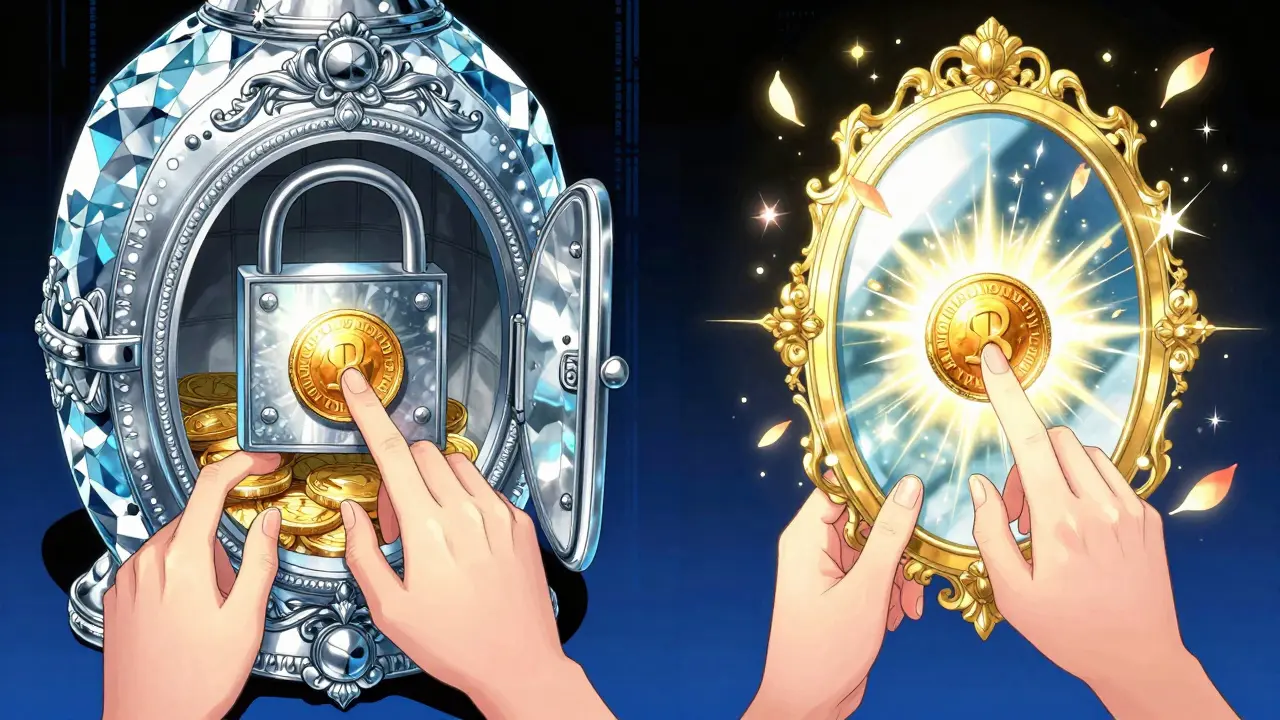
How does the destination chain know that you actually locked your coins on the source chain? It can't see the other blockchain's ledger. This is where Oracles and Validator Nodes come in.
Oracles act as data bridges, feeding real-world or cross-chain information into the smart contract. When you lock your funds, a group of validators monitors the source chain. They essentially vote and agree: "Yes, User X deposited 5 ETH." Once a consensus is reached, they sign a cryptographic proof. This proof is sent to the destination chain, which verifies the signature and triggers the release of the wrapped tokens.
This step is the most critical part of the security chain. If the validators are corrupted or the oracle provides false data, the bridge could mint tokens out of thin air without any collateral, leading to a collapse in the token's value.
Why Bother? The Real-World Perks of Interoperability
Bridging isn't just a technical trick; it solves real problems for people trying to make money in DeFi (Decentralized Finance). One of the biggest draws is the ability to chase higher yields. You might hold your main wealth in a secure network like Bitcoin, but you want to lend that value out on a platform like Aave to earn interest. Without a bridge, your BTC just sits there. With a bridge, it becomes WBTC and starts earning you a percentage every day.
It also helps with "gas wars." We've all seen Ethereum transaction fees skyrocket during a popular NFT drop. By bridging your assets to a Layer 2 or a different chain like Solana, you can continue trading and interacting with apps for a fraction of a cent, then bridge back to the main net when things calm down.
For developers, this is a game-changer. Instead of building an app for just one blockchain, they can create multi-chain dApps. A gaming platform could host its high-value assets on a secure chain while handling the fast-paced in-game microtransactions on a high-speed chain, bridging the two for a seamless player experience.

Step-by-Step: How to Bridge Your First Asset
If you're ready to try it, the process is generally straightforward, but you need to be careful with the details. Here is the standard workflow:
- Choose your bridge: Research which protocol supports your specific coin and target network. Check for audit reports to ensure the contract is safe.
- Connect your wallet: Use a wallet like MetaMask or Phantom to connect to the bridge's interface.
- Select the pair: Choose the "From" chain and the "To" chain (e.g., Ethereum $\rightarrow$ Polygon).
- Enter the amount: Specify how much you want to move. Be mindful that you'll need some native coins on the source chain to pay for the gas fee to lock the asset.
- Confirm and Wait: Sign the transaction in your wallet. The bridge will now lock your assets and wait for the validators to confirm the transfer. Depending on the chain's block time, this can take anywhere from a few seconds to an hour.
- Claim your tokens: Once confirmed, your wrapped assets will appear in your wallet on the destination chain.
The Dark Side: Risks and Pitfalls
No bridge is 100% safe. In fact, bridges have been the target of some of the largest heists in crypto history. The primary vulnerability is the "honey pot" effect. Because bridges lock massive amounts of capital in a single smart contract to back the wrapped tokens, they are incredibly attractive to hackers.
If a hacker finds a flaw in the smart contract, they can potentially drain all the locked original assets without burning the wrapped tokens. This leaves the wrapped tokens worthless because there is no longer any collateral backing them. To avoid this, look for bridges that use decentralized validation rather than a single central entity, and always start with a small amount to test the process.
Do I lose my original coins when I bridge?
No, you don't lose them, but they are "locked" and inaccessible while you hold the wrapped version. You can get them back at any time by burning the wrapped tokens through the bridge.
What is a wrapped token exactly?
A wrapped token is a synthetic asset on one blockchain that represents an equal value of an asset on another blockchain. It acts like a voucher or a claim ticket for the original coin.
Why are some bridges faster than others?
Speed depends on the consensus mechanism. Some bridges wait for multiple block confirmations on the source chain to ensure the transaction isn't reversed, while liquidity-pool-based bridges can swap assets almost instantly.
Can I bridge NFTs?
Yes, many modern bridges support NFTs. The process is similar: the NFT is locked on the original chain and a representation of that NFT is minted on the target chain.
What happens if a bridge gets hacked?
If the locked assets are stolen, the wrapped tokens may lose their value because they are no longer backed 1:1 by the original asset. This is why using audited, well-known bridges is critical.
Next Steps and Troubleshooting
If your assets haven't arrived on the destination chain after a few hours, don't panic. First, check a blockchain explorer (like Etherscan or Solscan) to see if the transaction was successfully locked on the source chain. If it was, the delay is likely on the bridge's minting side.
For power users, the next step is exploring cross-chain aggregators. These tools scan multiple bridges to find you the cheapest and fastest route for your specific asset pair, saving you from manually checking five different websites. If you're a developer, look into cross-chain messaging protocols that allow you to send not just value, but actual instructions between chains.


17 Comments
Write a comment





Aaron Zeiler
April 28, 2026 AT 11:17most people forget that liquidity pools can actually be riskier if the pool is shallow because you get hit with massive slippage when trying to move larger amounts
Carli Bates
April 29, 2026 AT 10:41oh look another guide telling us it is safe as long as you use audited bridges lol like audits actually stop the world from burning
Noel Mandotah
April 30, 2026 AT 07:11Groundbreaking stuff. Truly. I'm shocked you managed to explain wrapping without using a dictionary.
Jimmy vasquez
May 1, 2026 AT 05:42Just a quick tip for everyone: always double check the contract address of the wrapped token you receive on the destination chain to make sure you aren't holding a fake version!
Rachel S
May 1, 2026 AT 11:56It is absolutely imperative to maintain a rigorous security posture when utilizing cross-chain protocols! 😱 One small oversight in a smart contract can lead to an absolute catastrophe for your portfolio! 📉✨
Nitin Gupta
May 1, 2026 AT 15:13I completely agree with the point about gas wars. Moving to a Layer 2 is a very efficient way to manage costs while keeping your assets productive.
Livvy Cooper
May 3, 2026 AT 14:00Why do we even need this. It just sounds like a way to lose money faster.
Gabrielle Danis
May 3, 2026 AT 23:01The distinction between the Wrapped Asset method and the Liquidity Pool method is critical. While the former relies on the integrity of the lock-and-mint logic, the latter is fundamentally dependent on the availability of assets within the pool.
Sri Astuti
May 5, 2026 AT 15:14Honestly the analysis of the "honey pot" effect is way too simplified because it ignores the systemic risk of cascading failures when one bridge fails and the wrapped assets lose peg, which essentially creates a domino effect across multiple DeFi protocols that were using those wrapped assets as collateral in their lending markets, and frankly, most people are just gambling without understanding these deep architectural flaws 🙄😒
Janis Naglis
May 7, 2026 AT 01:52This is such a wonderful introduction to interoperability!!! The synergy between cross-chain messaging and liquidity provision is just breathtaking!!!! We are seeing a total paradigm shift in the Web3 ecosystem!!!! 🚀🌟✨
Elle Kharitou
May 7, 2026 AT 11:02It is fascinating to think about how we are essentially recreating the ancient trade routes of the Silk Road but with digital packets of value 🌏. The philosophical implication of a "wrapped" asset is that we are no longer trading the thing itself, but rather a promise of the thing, which mirrors how our entire global financial system operates with fiat currency 🦋. I believe this connectivity will eventually foster a more inclusive global economy where geography is completely irrelevant to one's ability to participate in finance 🌸. We are moving toward a state of digital harmony where the barriers between networks dissolve into a single, fluid layer of exchange 🌈. It is a beautiful evolution of human cooperation through mathematics and code 🕯️. I hope everyone takes a moment to appreciate the sheer ingenuity involved in making two completely different machines agree on a single truth 🍃. Let us embrace this journey with curiosity and kindness as we build these new bridges together 💖. It is not just about the money, but about the connection we are forging across the digital void 🌌. Truly a marvelous time to be alive and witnessing this transition ☀️. Keep exploring and stay positive everyone! 🌻
Kathleen Warren
May 7, 2026 AT 18:15If you're new to this, just take it slow. It's okay to be nervous about moving your coins! Just use a tiny amount first to see how it works.
AP Fisher
May 8, 2026 AT 17:56I wonder if there's a way to do this without any third party at all.
Wayne Gillis
May 8, 2026 AT 23:36Omg I just tried this with 0.1 ETH and it worked in like 2 mins!! 🤑💰 Who else is bridging right now?? Let me know what chain you're using!! 🚀
Andrew Todd
May 10, 2026 AT 23:34Only losers use these bridges. Real money stays in the US and doesn't need some weird digital trick to move.
edie rosa
May 12, 2026 AT 01:26The lack of mention regarding the ethical implications of the energy used by the validators is honestly disappointing. It's just another layer of inefficiency disguised as progress.
Michael Repak
May 13, 2026 AT 05:20You've got this!! Just follow the steps carefully, and you'll be a pro at bridging in no time!!!!