FEAR Token Airdrop: What Happened, Details & Current Status

You might be searching for a way to claim free FEAR token rewards right now. If that’s the case, you need to know this immediately: the main FEAR token airdrop is over. It happened back in 2021. There is no active campaign running today where you can sign up and get free tokens just by clicking a button.
However, understanding what happened with the FEAR project is still valuable. It serves as a perfect case study of how crypto airdrops have changed. In 2021, getting free tokens was as simple as following an account on Twitter. Today, it involves complex blockchain interactions. Knowing the difference helps you avoid scams that promise "new" FEAR drops when none exist.
Is there a current FEAR token airdrop?
No. The primary FEAR token airdrop concluded on September 24, 2021. Any website or social media post claiming you can claim new FEAR tokens today is likely a scam designed to steal your wallet credentials.
The Original FEAR Airdrop: How It Worked
To understand why people are still talking about it, we need to look at the mechanics of the original distribution. The FEAR token is a cryptocurrency associated with the Fear.com gaming platform, which focused on esports and play-to-earn experiences. When they launched their token distribution, they didn't try to build their own complicated infrastructure from scratch. Instead, they partnered with a giant in the industry.
The partner was CoinMarketCap, the world's largest cryptocurrency data aggregator and market tracker. This partnership was crucial because CoinMarketCap had (and still has) over 100 million monthly active users. By leveraging this existing audience, FEAR could distribute tokens widely without needing users to understand complex smart contracts or gas fees.
Here is exactly how the process looked for participants in 2021:
- Registration: Users logged into their existing CoinMarketCap accounts.
- Action: They clicked a specific "Join This Airdrop" button on the FEAR project page.
- Social Proof: Participants were required to maintain active social media profiles, specifically on Twitter and Telegram.
- Distribution: Winners received their tokens directly through the platform's infrastructure.
This method was incredibly low-barrier. You didn't need a hardware wallet. You didn't need Ethereum in your wallet to pay for transaction fees. You just needed a social media presence. This reflects the state of the crypto industry in 2021, where marketing reach was often prioritized over technical utility in early distributions.
Distribution Numbers and NFT Tickets
The scale of the FEAR airdrop was significant for its time, but it wasn't infinite. Understanding the numbers helps clarify why you can't just "claim" them now.
The project started small. Initially, they distributed only 2,000 Play2Earn NFT Airdrop tickets. Each of these tickets held a value equivalent to 25 FEAR tokens. This was a test run to gauge interest and ensure their systems worked. After this initial phase, they expanded significantly.
The larger distribution allocated 20,000 $FEAR tokens in total. These were spread among more than 500 winners. While 500 winners sounds like a lot, remember that this was out of potentially millions of viewers on CoinMarketCap. The odds of winning were slim, even back then. Most people who clicked "Join" did not receive anything. Only those selected by the randomization algorithm got the reward.
| Phase | Reward Type | Quantity Distributed | Winners |
|---|---|---|---|
| Initial Test | Play2Earn NFT Tickets | 2,000 tickets | ~2,000 users |
| Main Drop | $FEAR Tokens | 20,000 tokens | 500+ users |

Why FEAR Doesn't Fit Modern Airdrop Standards
If you are new to crypto in 2026, the FEAR model might seem too easy. That’s because the industry has matured. The days of "follow us on Twitter and get paid" are largely behind us, replaced by much more rigorous requirements.
Today, leading projects like EigenLayer or LayerZero use sophisticated snapshot systems. They don't just give tokens away; they reward verifiable activity. For example, EigenLayer rewards users who stake assets to secure networks-a process called restaking. This requires technical knowledge, capital investment, and risk management.
In contrast, the FEAR airdrop required minimal technical knowledge. It focused purely on social engagement. This approach was common in 2021 during the peak of the Play2Earn hype cycle. Projects wanted eyeballs and community noise more than they wanted active protocol users. However, this also led to issues with "airdrop farming," where bots created thousands of fake social accounts to game the system.
Modern projects combat this using Soulbound Tokens (SBTs) to verify human identity and multi-network activity checks. FEAR’s original campaign lacked these safeguards, which is partly why it remains a historical footnote rather than a current trendsetter.
Current Status of FEAR Token in 2026
So, if you somehow managed to win back in 2021, or if you buy some now, what is it worth? The reality is sobering. The FEAR token has seen very little growth compared to major competitors.
As of mid-2026, the market price of FEAR hovers around $0.008443. Price prediction models for 2025 and extending into 2028 suggest a narrow trading range. Analysts estimate highs between $0.008583 and $0.009288, with potential lows dropping to $0.003659. Even optimistic long-term projections only see a potential high of $0.01123 by 2028.
This represents a modest potential return on investment (ROI) of roughly 16% from current levels. Compare this to the explosive growth seen in top-tier gaming tokens like Axie Infinity or The Sandbox during their peaks, and FEAR appears stagnant. The token shows characteristics of low volatility, meaning it doesn't crash hard, but it also doesn't moon.
Limited search results and reduced visibility on major tracking platforms suggest the project may have pivoted away from aggressive marketing or community building. There are no recent major updates, partnerships, or development milestones visible in public records. This lack of momentum is typical for many Play2Earn projects that failed to transition from speculative hype to sustainable gameplay ecosystems.
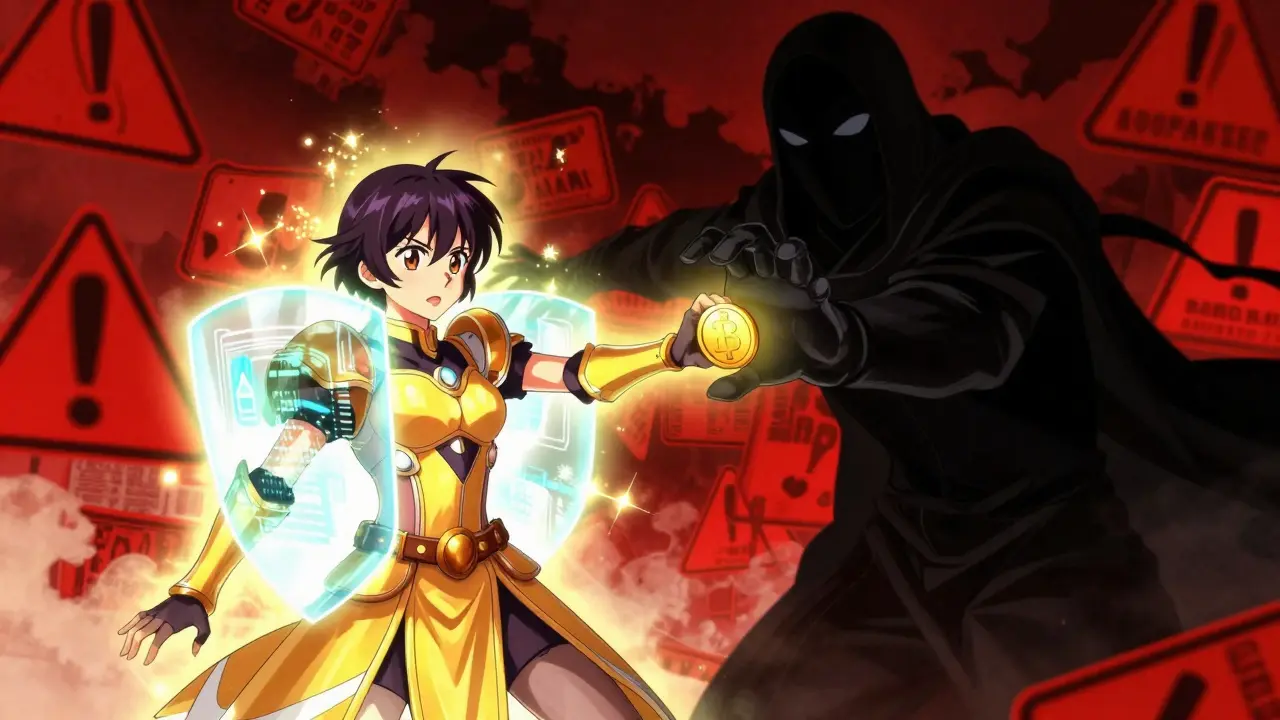
Red Flags: Avoiding FEAR Scams
Because the name "FEAR" is short and memorable, scammers love to use it. Since the official airdrop ended years ago, any site claiming otherwise is malicious. Here is how to spot the fakes:
- "New Phase" Claims: If a tweet says "FEAR Airdrop Phase 2 is live! Click here," ignore it. The project has not announced new phases.
- Wallet Connect Requests: Legitimate historical airdrops distributed via email or centralized exchanges. Never connect your private wallet to a suspicious link promising old tokens.
- Telegram Bots: Be wary of bots asking for your seed phrase to "verify eligibility." No legitimate project ever asks for your seed phrase.
The best protection is knowledge. Know that the CoinMarketCap partnership ended in 2021. Anything newer is unauthorized.
Lessons for Future Airdrop Hunters
While you can't get FEAR tokens for free anymore, the history of this project teaches valuable lessons for hunting future opportunities. The landscape has shifted from social media clout to on-chain merit.
If you want to position yourself for future airdrops in 2026 and beyond, focus on these areas instead of looking for dead projects like FEAR:
- Interact with New Protocols: Look for emerging Layer 2 solutions or DeFi protocols that haven't launched tokens yet. Use their bridges, swap tokens, and provide liquidity.
- Verify Authenticity: Use tools that track your on-chain footprint. Projects like Galxe or Zealy often host legitimate campaigns tied to real blockchain activity.
- Understand Restaking: Familiarize yourself with concepts like EigenLayer’s restaking. This is the current gold standard for earning potential airdrop points.
- Ignore Social-Only Drops: If a project only asks you to follow Twitter, it’s likely a low-value marketing stunt or a scam. Real value comes from contributing to network security or liquidity.
The FEAR token story is a relic of the early crypto wild west. It was simple, accessible, and ultimately limited in impact. Today’s opportunities require more work, but they also offer more genuine potential for reward. Don’t chase ghosts; build your on-chain reputation instead.
When did the FEAR token airdrop end?
The primary FEAR token airdrop distribution concluded on September 24, 2021, through a partnership with CoinMarketCap.
How much is 1 FEAR token worth in 2026?
As of mid-2026, the FEAR token trades at approximately $0.008443. Predictions suggest a stable but low-growth trajectory, with potential highs around $0.011 by 2028.
Did FEAR distribute NFTs?
Yes. Before the main token drop, FEAR distributed 2,000 Play2Earn NFT Airdrop tickets. Each ticket was valued at 25 FEAR tokens.
Is the FEAR project still active?
Public information suggests limited activity. There are no major recent updates, partnerships, or community events visible on major tracking platforms, indicating reduced market presence.
Can I still join the CoinMarketCap FEAR airdrop?
No. The registration period closed in 2021. Any links claiming to allow new registrations for this specific airdrop are fraudulent.



25 Comments
Write a comment





Tuan Nguyen
July 10, 2026 AT 13:07It is frankly amusing how the masses still chase these digital ghosts. The FEAR token was a marketing stunt, nothing more. You are all ignoring the fundamental lack of utility that plagued the project from day one. Real investors look at on-chain metrics, not Twitter followers.
Hazel Fruitman
July 11, 2026 AT 18:07i mean its just sad ppl fall for this stuff every time. like seriously? follow an account and get rich? nobody should believe that anymore. it feels dirty to even think about claiming free money without doing work.
Autumn Story
July 11, 2026 AT 18:53I really appreciate this breakdown!! It’s so helpful to know exactly what happened back in 2021... I was actually worried I missed out on something huge!!! But knowing it’s over makes me feel relieved... because scams are scary!!!
Mark Tuason
July 11, 2026 AT 21:43This is a very clear summary of the situation. It is important to distinguish between historical data and current opportunities. Many users seem confused by the timeline, so clarifying that the CoinMarketCap partnership ended in 2021 is crucial for safety.
Ella Collinson
July 13, 2026 AT 00:37The alpha here is obvious: low barrier to entry equates to low value accrual. The FEAR distribution mechanism relied on social graph manipulation rather than protocol interaction. In 2026, we see a shift towards verifiable user activity via SBTs and restaking mechanisms. FEAR failed to adapt to the post-hype cycle paradigm.
Ray Arney
July 13, 2026 AT 16:52Yeah, pretty much dead. Don't waste your time looking for it.
Andrew Schneider
July 14, 2026 AT 00:16Oh wow, another 'educational' post about a token that went nowhere! 🙄🔥 Can we talk about how boring this is? Everyone loves a good scam story though, right? 😂💀
Eric Braddock
July 14, 2026 AT 16:17You think it's over? They are hiding the real distribution. The CoinMarketCap link was a honeypot to identify retail wallets. Now they are tracking you for the next phase. Wake up sheeple. The algorithm knows who clicked.
Nick G
July 15, 2026 AT 02:01I find it fascinating how different cultures approach crypto speculation. In some regions, the idea of free tokens is seen as a gift, while others view it with extreme skepticism. It is important to respect everyone's journey, but also be aware of the global context of these projects.
Nick Wengel
July 15, 2026 AT 16:13Thanks for sharing this info. It helps to know what to avoid. Simple and straightforward.
Alicia Hull
July 16, 2026 AT 15:34Why do people keep falling for this?! It is absolutely unacceptable that scammers target new users. You need to protect yourself better. Stop being naive.
Johan Otto
July 17, 2026 AT 14:34Boring. Waste of my time reading this. Where is the drama? 😡
Anuj Kashyap
July 18, 2026 AT 15:47The irony is palpable. We chase 'free' things only to lose our privacy. 🤷♂️ Perhaps the true cost of the FEAR token was our attention span. A philosophical lesson wrapped in a rug pull. 😂
Tracy Marshall
July 20, 2026 AT 06:16this is clearly part of a larger conspiracy to drain small accounts. they want your seed phrase. dont trust anyone. ((sad))
Guy Davis
July 20, 2026 AT 11:44typo in ur post but good point. stop clicking links.
KEITH WONG
July 22, 2026 AT 10:43Listen up noobs. This is basic 101. If it sounds too good to be true, it is. 🚫 Don't be stupid. Learn blockchain basics before chasing ghosts.
Natalie Lucas
July 23, 2026 AT 02:40Hey guys! Just chillin and reading this. Good to know its over so i can focus on other stuff. vibes are off with fear token anyway lol
Curtis Johnson
July 24, 2026 AT 13:12I understand the frustration many feel when missing out on early opportunities. However, it is vital to remain calm and informed. Let us support each other in learning from these past mistakes rather than dwelling on them. Your financial health matters most.
Steven Briggs
July 26, 2026 AT 07:00yeah its done. move on.
Hamza k
July 26, 2026 AT 17:47Absolutely tragic how this narrative plays out again and again. The theater of crypto is endless, but the script remains the same: hype, dump, silence. What a performance!
Kim Kay
July 28, 2026 AT 12:00i hope everyone stays safe out there. its easy to make mistakes when you're new. let's learn together instead of judging.
Brad Semp
July 29, 2026 AT 09:00The grammatical structure of modern crypto discourse has deteriorated significantly since the FEAR era. One must possess a refined understanding of market mechanics to navigate this space effectively. Ignorance is not bliss; it is bankruptcy.
Korn Arrieta
July 30, 2026 AT 06:21The volatility metrics cited are misleading. The real issue is liquidity fragmentation. Without deep order books, price stability is an illusion. Analyze the depth charts, not the headline numbers.
Jackie D
July 30, 2026 AT 17:04What a wild ride it has been! I wonder if any of those original winners are still holding? It would be interesting to hear their stories. Maybe we could create a community thread for survivors?
Ruth Williams
July 31, 2026 AT 19:03This article serves as a necessary corrective to the prevalent misinformation surrounding legacy airdrops. It is imperative that readers adhere strictly to verified sources. Do not engage with unverified claims under any circumstances.