Why Memecoins Have Value Despite No Utility
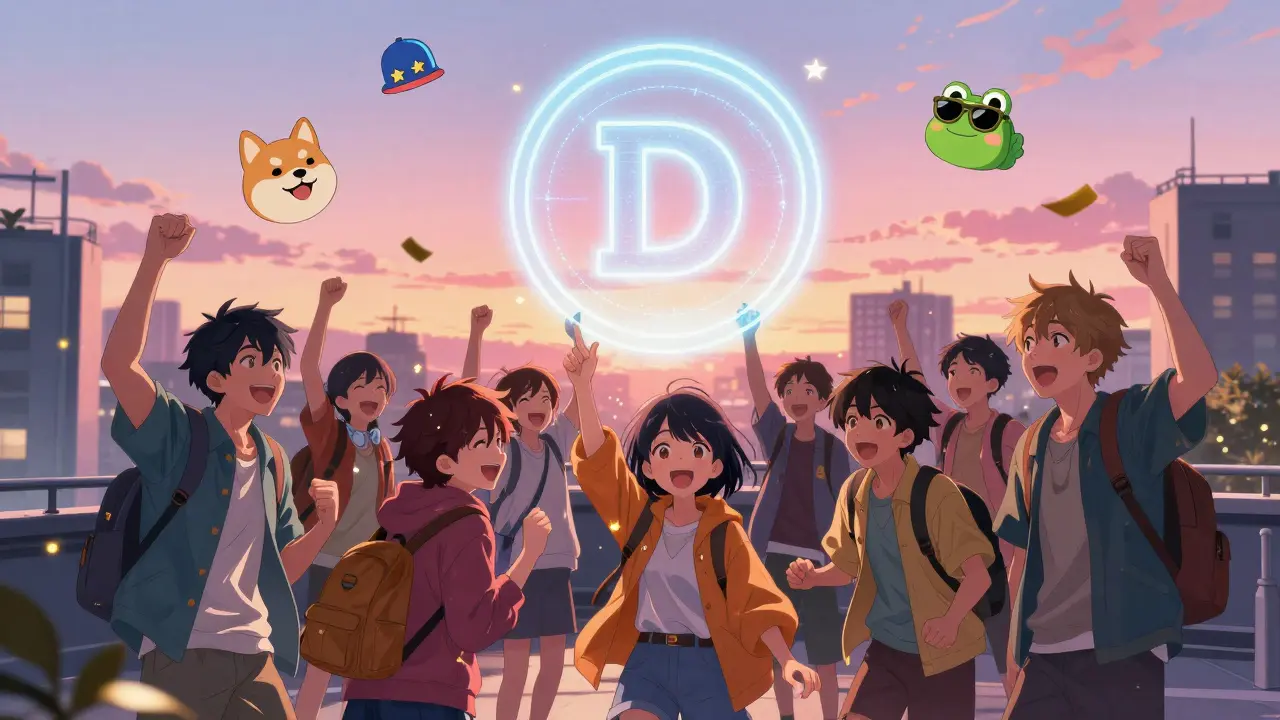
Why do people pay real money for a digital token shaped like a dog with a hat? Or a frog meme that literally does nothing? It’s not magic. It’s not technology. And yet, memecoins like Dogecoin, Shiba Inu, and Dogwifhat have billions in market value-even though they don’t pay dividends, don’t run apps, and don’t solve real problems.
Here’s the truth: memecoins aren’t investments. They’re social experiments. They’re digital collectibles. And their value comes from one thing: what people believe together.
They Started as a Joke
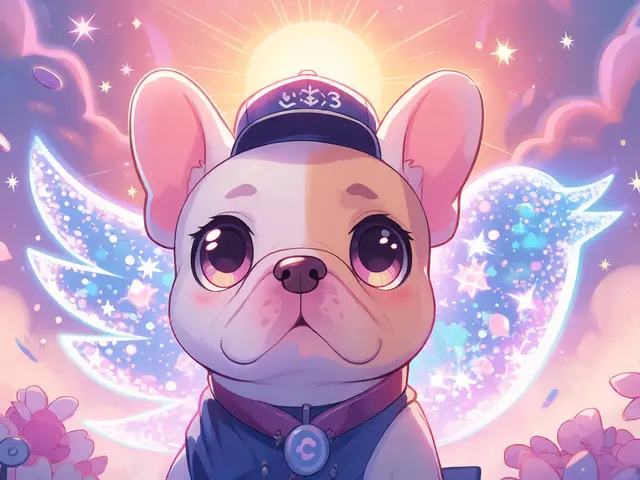
Dogecoin wasn’t meant to be taken seriously. In 2013, two engineers made it as a parody of the wild crypto boom. They picked the Shiba Inu dog from a popular meme, added a funny name, and threw it online. They expected it to die in a week.
It didn’t. Instead, people started using it to tip each other on Reddit for funny comments. It became a symbol of online kindness. No smart contracts. No mining rewards beyond fun. Just a currency with no rules-except one: be nice.
That’s when it clicked. People weren’t buying Dogecoin because it was useful. They bought it because it felt good. It was playful. It didn’t take itself seriously. And in a world full of complex finance jargon, that was refreshing.
Community Is the Only Product
Think of memecoins like a viral TikTok dance. The dance doesn’t do anything. It doesn’t fix your Wi-Fi or pay your rent. But if millions of people do it at the same time, it becomes cultural currency.
Shiba Inu’s rise wasn’t because of its code. It was because of the ‘Shib Army’-a group of Reddit and Twitter users who treated the coin like a team jersey. They didn’t care about blockchain efficiency. They cared about being part of something bigger. When Elon Musk tweeted ‘Dogecoin to the moon,’ it wasn’t because he believed in the tech. It was because he knew how to trigger a crowd.
That’s the engine behind every major memecoin: social momentum. When a coin trends on Twitter, people jump in not to build something, but to join the party. The more people join, the higher the price goes-not because the coin got better, but because more people think it’s valuable.
It’s Not About Tech. It’s About Trust
Compare Dogecoin to Ethereum. Ethereum runs smart contracts, powers DeFi apps, and secures billions in value through real utility. Dogecoin? It just moves tokens. No automation. No logic. Just transfers.
Yet Dogecoin’s market cap has hovered around $15 billion. Ethereum’s is $450 billion. So why does Dogecoin still matter?
Because trust isn’t always about logic. It’s about belief. People trust that others will keep buying Dogecoin. That’s it. That’s the whole model. It’s like baseball cards. A 1952 Mickey Mantle card isn’t useful. You can’t eat it. You can’t play with it. But collectors pay $10 million for it because others will pay more next year.
Meme coins work the same way. Their value lives in the collective imagination of their community. If enough people believe, it becomes real-until they stop believing.
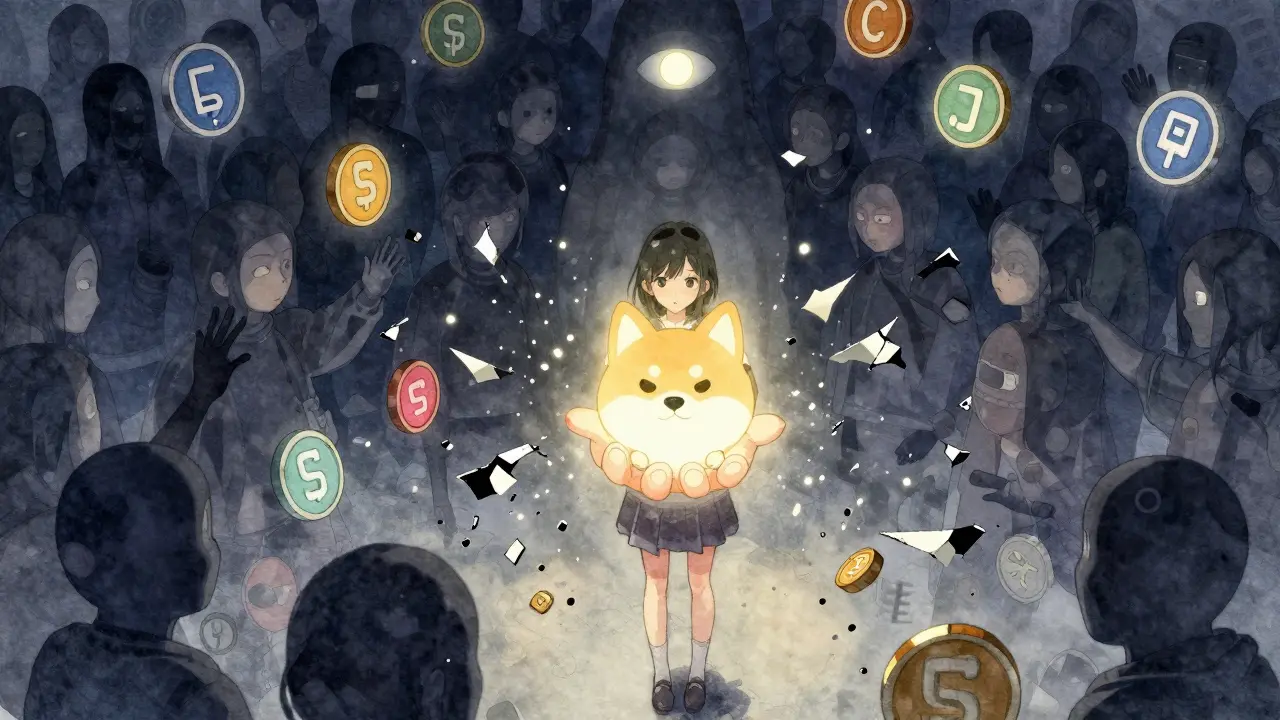
The Dark Side: 95% of Them Die
Here’s the catch: for every Dogecoin, there are 10,000 failed memecoins.
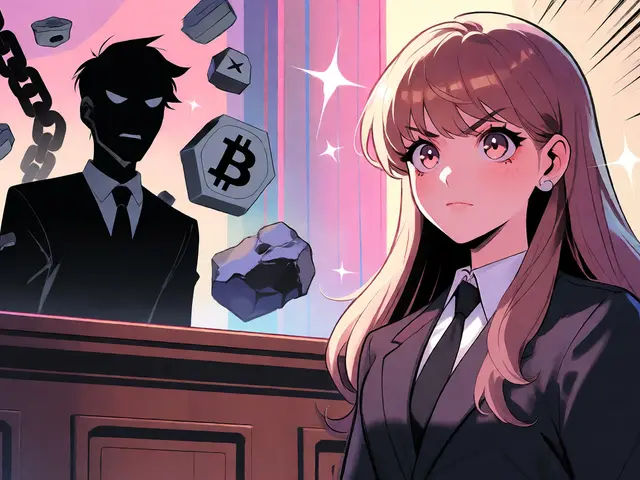
Take Squid Game token. It launched in 2021 with a $2,800 price tag. People rushed in, thinking they’d hit the jackpot. Then, in a single hour, the creators vanished with $3.4 million. The token dropped to zero. No warning. No refund. Just gone.
Or SafeMoon. It promised rewards for holding. But the code secretly locked sell orders. Investors couldn’t cash out. By 2022, it was worthless.
These aren’t bugs. They’re features. Over 78% of new memecoins launched since 2022 have hidden traps-‘honeypot’ contracts that prevent selling, or fake liquidity pools that disappear when prices rise. Chainalysis found that 95% of meme coins created in 2021 were dead by 2022.
That’s why memecoins aren’t for everyone. They’re for people who treat them like lottery tickets: small bets, big dreams, and full awareness that you might lose everything.
Who’s Buying This Stuff?
Most memecoin traders are young. Under 35. New to investing. They don’t have years of financial training. They watch YouTube influencers say, ‘Buy now, get rich tomorrow.’
One Reddit user turned $500 into $250,000 with early Dogecoin. Then lost it all on Shiba Inu six months later. Another lost $15,000 on a token called SQUID after following a ‘guru’ on TikTok.
It’s not about knowledge. It’s about emotion. FOMO (fear of missing out) drives more trades than analysis. A tweet from a celebrity can spike a coin 300% in an hour. A single negative post can crash it.
And institutions? They stay away. Less than 0.5% of memecoins are held by big funds. Bitcoin? 15%. That tells you everything. Wall Street sees memecoins as gambling. Retail investors see them as a chance to beat the system.
Are They Evolving?
Some memecoins are trying to grow up. Dogecoin now accepts payments for merchandise. Shiba Inu built its own exchange and NFT marketplace. Bonk on Solana is used for tipping creators and buying digital art.
But these aren’t revolutions. They’re afterthoughts. The core value hasn’t changed. Dogecoin isn’t valuable because it can buy a hoodie. It’s valuable because people still believe in it.
Even Elon Musk’s rumored Tesla integration isn’t about payment tech. It’s about signaling. If Tesla accepts Dogecoin, it tells the world: ‘This matters.’ And that’s enough to keep the hype alive.
So… Do They Have Value?
Yes. But not the kind you learn in finance class.
Meme coins have value because people give them value. Not because they’re useful. Not because they’re secure. But because they’re fun, viral, and emotionally engaging.
They’re the digital equivalent of wearing a weird T-shirt that makes people laugh. It doesn’t keep you warm. But it makes you feel like you belong.
If you’re thinking of trading them: know this. You’re not investing in a project. You’re betting on a crowd. And crowds can turn fast.
Some people get rich. Most lose money. But the ones who win? They don’t hold for years. They buy early, sell fast, and walk away before the party ends.
What’s Next?
Experts predict memecoins will shrink as a share of the crypto market-from 2% today to under 1.2% by 2027. As institutions grow and regulations tighten, the wild west of meme trading will calm down.
But they won’t disappear. Why? Because humans love stories. And memes are the most powerful stories online.
As long as there’s internet, there will be jokes turned into currency. As long as people want to belong, there will be coins built on laughter, not logic.
So if you see a new memecoin trending? Don’t ask if it’s smart. Ask: ‘Is this the next joke everyone’s laughing at?’ If yes, you might get in early. If no, you’re just another person chasing a ghost.
Why do memecoins have value if they have no real use?
Memecoins have value because people believe they do. Their price is driven by social trends, celebrity mentions, and community hype-not by technology, revenue, or utility. Think of them like collectible trading cards: their worth comes from what others are willing to pay, not from any inherent function.
Is Dogecoin still worth anything?
Yes. As of late 2025, Dogecoin remains the largest memecoin with a market cap around $15 billion. It has a loyal community, occasional merchant integrations, and ongoing support from high-profile figures like Elon Musk. But its value is still tied to sentiment, not fundamentals. It’s not a long-term investment-it’s a cultural asset.
Can you make money trading memecoins?
Some people do-but most lose money. Success usually comes from buying early, selling fast, and avoiding emotional holds. The average memecoin launched in 2022 is already worthless. Only a handful, like Dogecoin and Shiba Inu, survived. Treat memecoins like lottery tickets: small stakes, big risks.
Are memecoins a scam?
Not all, but many are. Over 78% of new memecoins contain malicious code, like ‘honeypot’ contracts that trap buyers. Rug pulls-where developers vanish with funds-are common. Always check for locked liquidity, verified teams, and audits before investing. If it sounds too good to be true, it probably is.
Should I invest in memecoins?
Only if you can afford to lose it all. Never put in money you need for rent, bills, or emergencies. If you do trade them, limit it to 1-5% of your portfolio. Focus on coins with real communities and track record-like Dogecoin or Shiba Inu. And never chase pumps. The biggest risk isn’t the market crashing-it’s you believing the hype.
22 Comments
Write a comment

rachael deal
December 26, 2025 AT 19:30Remember when Dogecoin was just a joke between friends on Reddit? Now it’s got its own merch line and Elon Musk tweets about it like it’s gospel. We’re not investing in crypto-we’re investing in vibes.
Jordan Fowles
December 28, 2025 AT 14:42It’s not about utility. It’s about collective hallucination. Like a cult that believes in a god made of memes. The more people believe, the more real it becomes. And when the belief fades? Poof. Just like that. Human psychology on full display.
SUMIT RAI
December 29, 2025 AT 10:34LOL imagine paying real money for a dog with a hat 😂
Elisabeth Rigo Andrews
December 30, 2025 AT 01:34Let’s be clear-memecoins are predatory financial instruments disguised as internet culture. The liquidity pools are honeypots, the ‘community’ is a pump-and-dump engine, and the retail investor is the sucker who thinks they’re part of the in-group. This isn’t innovation. It’s financialized nihilism.
Abhisekh Chakraborty
December 31, 2025 AT 19:11People don’t get it. It’s not about the coin. It’s about the dopamine hit from seeing your $5 turn into $500. That’s the drug. The token? Just the syringe.
dina amanda
December 31, 2025 AT 23:53Big banks and the Fed are terrified of this. Why? Because regular people are bypassing the system. This is the revolution. They’ll ban it soon. Mark my words.
NIKHIL CHHOKAR
January 1, 2026 AT 15:15You say memecoins are just social experiments? That’s cute. Most people buying them are broke teens who think they’re ‘doing crypto’ while their parents pay the rent. This isn’t culture-it’s a Ponzi dressed in a Shiba Inu onesie.
Bruce Morrison
January 3, 2026 AT 13:21It’s like collecting baseball cards but everyone’s betting on who’ll pay the most next week. No one’s holding for the long term. Everyone’s waiting for the next sucker to show up. That’s the whole game.
Mike Pontillo
January 4, 2026 AT 04:22So you’re telling me a dog picture is worth more than my degree? Cool. I’ll take my $2000 in Dogecoin and buy a house. Oh wait.
Joydeep Malati Das
January 5, 2026 AT 16:37The emotional appeal of memecoins is undeniable. They represent a rejection of sterile financial systems. Even if irrational, the desire to belong to a community that laughs at the same jokes as you is a powerful human need.
Steve Williams
January 5, 2026 AT 20:15In Nigeria, we understand value through scarcity and social validation. Memecoins are not absurd-they are an adaptation. When formal systems fail, people create their own. This is not gambling. This is resilience.
prashant choudhari
January 6, 2026 AT 19:03Every new memecoin is a test of human gullibility. The ones that survive aren’t the smartest-they’re the ones that got lucky with a celebrity tweet. That’s the algorithm now.
Khaitlynn Ashworth
January 8, 2026 AT 04:30Wow. So we’ve turned finance into a TikTok trend. Congrats. The only thing more tragic than the people buying this is the people selling it as ‘the future.’
Emily L
January 8, 2026 AT 15:13My cousin bought $3000 of SQUID. He cried for a week. Now he’s on a ‘crypto recovery’ subreddit. I told him to get a job. He said I don’t understand the revolution. I don’t. And I’m glad.
Gavin Hill
January 9, 2026 AT 20:00There’s something beautiful about a currency that doesn’t pretend to be anything other than what it is-a shared joke. No whitepapers. No audits. Just memes and hope. We’ve stripped finance down to its barest, silliest form. And somehow, it works.
Mandy McDonald Hodge
January 10, 2026 AT 18:39dogecoin to the moon 🚀💸 i bought 5000 doge in 2020 and now i eat ramen but i’m happy lol
Adam Hull
January 11, 2026 AT 08:56Calling this a ‘social experiment’ is an insult to actual social science. This is a carnival rigged by influencers and coded by teenagers with a Discord server and a Coinbase account. The only thing evolving here is the sophistication of the scam.
Willis Shane
January 13, 2026 AT 00:40The market cap of Dogecoin is a reflection of cultural capital, not economic value. It is a symbol of collective identity. To dismiss it as irrational is to misunderstand the nature of value in digital societies.
Jake West
January 13, 2026 AT 16:11Why do you even write this? Everyone knows memecoins are trash. You’re just giving them legitimacy. Go sell NFTs of your socks instead.
Shawn Roberts
January 14, 2026 AT 05:29if you’re not holding doge you’re not living 🤪
Andrea Stewart
January 15, 2026 AT 08:16Most memecoins die because they lack community cohesion. Dogecoin survived because its users had a shared ethos: kindness. That’s rare. That’s worth something.
Andrew Prince
January 16, 2026 AT 09:37Let us not confuse the aesthetic appeal of decentralized absurdity with legitimate economic structure. The market cap of a meme token is a statistical anomaly, a temporary artifact of behavioral finance pathology, and a clear indicator of systemic failure in retail investor education. The only sustainable value lies in blockchain infrastructure with verifiable utility, not in anthropomorphized canines.