What is Yield Finance (YIELDX)? A Deep Dive into the Token's Risks and Reality
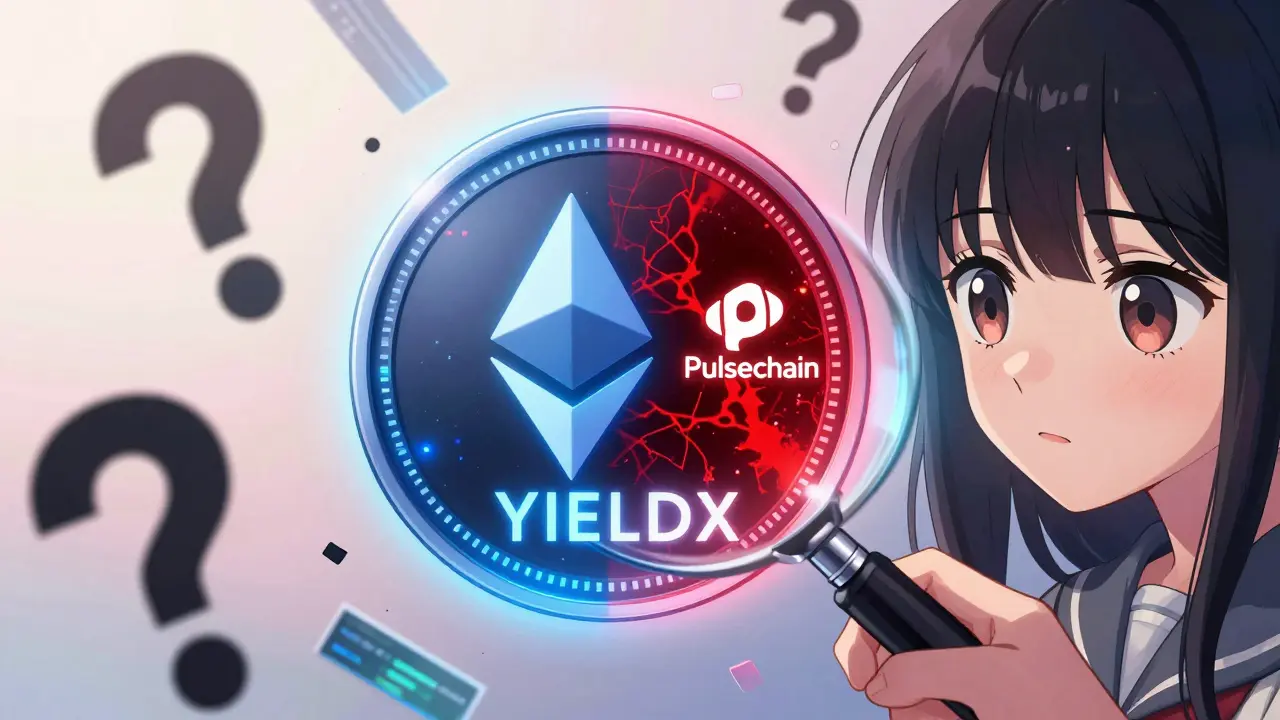
You’ve probably seen it pop up in a list of new tokens or maybe heard a whisper about it on social media. Yield Finance, trading under the ticker YIELDX, promises the kind of high returns that make your heart race. But here’s the thing: in the world of decentralized finance, if something sounds too good to be true, it usually is. And when you look closer at YIELDX, things get even more confusing.
This isn’t just another coin review. We’re going to pull back the curtain on what YIELDX actually is, why the data around it is so messy, and whether there’s any real value behind the hype-or if it’s just digital noise.
The Identity Crisis: What Exactly Is YIELDX?
Let’s start with the basics. Or rather, let’s try to find them. If you go looking for information on Yield Finance, you’ll quickly run into a wall of contradictions. This is the first red flag.
Some sources claim YIELDX operates on the Ethereum blockchain, positioning itself as a standard DeFi token focused on yield farming. Others, like CoinMarketCap, identify the project as "Yield Pulse," suggesting it runs on Pulsechain. These are two completely different networks with different technologies, communities, and risk profiles. How can a single token exist in two places at once? It can’t. This confusion suggests either a lack of technical clarity from the developers or an attempt to mislead investors by piggybacking on the popularity of established chains.
Then there’s the supply issue. Reports indicate a total supply of just 29,200 tokens with zero circulating supply. Think about that for a second. If no tokens are circulating, how is anyone trading it? How is anyone earning yield? A fully diluted valuation of roughly $4.39 USD tells us this isn’t a major player; it’s a ghost town. In legitimate projects, circulating supply drives liquidity and price discovery. Here, we have neither.
| Feature | Yield Finance (YIELDX) | Uniswap (UNI) | Aave (AAVE) |
|---|---|---|---|
| Blockchain Network | Unclear (Ethereum/Pulsechain conflict) | Ethereum | Ethereum & Multi-chain |
| Circulating Supply | 0 (Reported) | 753M+ | 14.8M+ |
| Daily Trading Volume | $0 / Not Available | $100M+ | $20M+ |
| Total Value Locked (TVL) | N/A | $Billions | $Billions |
| Community Presence | None Visible | Massive Global Community | Large Developer/User Base |
The Liquidity Trap: Why You Can't Sell
In crypto, liquidity is king. It means you can buy or sell your tokens without crashing the price. For YIELDX, liquidity appears to be non-existent. Major tracking platforms report daily trading volumes as "not available" or flat-out zero. Prices fluctuate wildly between $0.000105 and $0.00016, but these aren’t real market movements-they’re likely artifacts of thin order books or manipulated listings.
If you were to buy YIELDX today, could you sell it tomorrow? Probably not. Without active buyers, you’re stuck holding a bag of digital paper that has no market value. This is a classic characteristic of low-quality or abandoned projects. The absence of institutional interest and algorithmic trading activity confirms that YIELDX sits in the bottom tier of tracked cryptocurrencies, ranking somewhere between #7,460 and #13,005 depending on who you ask. That’s not a position of strength; it’s obscurity.
No Community, No Credibility
Real DeFi projects thrive on community engagement. They have active Discord servers, Telegram groups, Reddit threads, and GitHub repositories where developers commit code. Yield Finance has none of this. There are no user testimonials, no case studies, and surprisingly, no criticism either. Silence is deafening in the crypto world. When a project claims to offer yield farming, staking, and gaming features but provides no documentation, no user interface, and no smart contract audits, it’s raising serious questions.
Where are the developers? Where are the roadmap updates? Successful protocols like Compound or Maker Protocol publish regular reports, host community calls, and maintain transparent development logs. YIELDX offers vague promises of "enhanced yield optimization" and "cross-chain functionalities" with no timelines, no specs, and no proof of progress. This lack of transparency is a major warning sign.
Technical Analysis: The Market Says "Sell"
Even the limited technical analysis available paints a grim picture. Bitget, one of the few platforms listing YIELDX, shows a strong "Sell" signal. Oscillator readings lean bearish, and moving averages overwhelmingly suggest downward pressure. While technical analysis alone shouldn’t dictate investment decisions, it reflects the sentiment of traders who are actively monitoring the chart. In this case, they’re running away.
Moreover, the absence of coverage from reputable research firms like Messari or Delphi Digital is telling. These organizations cover thousands of tokens. If YIELDX had any genuine innovation or potential, it would be on their radar. Its exclusion suggests it lacks the fundamental metrics-such as protocol revenue, user adoption, or security audits-that define viable DeFi projects.

Is YIELDX a Scam or Just Dead?
We don’t need to label it a outright scam to recognize the danger. Whether the team has abandoned the project or is slowly draining liquidity, the outcome for the investor is the same: loss of capital. The combination of conflicting blockchain identities, zero circulating supply, no trading volume, and no community presence creates a perfect storm of risk.
In the broader context of the DeFi market, which reached approximately $200 billion in total value locked by 2025, users are increasingly sophisticated. They demand security, transparency, and proven track records. YIELDX offers none of these. It operates in the shadows, relying on ambiguity rather than substance.
How to Protect Yourself
If you’re exploring DeFi opportunities, here’s what you should look for instead:
- Verified Smart Contracts: Always check if the contract has been audited by a reputable firm like CertiK or OpenZeppelin.
- Active Development: Look for public GitHub repositories with recent commits.
- Community Engagement: Join their Discord or Telegram. Are real people asking questions? Are developers responding?
- Liquidity Depth: Check DEXs like Uniswap or SushiSwap. Is there enough liquidity to enter and exit positions easily?
- Clear Roadmap: Does the project have specific, measurable goals with deadlines?
YIELDX fails on all these counts. It’s better to miss out on a potential gain than to lose your entire investment to a hollow project.
What blockchain does Yield Finance (YIELDX) operate on?
There is significant confusion regarding YIELDX's blockchain. Some sources claim it is on Ethereum, while others link it to Pulsechain. This inconsistency is a major red flag indicating a lack of technical clarity or potential misinformation.
Is Yield Finance (YIELDX) a safe investment?
No. With zero reported circulating supply, negligible trading volume, and no visible community or development activity, YIELDX poses extreme risks. It lacks the fundamental infrastructure of legitimate DeFi projects.
Why is the trading volume for YIELDX so low?
The trading volume is reported as zero or unavailable because there is virtually no market activity. This indicates a lack of buyer interest and severe liquidity issues, making it difficult or impossible to sell the token.
Does Yield Finance have a community or support team?
There is no visible community presence on major platforms like Discord, Telegram, or Reddit. The absence of user feedback and developer interaction suggests the project may be inactive or abandoned.
What is the current price of YIELDX?
As of late 2025, YIELDX trades between $0.000105 and $0.00016. However, due to the lack of liquidity, these prices may not reflect a fair market value and could be manipulated.


22 Comments
Write a comment





Tricia Alach
May 22, 2026 AT 05:53its kinda wild how these projects just pop up out of nowhere and then vanish like smoke. i mean, who even checks the smart contracts anymore? its like we are all just gambling on vibes instead of actual tech. but hey, maybe im just old fashioned about wanting to see some code before i put money in. anyway, thanks for the heads up on this one.
Jan Gilmore
May 22, 2026 AT 21:20Let me educate you lot on why this is obvious garbage. The lack of circulating supply isn't a 'mystery', it's a rug pull waiting to happen. You think developers accidentally forget to distribute tokens? No. They hold them all so they can dump on retail idiots like yourselves. I've been in DeFi since 2017 and I've seen this exact pattern play out hundreds of times. It's not confusing, it's predatory. Wake up.
Caique Muniz
May 24, 2026 AT 11:36lol another 'deep dive' into nothing. seriously, who has time for this crap? just burn the token and move on. why are people still falling for yield farming scams in 2025? its embarrassing. also ur grammar is fine but ur analysis is lazy as hell. next.
Bradley Geldenhuys
May 25, 2026 AT 09:29Look at this mess! This is what happens when greed overrides logic! You people are walking into a trap with your eyes wide open! I am trying to help you here but you just ignore the red flags! The blockchain identity crisis alone should scare you off! Why do you keep ignoring reality? It makes me furious that people are so blind to basic financial principles! Stop being stupid and protect your assets!
robert Whitehead
May 27, 2026 AT 01:53The moral decay of this industry is astounding. People chasing yields without due diligence are complicit in their own destruction. YIELDX is a symptom of a sick ecosystem where transparency is mocked and speculation is king. I feel a profound sense of disappointment in the community for allowing such garbage to persist. We need stricter regulations and ethical standards, not more clickbait articles analyzing dust. This token is worthless because the values behind it are worthless.
Mike S
May 27, 2026 AT 09:21Oh wow, look at me, I'm an expert now! *sarcasm* This article is basically screaming 'SCAM' from every paragraph. Who needs a deep dive when the answer is right there in the zero volume? It's pathetic how many people still check CoinMarketCap rankings for legitimacy. If it's ranked #13,000, it's trash. Simple as that. Don't come crying to me when you lose your life savings on digital confetti.
H F
May 27, 2026 AT 16:29I completely agree with the assessment here! It is absolutely crucial that we stay vigilant against these types of hollow projects. The confusion regarding the blockchain network is a massive red flag that cannot be ignored. We must support only those protocols that demonstrate true transparency and active development. Let's rally together to promote better standards in DeFi!
Michael Berggren
May 29, 2026 AT 05:18This is a great reminder to always DYOR! 🧐📉 The comparison table really highlights how far YIELDX falls short compared to established players like Uniswap or Aave. It’s important to remember that liquidity is key in DeFi, and without it, you’re stuck holding the bag. Stay safe out there everyone! 🙌💰
Kiran CS
May 29, 2026 AT 16:51It is truly disheartening to witness such a lack of intellectual rigor in the cryptocurrency space. The very notion of investing in a token with zero circulating supply is preposterous and indicative of a deeply flawed understanding of market mechanics. One must question the sanity of individuals who would consider allocating capital to such an entity. It is a testament to the sheer absurdity of modern finance.
Bijan Das
May 31, 2026 AT 02:40typical scam. boring. waste of my time reading this. nobody cares about yieldx. get a real job. simple facts dont matter to you guys. sarcastic much?
Ashley Rodriguez
June 1, 2026 AT 23:20i think it is really sad that people have to write whole articles about things that are obviously fake because the internet is full of bad actors and it makes me worry about my friends who might fall for it and i hope everyone stays safe and sound and doesnt lose any money because that would be terrible and i wish there was more honesty in the world
Bridget Coogle
June 2, 2026 AT 15:20its scary how easy it is to get tricked. please be careful out there. trust your gut if something feels off. no pressure but do your homework. stay strong.
Zara Zaman
June 4, 2026 AT 12:12This is exactly why foreign chains are problematic. Lack of regulation allows this garbage to flourish. American investors deserve better than this unregulated sludge. We need strict oversight to prevent these entities from operating within our borders. It is unacceptable that such risks exist without proper safeguards. Protect American capital first.
Larry Port
June 5, 2026 AT 16:50I wonder if the developers are aware of the confusion surrounding the blockchain network. It seems like a fundamental oversight that could easily be clarified. Perhaps there is a technical reason for the dual listing claims, though unlikely. It would be interesting to see if anyone from the team responds to these concerns. Usually silence speaks volumes in these cases.
Jocelyn Garcia
June 6, 2026 AT 11:53the alpha is dead. liquidity dry. tvl non-existent. classic ghost chain behavior. move along folks, nothing to see here unless you like burning cash. jargon alert: this is a failed experiment in decentralization.
Amit Varpe
June 8, 2026 AT 09:48why is this even listed? shame on the exchanges. total waste of bandwidth. avoid at all costs. 🚫📉
Bronwen Butler
June 10, 2026 AT 00:34actually the lack of community might be a feature not a bug. maybe they are building in stealth mode. everyone else is too quick to judge based on surface metrics. you are all missing the bigger picture. typical herd mentality.
Pauline Larocco71
June 11, 2026 AT 06:39i feel for the people who bought this thinking it was legit. its so hard to tell whats real these days. i hope they learn from this experience and dont give up on crypto entirely. mistakes happen to the best of us. lets support each other through the tough times.
beti macedo
June 12, 2026 AT 12:56It is imperative that investors exercise extreme caution. The data presented herein clearly indicates a high-risk asset class. One should never invest without thorough verification of smart contract audits and team credentials. Please prioritize financial security over speculative gains. Thank you for sharing this informative piece.
Michelle Bonahoom
June 13, 2026 AT 23:09boring article. already knew it was a scam. why bother writing about it. just say its trash and move on. wasting my time with all these details. typical american media hype machine. stop feeding the trolls.
Matt Davis
June 15, 2026 AT 11:54You dare suggest this project has any merit? Absolutely preposterous! The audacity of these developers to list a token with zero utility is staggering. I find your attempt to analyze this garbage utterly insulting to intelligent discourse. Burn it down! Do not let these fraudsters operate with impunity! This is an outrage!
Albert Lee
June 16, 2026 AT 10:56I know it's frustrating to see projects like this fail, but remember that every loss is a learning opportunity. Don't let this discourage you from exploring legitimate DeFi opportunities. There are amazing projects out there that deserve your support. Keep your head up and stay focused on your long-term goals! You've got this!