What is The HUSL (HUSL) Crypto Coin? Full Breakdown of Price, Supply, and Real-World Use

The HUSL (HUSL) crypto coin isn’t just another altcoin. It was built for one specific purpose: to help musicians connect with fans using NFTs. Launched in September 2021, it promised to turn music royalties, exclusive content, and fan engagement into a blockchain-powered system. But today, its story is less about innovation and more about the harsh realities of small-cap crypto projects.
What Is The HUSL Token Really For?
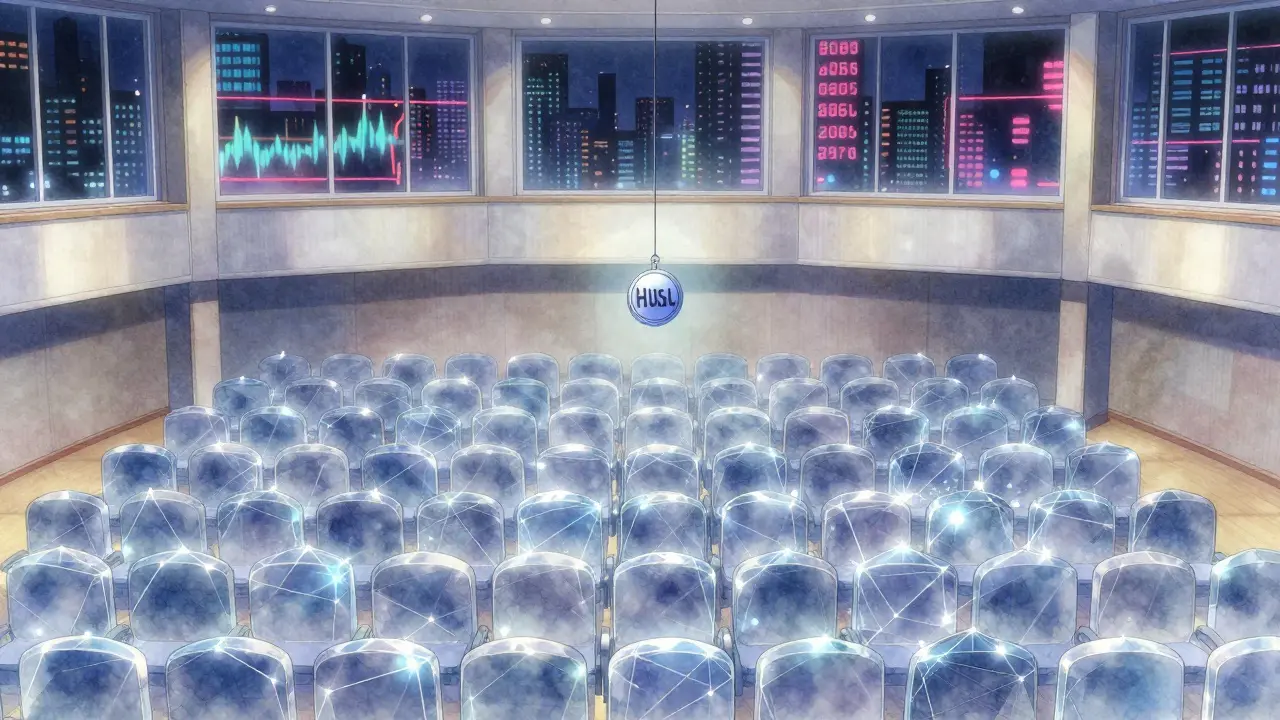
The HUSL token was designed as a utility coin for a music-focused platform. Artists could use it to mint NFTs of songs, concert tickets, behind-the-scenes footage, or even voting rights on future releases. Fans, in turn, could buy these NFTs using HUSL, earn rewards for engaging with content, or unlock special access to artists. It sounded like a fresh idea - cutting out middlemen like streaming services and record labels to give musicians direct control.
But here’s the catch: there’s no active platform to use it on. No app. No website. No verified artist partnerships. The project’s original roadmap vanished after launch. Today, HUSL exists mostly as a ticker on a few decentralized exchanges, with zero real-world usage. It’s a token without a product.
Tokenomics: Supply, Vesting, and Why It’s So Volatile
The HUSL token has a maximum supply of 100 million. That sounds huge - until you look at what’s actually circulating. According to data from CoinGecko and other trackers, only 400 HUSL tokens are currently available for trading. That’s not a typo. Out of 100 million, just 400 are on the open market.
So where’s the rest? Most of the supply is locked in vesting schedules from two fundraising rounds:
- Private Round: Raised $1.5M at $0.20 per token. Tokens are being released at 8.67% per month since launch.
- Public Round: Raised $250K at $0.25 per token. Tokens unlock at 10% in month one, then 20% monthly after that.
That means over 99% of the total supply is still locked up - but that doesn’t mean it’s safe. Every month, more tokens get released. And when they do, they flood the market. With so few buyers and so many tokens waiting to be sold, the price gets crushed.
Here’s the math: if 10 million tokens unlock next year and no one’s buying, the price won’t just dip - it’ll collapse. That’s why HUSL has seen a 99.98% drop from its all-time high.
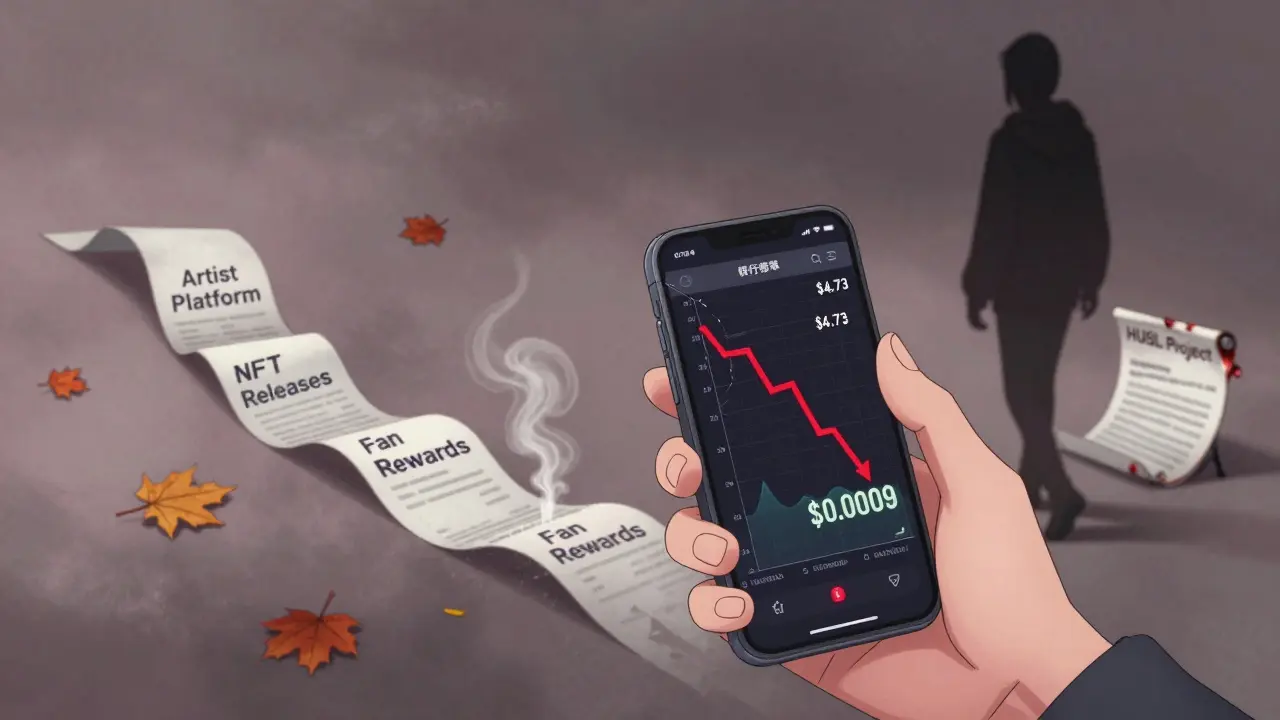
Price History: From $4.73 to $0.0009
The HUSL coin hit its peak just days after launch: $4.73 on September 27, 2021. That was fueled by hype, speculation, and early buyers who believed in the music-NFT vision.
Today, prices vary wildly across exchanges:
- CoinGecko: $0.0009148
- LiveCoinWatch: $0.000944
- Crypto.com: $0.000178
- ChainBroker: $0.006
These discrepancies aren’t glitches - they’re symptoms of a broken market. With trading volumes as low as $61 in 24 hours, a single large buy or sell can swing the price by 20% in minutes. That’s not a market. That’s a gambling table.
The all-time low? $0.0007032, hit in July 2025. That’s a 99.98% drop from the peak. Even if you bought at the public sale price of $0.25, you’d need the price to jump over 275 times just to break even.
Where Can You Trade HUSL?
You can buy HUSL on a few decentralized exchanges:
- Uniswap v2 (Ethereum): HUSL/ETH pair. Liquidity: $0.00. Volume: $61/day.
- PancakeSwap (BSC): HUSL/BNB pair. No public liquidity data.
- MEXC Global: Centralized exchange with slightly higher volume but still under $250/day.
There’s no centralized exchange like Coinbase or Binance listing HUSL. That’s a red flag. Big exchanges don’t list tokens with zero real use, no team updates, and liquidity below $100.
And here’s the kicker: the liquidity on Uniswap is listed as $0.00. That means there’s no real pool of funds backing trades. If you try to sell 10,000 HUSL, you’ll likely get nothing - or a price so low it’s meaningless.
Why Is HUSL Still Being Traded?
If HUSL has no utility, no platform, and almost no liquidity - why does anyone still trade it?
Simple: speculation. A handful of traders treat it like a lottery ticket. They buy tiny amounts hoping for a pump from a rumor, a fake tweet, or a bot-driven surge. The 12.1% price gain over the last week? That’s not because musicians started using it. It’s because someone dumped a few thousand tokens and triggered a short squeeze.
There’s no fundamental reason to hold HUSL. No roadmap. No team updates. No new features. The project’s last public post was in early 2022. The GitHub repo is empty. The Twitter account hasn’t posted since 2023.
Is HUSL a Scam?
It’s not technically a scam - there’s no evidence of theft or fraud. The tokens were sold fairly. The contracts are open source. The team didn’t rug-pull.
But it’s a classic example of a project that had a good idea, raised money, and then vanished. No product. No community. No progress. That’s worse than a scam - it’s a ghost.
If you’re thinking of buying HUSL, ask yourself: why would you invest in a token with no platform, no users, and 99.98% of its value gone? The only people still trading it are those hoping for a miracle - not a business.
What Happens Next?
Unless the team suddenly releases a working platform, signs major artists, or unlocks a liquidity pool, HUSL will keep drifting lower. The monthly vesting releases mean more supply hitting the market. With no demand, the price will keep falling.
Some might argue it’s a “diamond hands” play. But in crypto, holding a token with zero utility isn’t bravery - it’s a trap. The longer you wait, the harder it gets to exit.
For now, HUSL stands as a cautionary tale: even a clever idea - music + NFTs - means nothing without execution.
15 Comments
Write a comment



Alan Enfield
February 16, 2026 AT 12:06george chehwane
February 16, 2026 AT 16:20Aileen Rothstein
February 16, 2026 AT 21:54JJ White
February 17, 2026 AT 09:04Nicole Stewart
February 17, 2026 AT 17:42yogesh negi
February 17, 2026 AT 18:48Nikki Howard
February 18, 2026 AT 19:12Tarun Krishnakumar
February 20, 2026 AT 00:06Dominica Anderson
February 20, 2026 AT 11:54sruthi magesh
February 21, 2026 AT 07:19Lisa Parker
February 22, 2026 AT 16:10Nova Meristiana
February 23, 2026 AT 07:34Jennifer Riddalls
February 24, 2026 AT 23:48Kyle Tully
February 25, 2026 AT 10:40kieron reid
February 27, 2026 AT 02:53