What is Celo Dollar (CUSD)? A Simple Guide to the Mobile-First Stablecoin
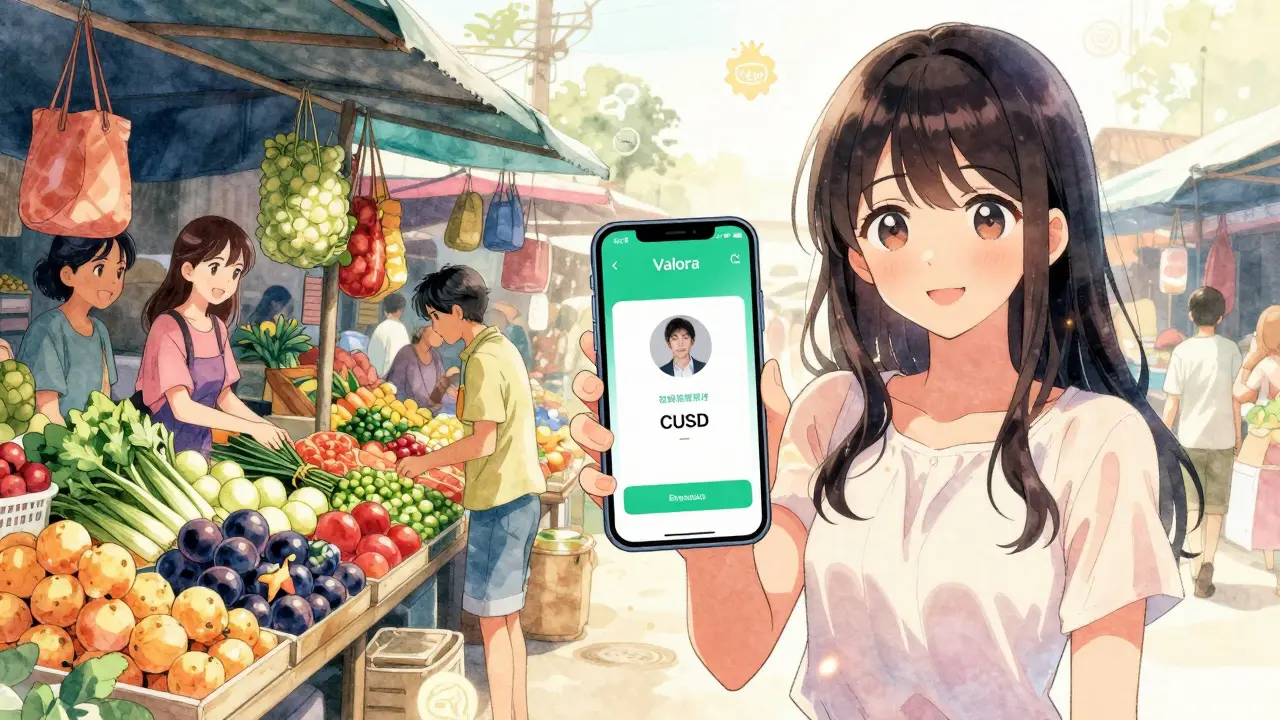
Celo Dollar (CUSD) is a stablecoin built to act like digital cash - always worth $1.00 USD - but designed for people who don’t have bank accounts. Unlike traditional crypto that swings wildly in price, CUSD stays steady so you can use it to pay for things, send money to family, or save without worrying about losing value overnight. It runs on the Celo blockchain, a network built specifically for mobile phones, making it easier to use than Bitcoin or Ethereum for everyday people in places like Nigeria, Colombia, or the Philippines.
How CUSD Stays Worth $1.00
CUSD doesn’t sit in a bank vault like USDC or USDT. Instead, it’s backed by a mix of other cryptocurrencies - mostly CELO, Bitcoin, and Ethereum - held in a digital reserve. When the price of CUSD dips below $0.99, the system automatically burns some CUSD to reduce supply and push the price back up. When it rises above $1.01, it prints more CUSD and sells it to bring the price down. This is called an algorithmic mechanism, and it works like a self-correcting thermostat for money.
The reserve isn’t just one asset. As of late 2023, it’s made up of 45% CELO, 30% Bitcoin, 20% Ethereum, and 5% other tokens. This diversification helps protect against crashes in any single coin. The whole system is overseen by smart contracts and verified by decentralized oracles - meaning no single company controls it. That’s different from USDC, which is backed by actual U.S. dollars held in regulated banks.
Why CUSD Works Better on Phones
Here’s what makes CUSD truly different: you don’t need to copy and paste a 42-character wallet address to send money. You just type a phone number. Apps like Valora let you register with your mobile number, and then you can send CUSD to anyone else in the world who has the app - even if they’ve never used crypto before.
This matters because over 1.4 billion adults globally don’t have bank accounts, but nearly 70% of them own a smartphone. In Kenya, for example, people already use mobile money apps like M-Pesa. CUSD is built to feel just as simple. You don’t need to understand blockchain. You don’t need a credit card. You just need a phone and a connection.
Speed and Cost: Faster Than Western Union
Sending CUSD takes about 5 seconds. The fee? Less than one cent. Compare that to Western Union, which charges $15-$25 to send $200 to Nigeria. In 2022, Mercy Corps used CUSD to send $2.3 million to Venezuelan refugees in Colombia. Recipients got the money in minutes, not days, and 92% said it was easier than cash vouchers.
On the Ethereum network, sending DAI (another stablecoin) can cost over $1.50 during busy times. On Celo, sending CUSD averages $0.005 - that’s 300 times cheaper. That’s why it’s ideal for small payments: buying a bus ticket, paying a street vendor, or sending $5 to your cousin in Guatemala.
How It Compares to Other Stablecoins
| Feature | CUSD | USDC | DAI | UST (collapsed) |
|---|---|---|---|---|
| Backing | Multi-crypto reserve (CELO, BTC, ETH) | U.S. dollars in banks | Over-collateralized crypto | Algorithmic (failed) |
| Transaction Speed | 5 seconds | 10-60 seconds (Ethereum) | 10-60 seconds (Ethereum) | 2-5 seconds (before collapse) |
| Average Fee | $0.005 | $1.50+ (during congestion) | $1.50+ | $0.01 |
| Mobile-Friendly | Yes - phone number transfers | No | No | No |
| Market Cap (Q4 2023) | $45 million | $25 billion | $5.2 billion | $0 (collapsed) |
CUSD isn’t the biggest stablecoin - not even close. But it doesn’t need to be. It’s not trying to replace Wall Street. It’s trying to replace money transfer shops in rural towns. That’s why it’s growing fast in Latin America and Africa, where remittance fees eat up 6.3% of every dollar sent, according to the World Bank.
Real People Using CUSD
On Reddit, users in the U.S. report sending CUSD to Nigeria in under two minutes for $0.03. One user wrote: “I used to pay $20 to send $200 to my sister. Now I send it for a coffee’s worth of gas fee - and she gets it instantly.”
But it’s not perfect. Some users on Trustpilot complain about the Valora wallet being confusing at first. You need a tiny bit of CELO to pay for gas fees before you can send CUSD. That trips up newcomers. If you don’t know what gas is, you’ll get stuck.
Also, sending to phone numbers doesn’t always work. In countries with unusual phone formats - like some parts of India or Indonesia - the system sometimes fails. Developers are working on it, but it’s still a bug in 27% of support tickets.

Who’s Behind CUSD?
The Celo Foundation is a non-profit group made up of engineers, economists, and humanitarian organizations. They’re not trying to get rich. They’re trying to make money accessible. Partners include Mercy Corps, the UN, and the World Food Programme. Their goal? To help people who’ve been left out of the financial system.
In November 2023, Celo upgraded its network to use Ethereum Layer 2 technology. That cut fees by 75% and boosted transaction speed to 4,000 per second. It’s now one of the fastest blockchains for everyday payments.
What’s Next for CUSD?
In January 2024, Celo started testing integration with the European Central Bank’s digital euro project. That’s a big deal - it means CUSD could one day be used to pay for public services in Europe, even if you’re not a citizen.
They’re also testing CUSD for carbon credits. In late 2023, $450,000 in carbon offsets were paid out using CUSD through ClimateTrade. Farmers in Kenya got paid in CUSD for planting trees, and buyers in Germany could track the impact directly on the blockchain.
Analysts at Messari predict CUSD’s market cap could hit $120 million by 2025 - still small compared to USDC, but huge for a stablecoin built for the unbanked.
Should You Use CUSD?
If you’re in the U.S. or Europe and just want to trade crypto, stick with USDC or DAI. They’re on every exchange, have more liquidity, and are easier to cash out.
But if you’re sending money to family in a country with weak banking, or if you’re someone who just needs a simple way to store value without a bank, CUSD is one of the best options out there. It’s not perfect, but it’s designed for real people - not investors.
Try it: Download the Valora wallet. Verify your phone number. Buy $1 of CUSD. Send it to a friend. You’ll see why it’s different.
Is CUSD the same as USDC?
No. USDC is backed by actual U.S. dollars held in U.S. banks and regulated by financial authorities. CUSD is backed by a mix of cryptocurrencies like Bitcoin and CELO, and it’s designed to work on mobile phones using phone numbers instead of wallet addresses. USDC is for trading and institutional use. CUSD is for sending money to people without bank accounts.
Can I lose money with CUSD?
The peg to $1.00 is designed to hold, but it’s not guaranteed. During the crypto crash in May 2021, CUSD briefly dropped to $0.97. That’s because part of its backing - CELO - also lost value. The system eventually corrected itself, but if crypto markets collapse for months, CUSD could struggle to stay pegged. It’s less risky than UST (which collapsed), but more risky than USDC.
How do I buy CUSD?
You can buy CUSD on decentralized exchanges like Ubeswap or SushiSwap using other crypto like ETH or CELO. You can also buy it directly in the Valora wallet using a credit card or bank transfer, but you’ll need to first buy a small amount of CELO to pay for transaction fees. There’s no way to buy CUSD on Coinbase or Binance yet.
Is CUSD safe to store?
Yes, if you use a trusted wallet like Valora and keep your recovery phrase secure. The Celo blockchain has never been hacked. But like all crypto, if you lose your recovery phrase or send CUSD to the wrong address, there’s no way to get it back. Never share your recovery phrase with anyone.
Can I use CUSD to pay for goods online?
Not yet on big sites like Amazon or eBay. But some small businesses in Latin America and Africa accept CUSD directly through mobile wallets. There are also pilot programs where farmers, ride-share drivers, and street vendors are paid in CUSD. As adoption grows, more merchants will likely start accepting it.

22 Comments
Write a comment





Tselane Sebatane
January 20, 2026 AT 03:41CUSD is literally changing lives in places like Nigeria and Kenya where people can't even get a bank loan but they got a phone. I saw a woman in Soweto pay for her kid's school supplies with CUSD last month - no middlemen, no fees, no waiting. This isn't crypto fantasy, this is real financial dignity. We need more of this, not less. 🌍💪
katie gibson
January 21, 2026 AT 12:34Ok but like… why should I care about some phone-number stablecoin when USDC is on EVERY exchange and backed by ACTUAL DOLLARS?? Celo feels like a niche experiment for people who think blockchain is a personality trait. Also, who even uses Valora? I’ve never heard of it. 😴
Darrell Cole
January 21, 2026 AT 15:46Algorithmic stablecoins always fail. UST collapsed. CUSD is just UST with extra steps. The fact that it’s backed by volatile crypto assets means it’s one bad bear market away from being worthless. And don’t get me started on phone number transfers - that’s not innovation that’s a security nightmare waiting to happen. You think your cousin in Guatemala won’t get scammed? Please.
Harshal Parmar
January 22, 2026 AT 11:38Man I love this. In India, sending money to family in rural villages used to mean waiting days and paying 10% in fees. Now with apps like PhonePe and UPI, we’re getting close to this. CUSD could be the global version. No need for banks. Just a phone and trust. Simple. Beautiful. Let’s make this work.
MOHAN KUMAR
January 24, 2026 AT 08:17Market cap is $45M? That’s cute. USDC is $25B. This isn’t a competitor - it’s a side project. Don’t confuse accessibility with scalability. CUSD is great for remittances, but it won’t replace anything major. It’s a tool, not a revolution.
carol johnson
January 26, 2026 AT 02:21OMG I just sent $1 to my cousin in Colombia using Valora and she got it in 3 seconds 😭😭😭 This is the future!! I cried. I literally cried. Why is no one talking about this?? 🌟📱💖
Jeffrey Dufoe
January 26, 2026 AT 16:54Been using CUSD to pay my cleaner in LA. She doesn’t have a bank account but she has a phone. She loves it. No more cash handoffs. No awkwardness. Just send and done. Small thing, big difference.
Andy Marsland
January 26, 2026 AT 21:21Let’s be real - this is just a vanity project for Silicon Valley tech bros who think they’re saving the world. The fact that it needs CELO to pay gas fees? That’s not user-friendly, that’s a trap. You’re forcing people to buy another volatile asset just to use your ‘simple’ system. Classic crypto move.
Bonnie Sands
January 28, 2026 AT 00:36Wait… so CUSD is backed by Bitcoin and Ethereum? But Bitcoin’s crashed 70% before. What happens when the whole crypto market tanks again? Isn’t this just one big Ponzi where the rich get to cash out and the poor get stuck with worthless tokens? I smell a scam.
Abdulahi Oluwasegun Fagbayi
January 29, 2026 AT 09:49In Nigeria, we know what happens when you trust a system built by foreigners. But CUSD? It’s different. The team works with local NGOs. The devs listen. I’ve seen people in Aba use it to buy fuel and pay school fees. It’s not perfect. But it’s honest. That’s rare.
Paru Somashekar
January 30, 2026 AT 05:05While CUSD presents an innovative approach to financial inclusion, it is imperative to acknowledge the regulatory and operational risks inherent in algorithmic stablecoins. The lack of fiat backing, coupled with exposure to volatile crypto assets, introduces systemic vulnerabilities that may not be adequately mitigated by decentralized oracles. Caution is advised for non-technical users.
Jonny Lindva
January 30, 2026 AT 14:01Just tried it. Got a friend in the Philippines to test it. Took 4 seconds. Cost 2 cents. She didn’t know what blockchain was but she got the money. That’s the whole point. No need to overcomplicate it. Just send money like you send a text.
Margaret Roberts
January 31, 2026 AT 23:16Who’s really behind this? Celo Foundation? Sounds like a front for some hedge fund. And why are UN and World Food Programme involved? Are they trying to replace cash aid with crypto? What’s next - food stamps on the blockchain? This feels like a covert experiment on the global poor.
Jennifer Duke
February 2, 2026 AT 01:09It’s cute that you think sending money via phone number is revolutionary. In 2024, even my grandma uses Venmo. This is just crypto’s version of trying to look cool at a high school reunion. USDC is faster, cheaper, and actually trusted. Stop romanticizing the underdog.
Heather Crane
February 2, 2026 AT 02:05I’ve been using CUSD to pay for organic veggies from a vendor in Mexico City - she didn’t even have a credit card reader. We just scanned QR codes. She cried. I cried. It’s not about tech. It’s about dignity. This is what financial justice looks like. Let’s not let elitists ruin it.
Steve Fennell
February 2, 2026 AT 05:34As someone who grew up in rural Kenya, I can tell you - this is the closest thing to magic I’ve seen in finance. No bank branches. No paperwork. Just a phone. And yes, the first time you send CUSD, you need a little CELO for gas - but that’s like needing a match to light a fire. Once you get it, you never go back.
Anna Topping
February 3, 2026 AT 07:56I keep thinking about how CUSD lets people bypass centuries of financial exclusion. It’s not just money - it’s agency. Imagine being told your whole life you’re not worthy of a bank account… then one day you send $5 to your mom and she gets it before you hang up the phone. That’s not innovation. That’s healing.
Tammy Goodwin
February 3, 2026 AT 20:28It’s interesting how CUSD avoids the U.S. banking system entirely. I wonder if that’s intentional. Maybe it’s not about helping the unbanked - maybe it’s about creating an alternative economy outside of Western control. Food for thought.
Julene Soria Marqués
February 5, 2026 AT 17:33So you’re telling me I need to buy CELO just to send CUSD? And the wallet is confusing? And phone numbers don’t always work in India? And the system almost broke in 2021? So… it’s not ready. Why are you hyping this like it’s the next iPhone? It’s a beta.
Ashok Sharma
February 6, 2026 AT 23:36Dear friend, this technology has great potential. For those without access to banks, it is a gift. Please do not focus on the small flaws. Focus on the lives it changes. A small fee, a quick transfer - these are miracles for many. Let us support progress, not doubt it.
Catherine Hays
February 7, 2026 AT 00:49Mark my words - this is how they track you. Phone number linked to wallet. Every transaction logged on a blockchain controlled by a non-profit with UN ties. Next thing you know, your CUSD gets frozen because you bought too much rice or donated to the wrong charity. This isn’t freedom. It’s surveillance with a smile.
Jeffrey Dufoe
February 7, 2026 AT 09:05Just replied to my cousin in Guatemala with CUSD. She didn’t even know what it was. She just saw the $5 show up. Asked me if it was magic. I said no - it’s just tech that works for people, not just investors.