Vietnam Ranks #5 in Global Crypto Adoption Despite Strict Regulations

When you hear Vietnam is one of the top countries for crypto use, you might picture a free-for-all market with exchanges on every corner. But the truth is more complicated. Vietnam ranks #5 in the 2025 Chainalysis Global Crypto Adoption Index - not because it’s open, but because its people are determined. Despite government rules that make it harder than ever to trade legally, millions of Vietnamese are using crypto anyway. They’re not doing it for speculation. They’re doing it to survive.
How Vietnam Became a Crypto Powerhouse
Vietnam’s crypto adoption didn’t come from big banks or government incentives. It came from necessity. With a population of nearly 99 million, about 17 million people - or 17.2% - are actively trading or holding digital assets. That’s more than the entire population of New Zealand. In 2025, Vietnamese users generated over $100 billion in crypto transactions. That’s not just trading. It’s remittances, e-commerce, and daily payments slipping through the cracks of a broken financial system. The numbers don’t lie. Chainalysis’ 2025 report shows Vietnam leads Southeast Asia in retail adoption, with 20.3% of its population owning crypto. Thailand is at 14.7%. Indonesia is at 18.2%. Even India, often called a crypto giant, has lower adoption per capita. Vietnam’s users aren’t just buying Bitcoin. They’re using it to send money home, buy goods from overseas sellers, and protect savings from inflation.What the Government Actually Allows - and Bans
Here’s where it gets strange. In June 2025, Vietnam passed the Law on Digital Technology Industry. On paper, it legalized crypto. But in practice, it made it nearly impossible to operate legally. The State Bank of Vietnam (SBV) drew a hard line: you can own Bitcoin and Ethereum. You can trade them. But you can’t issue stablecoins. You can’t use USDT or USDC as a bridge between VND and global markets. You can’t even create a local exchange unless you have at least 10 trillion VND ($379 million USD) in capital. That’s more than most banks in Vietnam have in reserves. Only state-owned enterprises or massive conglomerates can even apply to become a Crypto Asset Service Provider (CASP). And even then, they have to jump through 14 different compliance hoops - real-time transaction monitoring systems, daily audits, physical server locations inside Vietnam, and more. The result? Zero applications for the government’s own regulatory sandbox since it launched in September 2025. Meanwhile, the government keeps saying it wants to bring crypto trading “onshore.” But it’s building a wall so high that no one can climb it.The Underground Market: Binance, P2P, and Premiums
So where are people trading? Over 63% of Vietnamese crypto users rely on Binance P2P. Another 21% use Bybit. 19% use OKX. These aren’t official Vietnamese platforms. They’re offshore. And they’re the only way most people can convert VND to crypto - and back again. But it’s not easy. Users pay 3-5% premiums just to buy USDT with VND. Why? Because there’s no legal, liquid market. When you’re the only buyer in a restricted system, you pay more. One Reddit user, HanoiTrader88, wrote in September 2025: “I spend hours verifying my ID just to get $200 worth of USDT. And I still get flagged every other trade.” Trustpilot reviews for Binance Vietnam show a 3.2/5 rating. Two-thirds of negative reviews complain about slow VND deposits and constant KYC checks. Yet people keep using it. Because the alternative - traditional banks - is worse.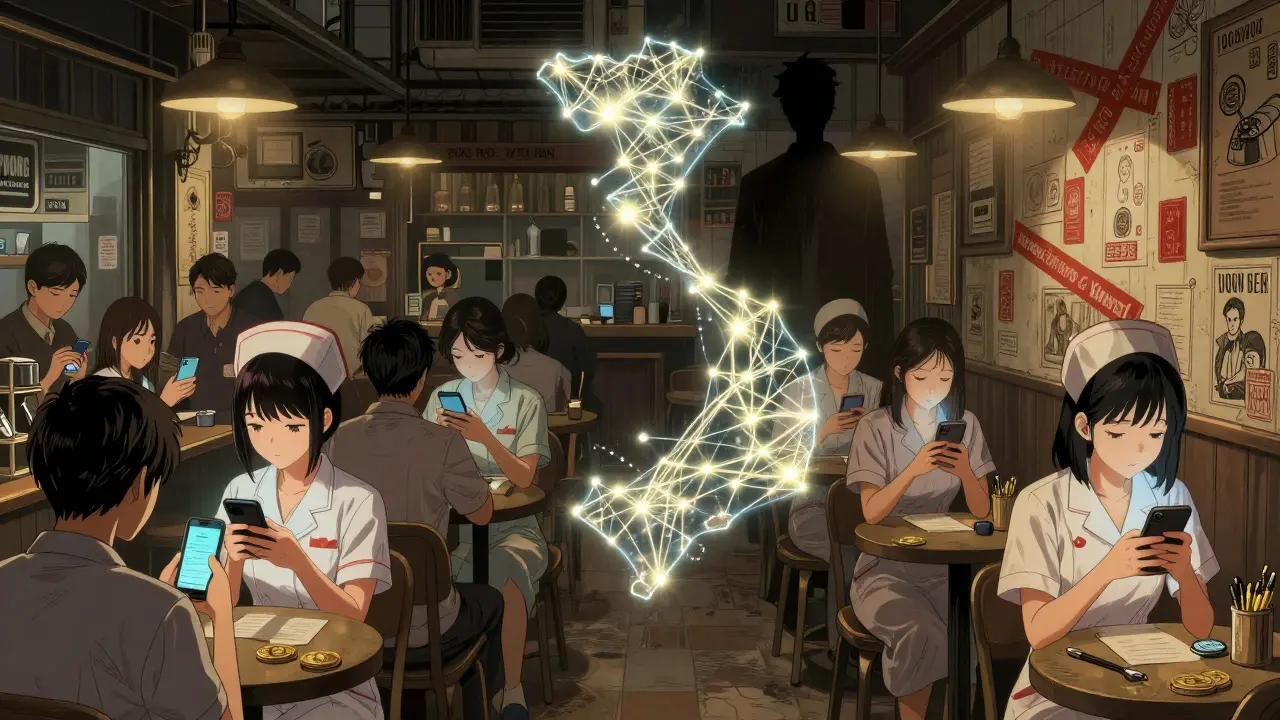
Why Crypto Is Essential for Remittances
Vietnam received $19.2 billion in international remittances in 2024. That’s money sent home by workers in the U.S., South Korea, Japan, and Europe. Traditional services like Western Union and MoneyGram charge 6-8% in fees. That’s $1.2 billion a year just in costs. Crypto cuts that to under 2%. A September 2025 survey found that 74% of Vietnamese crypto users send money overseas using digital assets. The average transaction? $387. The fee? 1.2%. That’s not a luxury. It’s a lifeline. Compare that to the Philippines. There, GCash - a mobile wallet used by 70 million people - launched GCrypto in 2023. It lets users buy, hold, and send crypto directly in-app. Over 8.7 million users joined in under two years. Vietnam could have done the same. But its ban on stablecoins blocks that path. No local stablecoin means no seamless VND-to-crypto conversion. No seamless conversion means no mass adoption through mobile apps.Who’s Using Crypto in Vietnam - and Why
It’s not just traders. It’s students, nurses, factory workers, and small business owners. According to OneSafe.io’s 2025 data:- 68% of users are under 35
- 54% have a university degree
- 59% earn between 15-40 million VND per month ($568-$1,514)
- 41% use crypto to pay for goods on Shopee Vietnam’s crypto pilot program

The Cost of Being Too Careful
The SBV says its rules are about “financial stability.” But the reality is the opposite. By forcing 92% of crypto activity underground, Vietnam is creating a system that’s harder to monitor, harder to tax, and more dangerous. The IMF warned in October 2025 that unregulated P2P trading poses “significant financial integrity risks.” That’s code for: “We have no idea where most of this money is going.” Meanwhile, startups trying to build compliant platforms face 11.3 months of red tape and an average cost of $2.8 million to get licensed. That’s not regulation. That’s exclusion. PwC Vietnam found that only 17% of crypto activity comes from institutions. In Singapore, it’s 49%. Why? Because Singapore lets regulated firms issue stablecoins. Vietnam doesn’t. And that single difference is why institutional investors stay away.What Could Change
There are signs of movement. In October 2025, the Ministry of Finance proposed a 2% VAT and 0.1% transaction tax on crypto trades. That’s a step toward recognizing crypto as real economic activity. The SBV also announced a pilot for a digital đồng - Vietnam’s own central bank digital currency (CBDC). If that system can connect to crypto exchanges, it could become the bridge the market needs. Imagine: you send USDT to a digital đồng wallet, and it auto-converts to VND. No offshore middlemen. No premiums. No delays. Morgan Stanley predicts that if Vietnam allows stablecoins by 2027, it could capture 12-15% of its $19.2 billion remittance market - adding $2.3 to $2.9 billion in annual economic activity. It could also unlock $137 billion in e-commerce sales by letting Shopee and Lazada accept crypto payments directly. But that’s a big “if.” Right now, the government is trying to control a wave it didn’t create - and it’s drowning in its own rules.What’s Next for Vietnam’s Crypto Scene
Vietnam’s crypto story isn’t about technology. It’s about people. It’s about a generation that refused to wait for permission to use better tools. They didn’t need a law to start trading. They just needed a phone and a Wi-Fi connection. The question isn’t whether Vietnam will keep leading in adoption. It already is. The real question is whether the government will catch up. If it does - by allowing stablecoins, lowering capital requirements, and creating real on-ramps - Vietnam could become the most innovative crypto market in Southeast Asia. If it doesn’t, it’ll stay stuck: a nation of crypto pioneers trapped in a system designed to keep them out. The world watches. And so do the 17 million Vietnamese who already know: money doesn’t need permission to move.Why does Vietnam rank so high in crypto adoption if it bans stablecoins?
Vietnam ranks high because its people use crypto out of necessity, not choice. With weak banking infrastructure, high remittance fees, and inflation concerns, millions turned to peer-to-peer platforms like Binance P2P to send money, buy goods, and protect savings. Even though the government bans stablecoins and restricts local exchanges, demand is so strong that users pay 3-5% premiums just to trade. The ranking reflects grassroots adoption, not government policy.
Can I legally buy Bitcoin in Vietnam?
Yes, you can legally own Bitcoin and other cryptocurrencies in Vietnam. However, you cannot legally trade them on a local exchange unless you’re a state-backed entity with over $379 million in capital. Most people buy Bitcoin through offshore platforms like Binance, Bybit, or OKX using peer-to-peer (P2P) trades in Vietnamese Dong (VND). These trades operate in a legal gray area but are widely tolerated.
Why doesn’t Vietnam allow stablecoins like USDT?
The State Bank of Vietnam bans fiat-backed stablecoins to prevent capital flight, currency devaluation, and unregulated financial activity. They fear that if people can easily convert VND to USDT, it could destabilize the national currency. Instead, they require crypto assets to be backed only by tangible real-world goods - like property or commodities - not cash. This makes stablecoins illegal, even though they’re the most practical tool for everyday crypto use.
How much of Vietnam’s crypto activity is illegal?
Approximately 92% of crypto transactions in Vietnam happen outside formal channels, according to the IMF’s October 2025 assessment. This includes P2P trades on offshore platforms, informal cash exchanges, and unlicensed wallets. Only 8% occur through regulated or licensed entities - and even those are barely functional due to extreme compliance barriers. The government admits it has little visibility into this underground market.
Is Vietnam planning to regulate crypto more openly in the future?
There are signs of change. In October 2025, the Ministry of Finance proposed taxing crypto trades, and the State Bank of Vietnam began testing a digital đồng - a central bank digital currency. If the digital đồng can connect to crypto wallets, it could become a legal bridge between VND and digital assets. Experts believe if stablecoins are allowed by 2027, Vietnam’s adoption could rise even higher. But for now, the government remains cautious, prioritizing control over innovation.
20 Comments
Write a comment





Alison Hall
December 31, 2025 AT 06:12Crypto in Vietnam isn't about speculation-it's survival. People are using it to feed their families, send money home, and bypass a broken system. That's not tech hype, that's human ingenuity.
Vernon Hughes
December 31, 2025 AT 09:45Government bans don't stop demand they just make it more expensive and dangerous. This is textbook unintended consequence.
Brooklyn Servin
January 1, 2026 AT 15:16Let me just say this: Vietnam’s 17 million crypto users aren’t rebels-they’re rational. When your bank charges 8% to send money to your mom, and crypto charges 1.2%, you don’t need a PhD to pick the better option. The SBV is trying to regulate a tide with a sieve. And honestly? They’re gonna lose. The digital đồng might help-but only if it actually talks to crypto. Otherwise, it’s just another expensive paperweight.
dayna prest
January 1, 2026 AT 19:20Oh wow, another ‘people are so clever’ story about how regulations are evil. Newsflash: unregulated crypto = money laundering paradise. Vietnam’s government is trying to prevent financial chaos, and you’re acting like they’re the villains. Maybe the problem isn’t the rules-it’s that people want to bypass every system ever created because they think they’re smarter than institutions.
Andy Reynolds
January 2, 2026 AT 16:18I love how this isn’t about tech-it’s about people refusing to accept broken systems. I’ve talked to Vietnamese students who use crypto to buy textbooks from China because Shopee won’t take VND. They’re not trying to get rich. They’re just trying to get by. That’s the real story here.
Haritha Kusal
January 3, 2026 AT 22:24so trueeee!! in india also people use crypto for remittances cause banks are slowww and fees are insane. why cant governments just make it easier instead of making it harder??
Mike Reynolds
January 4, 2026 AT 10:44It’s wild how the government says they want adoption onshore but builds walls so high no one can even see the top. It’s like saying you want people to bike to work… but then banning bikes and charging $500 for a permit to ride a tricycle.
Prateek Chitransh
January 4, 2026 AT 11:18Let’s be real-the SBV doesn’t fear crypto. They fear losing control. They’d rather have 17 million people trading in the shadows than 10 million trading openly with taxes and oversight. It’s not about stability. It’s about power.
Amy Garrett
January 4, 2026 AT 16:11imagine paying 5% just to buy usdt like its some kind of black market drug lmao. people are literally paying extra to use money that’s supposed to be free and open. this is insane.
Raja Oleholeh
January 6, 2026 AT 09:06Why should Vietnam care about crypto? America and China run the world. Let them deal with it. We have real problems like food and roads.
Phil McGinnis
January 7, 2026 AT 11:34These so-called ‘grassroots adoption’ narratives are dangerous fantasies. A nation that cannot regulate its own financial infrastructure has no right to claim technological leadership. This is not innovation-it’s anarchy dressed in blockchain.
Khaitlynn Ashworth
January 9, 2026 AT 01:02Oh wow, so Vietnam’s ‘crypto pioneers’ are just criminals who can’t follow basic rules? And we’re supposed to admire them? Cute. I bet they also think jaywalking is a civil rights issue.
SUMIT RAI
January 10, 2026 AT 23:24Stablecoins are just fiat in disguise. Vietnam’s ban is smart. Let the west drown in their own crypto bubbles. We’ll keep our currency intact.
nayan keshari
January 11, 2026 AT 21:06They banned stablecoins because they know if people can convert VND to USDT easily, no one will use the dong anymore. It’s not about control-it’s about fear.
Elisabeth Rigo Andrews
January 13, 2026 AT 17:35Let’s not romanticize this. Underground crypto markets are breeding grounds for tax evasion, sanctions evasion, and organized crime. This isn’t ‘people power’-it’s systemic risk wrapped in a feel-good narrative.
christopher charles
January 13, 2026 AT 20:11They’re not ‘bypassing’ the system-they’re fixing it. The banks are the problem, not the people. If the government wanted to help, they’d build bridges, not walls. And honestly? If I lived in Vietnam, I’d be on Binance too. No question.
rachael deal
January 14, 2026 AT 00:52Can we just appreciate how beautiful it is that a country with no crypto-friendly laws still leads the region in adoption? That’s the power of real need vs. red tape.
Gavin Hill
January 14, 2026 AT 22:07Money moves. Always has. Always will. The question isn’t whether people will use crypto-it’s whether institutions will adapt or become irrelevant.
Bruce Morrison
January 15, 2026 AT 23:17What’s more dangerous: people using crypto to send money home, or a government that refuses to acknowledge reality? The answer isn’t complicated.
Ian Koerich Maciel
January 16, 2026 AT 10:01It’s fascinating how the most technologically advanced financial behavior emerges precisely where regulation is most rigid. The irony is almost poetic. The State Bank of Vietnam is not preventing crypto adoption-it is, unintentionally, engineering its most resilient form.