Unlicensed Crypto Mining in Iran: The IRGC’s Hidden Empire

Imagine your city going dark for hours every day because the military is running massive server farms next door. That’s not a dystopian novel; it’s daily life in parts of Iran today. While ordinary citizens struggle with rolling blackouts and soaring electricity bills, a shadowy network linked to the Islamic Revolutionary Guard Corps (IRGC) quietly dominates the country’s cryptocurrency sector. This isn’t just about tech enthusiasts chasing digital gold. It’s a strategic maneuver to bypass international sanctions, funded by national resources that should belong to the public.
The story of unlicensed crypto mining in Iran is really a story about power. When global banks cut off Tehran due to sanctions, the regime needed a way to move money without leaving a paper trail. Cryptocurrency offered the perfect loophole. But instead of letting private miners compete fairly, state-affiliated entities seized control. They turned a decentralized technology into a centralized tool for political survival, creating what investigators call a "crypto cartel." If you’ve wondered why Iran remains a top Bitcoin producer despite economic isolation, the answer lies in this militarized approach to blockchain.
How the IRGC Built a Crypto Cartel
By 2019 and 2020, reports began surfacing that the IRGC wasn’t just watching the crypto boom-they were driving it. Supreme Leader Ali Khamenei reportedly ordered the expansion of mining operations to compensate for lost dollar revenue. The strategy was simple: use Iran’s heavily subsidized electricity to mine Bitcoin cheaply, then sell those coins on global markets to buy hard currency or fund proxy groups abroad.
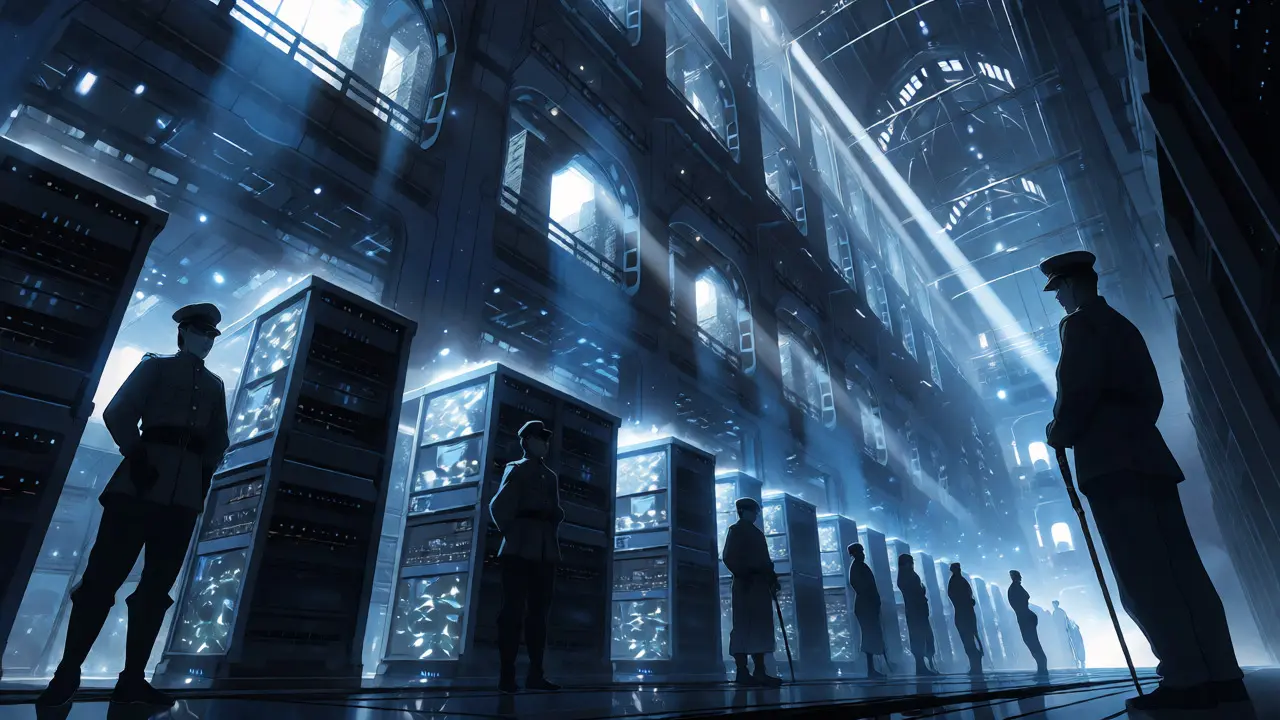
This wasn’t done through small garage setups. We’re talking industrial-scale farms located in special economic zones and military bases. These locations offer two huge advantages: guaranteed power supply and minimal civilian oversight. One prominent example is the 175-megawatt facility in Rafsanjan, Kerman Province. Nominally a joint venture with foreign investors, it operates under the umbrella of an IRGC-affiliated enterprise. Because these sites are often on military land, they can draw electricity at rates far below what a factory or home pays, sometimes even refusing to pay utility bills entirely.
The scale is staggering. Estimates suggest that over half of all mining hardware in Iran belongs to state-related entities. Out of approximately 180,000 active mining devices in the country, around 100,000 are controlled by quasi-state organizations like the Astan Quds Razavi, a massive religious foundation supervised by the Supreme Leader. This monopoly allows the regime to profit from national resources while claiming the industry is open to private investment.
The Energy Crisis: Who Pays the Price?
Here is where the rubber meets the road for regular Iranians. Bitcoin mining requires specialized computers called ASICs, which consume enormous amounts of electricity 24/7. When the IRGC and its partners plug these machines into the grid, they create a massive load. But because they operate with political protection, they don’t face the same rationing measures as civilians.
In 2022, the Iranian parliament passed legislation allowing the military to build its own power plants and transmission lines. On the surface, this sounds like infrastructure development. In practice, it allowed the IRGC to redirect public electricity originally intended for cities and industries toward their secret mining farms. Energy Minister Ali Abadi, himself a former IRGC commander, has openly criticized unauthorized mining, calling it "an ugly and unpleasant theft"-like putting a hand in someone else’s pocket. Yet, his background raises a tough question: how committed is a government led by ex-IRGC figures to cracking down on the very organization that employs them?
The result is a two-tiered system. Private miners face high tariffs and strict regulations, including requirements to sell their mined Bitcoin directly to the Central Bank of Iran (CBI). This makes legal mining financially unsustainable for many. Meanwhile, the state-backed giants enjoy effectively free power, immune to the costs that crush smaller competitors. So when your neighborhood loses power during a summer heatwave, there’s a good chance the electricity is being used to solve complex cryptographic puzzles for the elite.
Sanctions Evasion and Global Tracking
Why does the world care? Because this isn’t just domestic policy; it’s a geopolitical tool. Blockchain analytics firms have identified Iran as one of the world’s major Bitcoin producers. More importantly, intelligence agencies like the U.S. Treasury Department and Israeli Mossad track specific Bitcoin wallets tied to IRGC operations. These wallets are believed to fund proxy groups involved in regional conflicts, providing a lifeline that traditional banking sanctions cannot easily block.
Cryptocurrency works for sanctions evasion because of two key features: direct transactions and relative anonymity. Unlike wire transfers that require multiple bank verifications and leave clear audit trails, crypto exchanges happen directly between digital wallets. While the blockchain itself is public, the identities behind the wallets can remain obscure if mixed properly. For the IRGC, this means they can convert mined Bitcoin into other currencies or goods without passing through Western-controlled financial hubs like SWIFT.
| Feature | Private/Licensed Miners | IRGC/State-Affiliated Miners |
|---|---|---|
| Electricity Cost | High tariffs; subject to subsidies cuts | Subsidized or effectively free |
| Regulatory Oversight | Strict Ministry of Industry monitoring | Minimal; protected by military status |
| Sales Requirements | Must sell to Central Bank of Iran | Flexible; often sold on global markets |
| Infrastructure | Shared grid; prone to outages | Dedicated lines; priority access |

The Regulatory Cat-and-Mouse Game
Iran officially recognized cryptocurrency mining as a legal industry in 2019. The Ministry of Industry, Mines, and Trade issues licenses, but the framework seems designed more for control than competition. Recent moves by the Central Bank highlight this tension. In late 2024, new programs blocked most Iranian crypto-to-rial payments through internet websites within Iran. By January 2025, however, the central bank began selectively unblocking certain exchanges using a government API that grants full access to user data.
This isn’t about banning crypto. It’s about surveillance and control. The state wants to monitor who is buying and selling, ensuring that the profits flow back into the official economy-or at least stay visible. For ordinary Iranians, this creates a frustrating environment. Platforms like Nobitex remain popular but operate under stringent rules. Many users circumvent restrictions by using Virtual Private Networks (VPNs) to access foreign exchanges, avoiding local scrutiny. It’s a digital cat-and-mouse game where the government tries to keep the benefits of crypto for itself while limiting freedom for its citizens.
What This Means for the Future
The current status of unlicensed IRGC mining shows no signs of slowing down. Despite official rhetoric about cracking down on unauthorized activities, the military-industrial complex continues to expand its footprint. Political protection, armed enforcement, and direct access to subsidized energy ensure that these operations remain largely immune to regulatory pressure.
For investors and observers, the takeaway is clear: Iran’s role in the global crypto market is not driven by grassroots adoption or technological innovation alone. It is a state-sponsored mechanism for survival. As long as international sanctions restrict traditional financial channels, the incentive for the IRGC to mine Bitcoin will remain strong. And as long as the electricity grid prioritizes military needs over civilian comfort, the lights will likely stay dim in Tehran while the servers hum in Rafsanjan.
Why is cryptocurrency mining so profitable in Iran?
Mining is highly profitable in Iran primarily due to extremely low electricity costs. The government heavily subsidizes energy, allowing miners to spend significantly less per kilowatt-hour compared to countries like the US or China. Additionally, state-affiliated entities like the IRGC often receive preferential rates or avoid paying bills entirely, maximizing their profit margins on mined Bitcoin.
How does IRGC involvement affect ordinary Iranian citizens?
The primary impact is frequent power outages. Industrial-scale mining farms consume vast amounts of electricity, straining the national grid. Because these state-backed operations have priority access to power, residential areas and private businesses often experience rolling blackouts, especially during peak demand seasons, leading to discomfort and economic disruption for the general population.
Is cryptocurrency mining legal in Iran?
Yes, but with strict conditions. Since 2019, licensed mining is legal and regulated by the Ministry of Industry, Mines, and Trade. However, licensed miners must sell their mined assets to the Central Bank of Iran and pay higher energy tariffs. Much of the mining activity is considered "unlicensed" or operates in a gray area, particularly when conducted by entities with military or state connections that bypass standard regulatory constraints.
How do international agencies track IRGC crypto funds?
Agencies like the US Treasury and Israeli intelligence use blockchain analytics firms to trace Bitcoin flows. They identify clusters of wallets associated with known IRGC addresses. Even though crypto offers anonymity, patterns in transaction timing, volume, and interaction with sanctioned entities allow analysts to link digital assets to specific military or political operations, helping to enforce sanctions.
Can ordinary Iranians freely trade cryptocurrency?
Not entirely. While trading is possible on local platforms like Nobitex, the Central Bank imposes tight controls. Direct conversions between crypto and rial via websites are restricted, and foreign-mined cryptocurrencies cannot be used for domestic transactions. Many citizens use VPNs to access global exchanges, but they risk legal penalties and lack the institutional protections enjoyed by state-linked actors.