Shield DAO SLD Airdrop: What Happened and Why It Matters

The Shield DAO airdrop wasn’t just another token giveaway. It was a carefully planned move to build a decentralized derivatives protocol from the ground up - and it only rewarded people who actually helped build it. If you’re wondering whether you missed out, or why this airdrop still gets talked about in DeFi circles, here’s the full story - no fluff, just facts.
What Was the Shield DAO Airdrop?
In 2021, Shield (formerly ShieldEX) launched its first and only token distribution: the SLD airdrop. Unlike most projects that give tokens to anyone who joins a Discord or follows a Twitter account, Shield focused on real contributors. The goal? To bootstrap a decentralized derivatives platform built on non-cooperative game theory - a fancy way of saying it was designed so no single group could control or exploit the system. The total supply of SLD tokens was capped at 1 billion, but only 4,085,754 were distributed in this initial airdrop. That’s less than 0.5% of the total supply. The rest? Reserved for protocol incentives, team, and future development - not speculative trading.Who Got SLD Tokens?
Shield didn’t hand out tokens to random wallets. You had to earn them. Here’s who qualified:- Users who participated in the Shield Kovan or Binance Smart Chain (BSC) testnets
- People who applied for the Shield Initial Token Offering (ITO)
- Contributors to the 1st and 2nd Shield Bug Bounty Programs
- Participants in the Shield Gleam Series campaigns (community challenges and engagement drives)
How Did You Claim Your SLD Tokens?
Claiming wasn’t automatic. You had to take action. The claiming window opened on August 5, 2021, and closed on September 12, 2021. To claim, users had to:- Visit the official Shield airdrop claim page
- Connect their MetaMask wallet
- Switch their network from Ethereum to Binance Smart Chain (BSC)
- Click ‘Claim’ if eligible

Why Did Shield Do This?
Shield wasn’t trying to create a pump-and-dump token. It was building Perpetual Options - a new kind of on-chain derivative that doesn’t require rolling positions. Think of it like a futures contract that never expires, with no fees, no liquidations, and no manual upkeep. It’s a big deal in DeFi because existing options platforms (like Lyra or Deri) make users constantly manage their positions. Shield wanted to fix that. To make that work, they needed real users testing the system under pressure. So they didn’t just airdrop tokens - they hired a community. Bug bounties, testnet stress tests, and community campaigns were the real currency. The SLD token? Just a way to say thank you.How Did Shield Compare to Other Airdrops in 2021?
2021 was the year of the airdrop boom. Uniswap, Polygon, and Arbitrum all gave away millions in tokens. But Shield’s approach was different.| Project | Token Distributed | Eligibility | Claim Window | Focus |
|---|---|---|---|---|
| Shield DAO | SLD (4,085,754) | Testnet users, bug bounty contributors | August 5 - September 12, 2021 | Derivatives infrastructure |
| Uniswap | UNI (150M) | Historical traders | September 2020 | DEX liquidity |
| Polygon | MATIC (100M) | Early users, validators | December 2020 | Layer 2 scaling |
| Skyren DAO | SKYREN (ongoing) | Airdrop farming | 2022-present | Multi-project airdrop aggregation |
What Happened to SLD After the Airdrop?
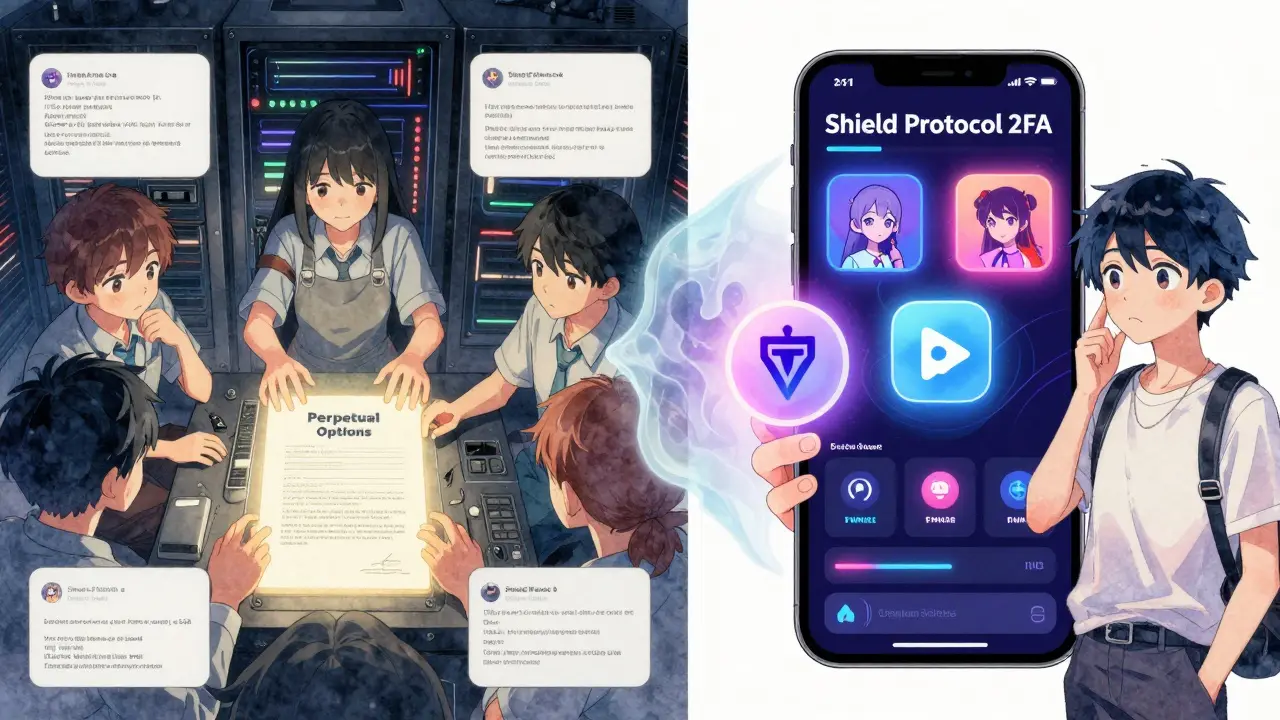
Here’s where things get confusing. After the airdrop, Shield’s derivatives protocol continued development. But the SLD token never listed on major exchanges. CoinMarketCap still lists the token contract - 0x1ef6...95a084 - but shows circulating supply as 0 SLD. That doesn’t mean the token disappeared. It means it never moved into active trading. Some believe the team shifted focus. Others think the token was intentionally held back to avoid speculation. Either way, the original Shield derivatives project never launched its mainnet with SLD as its governance token. And then there’s the confusion. In 2024, a completely different project called Shield Protocol (note: no DAO) launched. This one focuses on blockchain-based two-factor authentication (2FA), replacing centralized services like Google Authenticator. It’s a security tool - not a derivatives platform. It even has its own NFT airdrops and a gaming platform called Shield SWAG. Same name. Totally different project. Many people now mix up the two. If you see someone talking about a “new Shield airdrop” in 2025 or 2026, they’re almost certainly talking about the 2FA project - not the original Shield DAO that gave out SLD in 2021.Could There Be Another Shield DAO Airdrop?
Almost certainly not. The original Shield DAO airdrop was a one-time event. The team never announced plans for a second round. The SLD token was never intended to be a trading asset - it was meant to be a reward for builders. And with no mainnet launch, no exchange listings, and no active development on the derivatives side, the project is effectively dormant. The newer Shield Protocol (2FA) is a separate entity with its own roadmap, token, and community. It’s not a continuation. It’s a reboot under the same name - likely because “Shield” sounded trustworthy.What Can You Learn From This?
The Shield DAO airdrop teaches you something important: not all airdrops are created equal. Some projects give tokens to attract attention. Others give tokens to reward contribution. Shield was in the second group. If you participated in their testnets or bug bounties, you were part of something real. If you didn’t - you weren’t left out. You just weren’t part of the build. It’s also a lesson in naming. One name, two projects, zero connection. Always check the contract address. Always check the timeline. Always ask: Who built this? Today, if you’re looking for a meaningful airdrop, don’t chase the hype. Look for projects that ask you to test, report, and improve - not just follow and retweet. That’s where real value is made.Did everyone who participated in the Shield DAO airdrop get SLD tokens?
No. Only those who completed specific qualifying activities - like testnet participation, bug bounty submissions, or Gleam campaign tasks - were eligible. Even then, claims had to be made manually during the August-September 2021 window. Many missed it due to network switching issues or lack of awareness.
Can I still claim SLD tokens from the Shield DAO airdrop?
No. The claiming period ended on September 12, 2021. Any unclaimed tokens were redistributed to the Shield community pool. There is no active claim page or method to retrieve SLD tokens today.
Is the Shield Protocol 2FA project the same as Shield DAO?
No. Shield DAO (2021) was a derivatives protocol that issued SLD tokens. Shield Protocol (2024+) is a blockchain-based 2FA system with its own NFTs and gaming platform. They share a name but have no technical, team, or token connections. Confusing them is common - but incorrect.
Why does CoinMarketCap show 0 SLD circulating supply?
Because the SLD token was never listed on exchanges, and very few holders moved it after claiming. Most recipients didn’t trade it. Some burned their tokens. Others kept them in wallets with no activity. The data reflects zero trading volume and zero transfers - not that the tokens vanished.
Was the Shield DAO airdrop a scam?
No. The airdrop was transparent, time-bound, and tied to verifiable contributions. The project’s GitHub, testnet logs, and bounty reports are still public. The lack of a mainnet launch doesn’t make it a scam - it means the project stalled. Many DeFi projects do. That’s different from fraud.
19 Comments
Write a comment



Ruby Ababio-Fernandez
February 16, 2026 AT 14:27Jenn Estes
February 17, 2026 AT 07:01James Breithaupt
February 18, 2026 AT 00:13Scott McCrossan
February 18, 2026 AT 13:01Jeremy Fisher
February 19, 2026 AT 05:37AJITH AERO
February 20, 2026 AT 16:57Angela Henderson
February 22, 2026 AT 10:48sruthi magesh
February 23, 2026 AT 18:58Aileen Rothstein
February 24, 2026 AT 18:46Jennifer Riddalls
February 26, 2026 AT 14:22Kyle Tully
February 27, 2026 AT 14:12Ian Plunkett
February 27, 2026 AT 17:29yogesh negi
February 28, 2026 AT 11:37Nikki Howard
March 1, 2026 AT 09:45Sasha Wynnters
March 3, 2026 AT 02:09george chehwane
March 3, 2026 AT 17:29Charrie VanVleet
March 4, 2026 AT 15:40Rajib Hossaim
March 5, 2026 AT 01:02Beth Erickson
March 5, 2026 AT 12:47