Polarity.Exchange Crypto Exchange Review: What Went Wrong and Why It's Dead

When Polarity.Exchange launched in June 2020, it promised something rare: a fully decentralized crypto exchange with no KYC, no tracking, and full control over your funds. For users who valued privacy above all else - especially those trading privacy coins like Pirate Chain (ARRR) - it felt like a dream come true. The interface was simple, fees were dirt cheap at just 0.01 USDT per trade, and the platform ran on the Turtle Network blockchain, which was supposed to offer extra layers of anonymity. But by June 2025, the website was gone. No redirects. No explanations. Just a blank page. This isn’t a story about a startup that failed quietly. This is a story about a platform that lost trust, then lost everything.
The Promise: No KYC, Full Control, Privacy First
Polarity.Exchange didn’t try to compete with Binance or Coinbase. It didn’t want to. Instead, it carved out a tiny, niche space for users who refused to hand over personal documents just to trade crypto. Its entire identity was built around being the opposite of regulated exchanges. No ID checks. No address verification. No government oversight. If you wanted to trade ARRR, XMR, or FIRO without leaving a paper trail, Polarity was one of the few places left.
It also claimed to give users true ownership. Unlike centralized exchanges that hold your coins in their wallets, Polarity used a vault system where funds stayed in your own wallet. Transactions were signed on your device. The exchange only matched orders. That’s how decentralized exchanges (DEXs) are supposed to work. Add in blockchain-based 2FA - where authentication keys were stored on the blockchain itself - and it sounded like a security win.
Early users praised it. Trustpilot reviews from 2021 gave it a 4.3/5 rating. One user, CryptoTrader87, said they got their funds back within 24 hours after sending them to the wrong address. Another Reddit user, PirateChainFan, wrote: "I've traded ARRR here for 8 months with zero issues and complete anonymity." Those weren’t flukes. For over two years, Polarity delivered on its core promises.
The Downfall: A Hack That Couldn’t Be Recovered
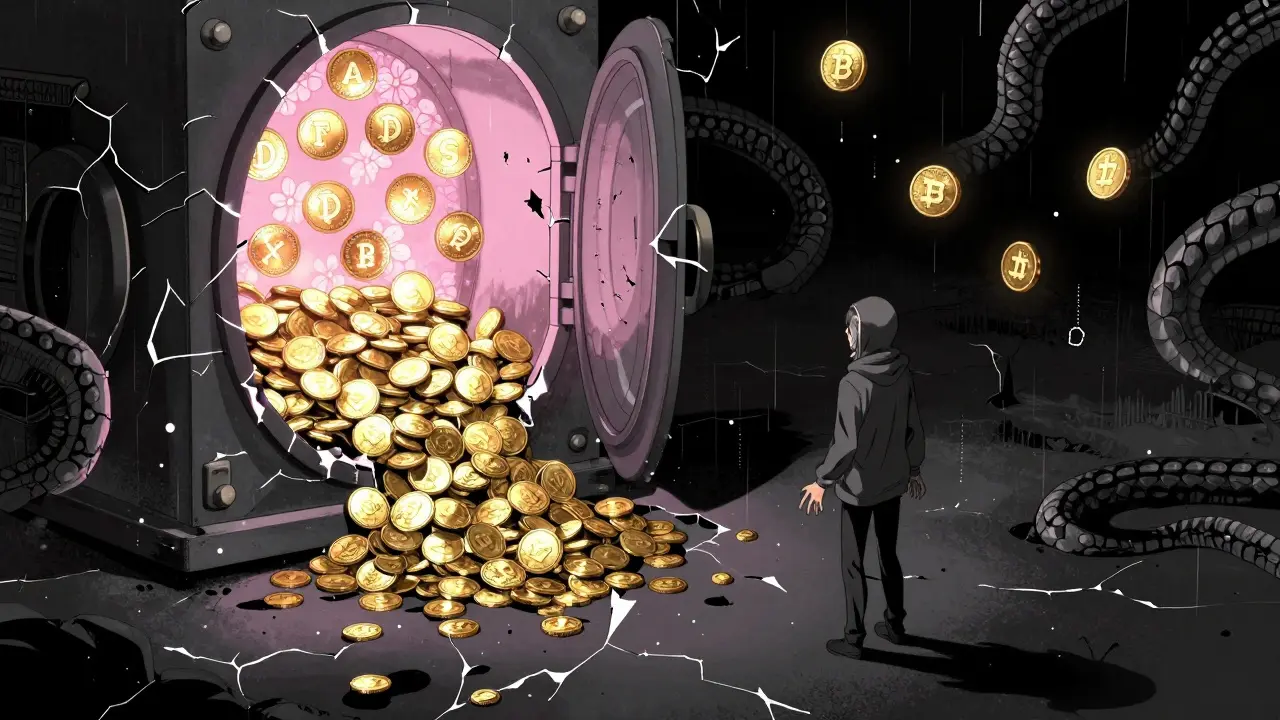
On February 17, 2023, everything changed. A hacker exploited a flaw in the exchange’s wallet management system and drained $353,000 in user funds. The stolen assets weren’t just a few obscure tokens. They included USDT, BTC, ETH, LINK, UNI, BNB, DAI, MATIC, and 23 other major coins. The attack didn’t just hit the exchange - it hit the trust of everyone who used it.
Here’s what made it worse: the stolen coins weren’t even the privacy coins Polarity was famous for. ARRR, XMR, DVPN, and others were untouched because they were stored in separate wallets. That meant the hack wasn’t about targeting privacy users - it was about targeting the base layer of the entire system. The USDT pair, the backbone of every trade, was the weak point.
Instead of transparency, the team went silent. No press release. No detailed incident report. No timeline for recovery. The only update came from MEXC, a third-party exchange, which published a blog post on February 20, 2023, confirming the breach and stating: "Customers have totally lost trust in the team." The community didn’t believe anything else they said after that.
The Aftermath: A Slow, Public Death
After the hack, Polarity didn’t shut down immediately. It went into "withdraw-only mode" - meaning you could pull out your remaining funds, but you couldn’t deposit anything new. That’s not a recovery plan. That’s a slow exit. By March 2023, Trustpilot reviews turned toxic. One user, AnonTrader2023, wrote: "Lost $2,350 in the hack and received zero communication about recovery - classic exit scam pattern."
The Telegram group, once home to 4,200 active members, shrank to under 300 by December 2023. Brand24’s analysis showed 92% of messages in the 30 days after the hack were negative. Support responses, which used to take under 22 minutes, stretched to over 72 hours. Documentation, already thin, vanished. The website stopped updating. The team disappeared.
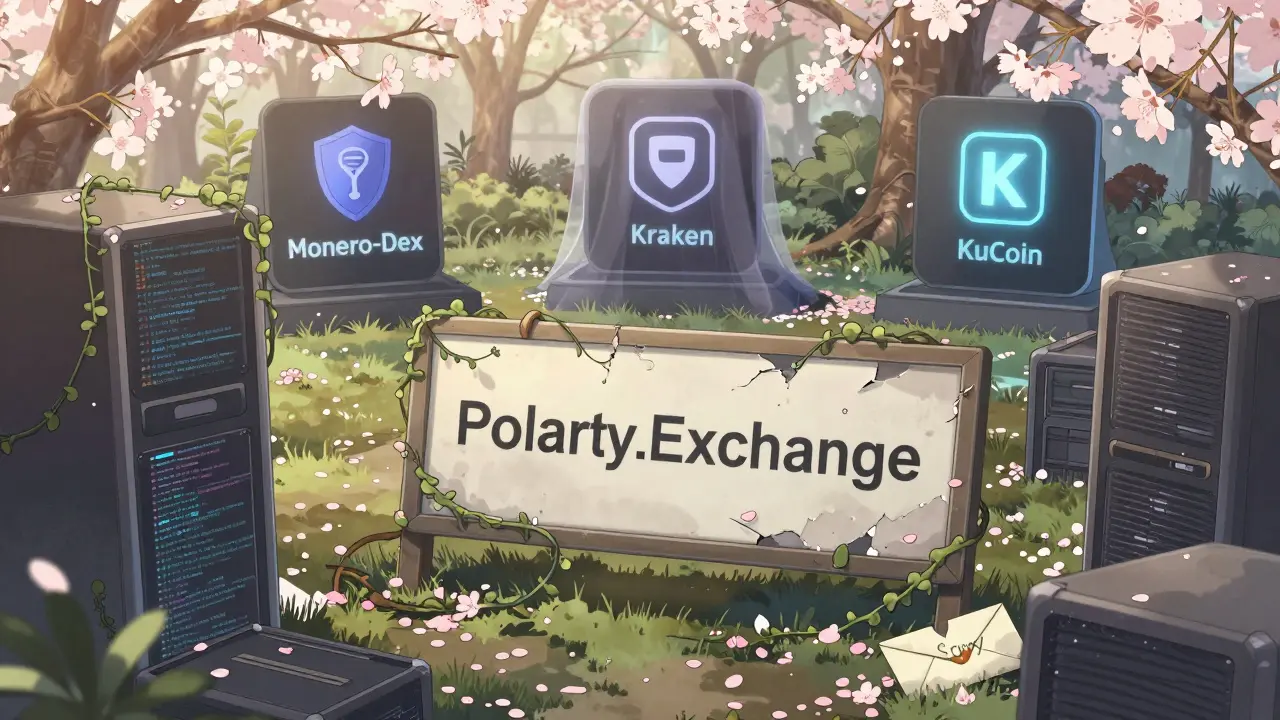
By October 2024, Coinranking marked Polarity as inactive. By June 1, 2025, Blockspot.io confirmed the domain polarity.exchange was offline. No one claimed responsibility. No one offered refunds. No one even said sorry.
Why It Failed: More Than Just a Hack
The hack was the final blow, but it wasn’t the cause. The real problem was a pattern of neglect.
- No security audits. While competitors like Uniswap and PancakeSwap hired third-party firms to audit their code, Polarity never did. Blockchain security expert Dr. Elena Rodriguez called it "a fundamental flaw that should have been caught during standard audits."
- Low liquidity. With only $1.2 million in daily volume, Polarity couldn’t absorb large trades. That made it vulnerable to price manipulation and easier to drain.
- No backup infrastructure. The platform had no mobile app, no redundancy, no fail-safes. One server. One blockchain. One team. No margin for error.
- No legal footing. Operating from Northern Cyprus meant zero regulatory protection. If you lost money, you had no recourse. No consumer law. No insurance. No hope.
It wasn’t a lack of innovation that killed Polarity. It was a lack of responsibility. Privacy is important. But privacy without security is just a trap.
What You Can Learn From Polarity.Exchange
If you’re looking for a privacy-focused exchange today, Polarity is dead. But the lessons aren’t.
- Never trust a platform that doesn’t publish audits. If they won’t show you who checked their code, don’t trust their claims.
- Check liquidity before you trade. A $1 million daily volume is a red flag. Look for exchanges with at least $100 million.
- Use non-custodial wallets. Even if you use a DEX, keep your funds in a wallet you control - not in the exchange’s vault.
- Watch for silence. If a team stops communicating after a problem, assume the worst.
Privacy coins aren’t going away. Demand for them is still growing - Chainalysis estimates 2.3% of all crypto trading volume in 2025 was privacy-focused. But the platforms that survive now are the ones that combine privacy with proof: regular audits, multi-signature wallets, and transparent teams. Polarity offered one without the other. And that’s why it’s gone.
What Replaced It?
There’s no direct replacement for Polarity.Exchange. But users who wanted its features have moved to two types of platforms:
- More secure DEXs like Monero-Dex, which uses multi-sig wallets and quarterly audits.
- Hybrid privacy options on larger exchanges like Kraken and KuCoin, which now support limited privacy coin trading with optional privacy layers - even with KYC.
The market has shifted. Users still want anonymity, but they won’t trade it for safety. Polarity.Exchange was a warning. Not a model.
Is Polarity.Exchange still operational?
No. The Polarity.Exchange website has been offline since June 1, 2025. Coinranking marked it as inactive in October 2024, and blockchain tracking firm Blockspot.io confirmed the domain is no longer accessible. There have been no updates, announcements, or recovery efforts from the team since the February 2023 hack.
What happened to the funds lost in the 2023 hack?
The $353,000 stolen during the February 17, 2023 hack was never recovered. The development team provided no details on the breach, offered no compensation, and stopped responding to user inquiries. Blockchain analysis showed the stolen funds were moved through multiple mixing services, making recovery impossible. Users lost their assets with no legal recourse.
Did Polarity.Exchange have KYC requirements?
No. Polarity.Exchange was built on a strict no-KYC policy, which was one of its main selling points. Users could trade without submitting any personal documents, ID, or proof of address. This attracted privacy-focused traders but also made it harder to trace the hack or hold the team accountable.
What coins could you trade on Polarity.Exchange?
All trading pairs were based on USDT. The exchange supported BTC, ETH, BNB, LINK, UNI, DAI, MATIC, LTC, and others, along with privacy coins like ARRR, XMR, FIRO, and DVPN. However, the hack only affected the main USDT-linked wallets. Privacy coins stored in separate wallets remained untouched - a key detail that exposed the platform’s flawed architecture.
Why did Polarity.Exchange fail when other privacy exchanges survived?
Other privacy-focused platforms survived because they prioritized security over novelty. Platforms like Monero-Dex use multi-signature wallets, undergo regular third-party audits, and maintain transparent communication. Polarity relied on untested infrastructure, skipped audits, and vanished after the hack. In crypto, trust is built through transparency - not promises.



13 Comments
Write a comment





Scott McCrossan
February 17, 2026 AT 16:32Beth Erickson
February 18, 2026 AT 08:50Ruby Ababio-Fernandez
February 19, 2026 AT 18:43Jeremy Fisher
February 20, 2026 AT 08:17Andrew Edmark
February 21, 2026 AT 00:56Dominica Anderson
February 21, 2026 AT 05:04sruthi magesh
February 22, 2026 AT 15:50Lisa Parker
February 23, 2026 AT 23:51Geet Kulkarni
February 25, 2026 AT 23:00Paul David Rillorta
February 27, 2026 AT 21:14andy donnachie
February 27, 2026 AT 21:56Lauren Brookes
February 28, 2026 AT 14:04James Breithaupt
March 1, 2026 AT 03:38