NFTP (NFT Token Pilot) Heco Chain Airdrop: The Truth Behind the Scam
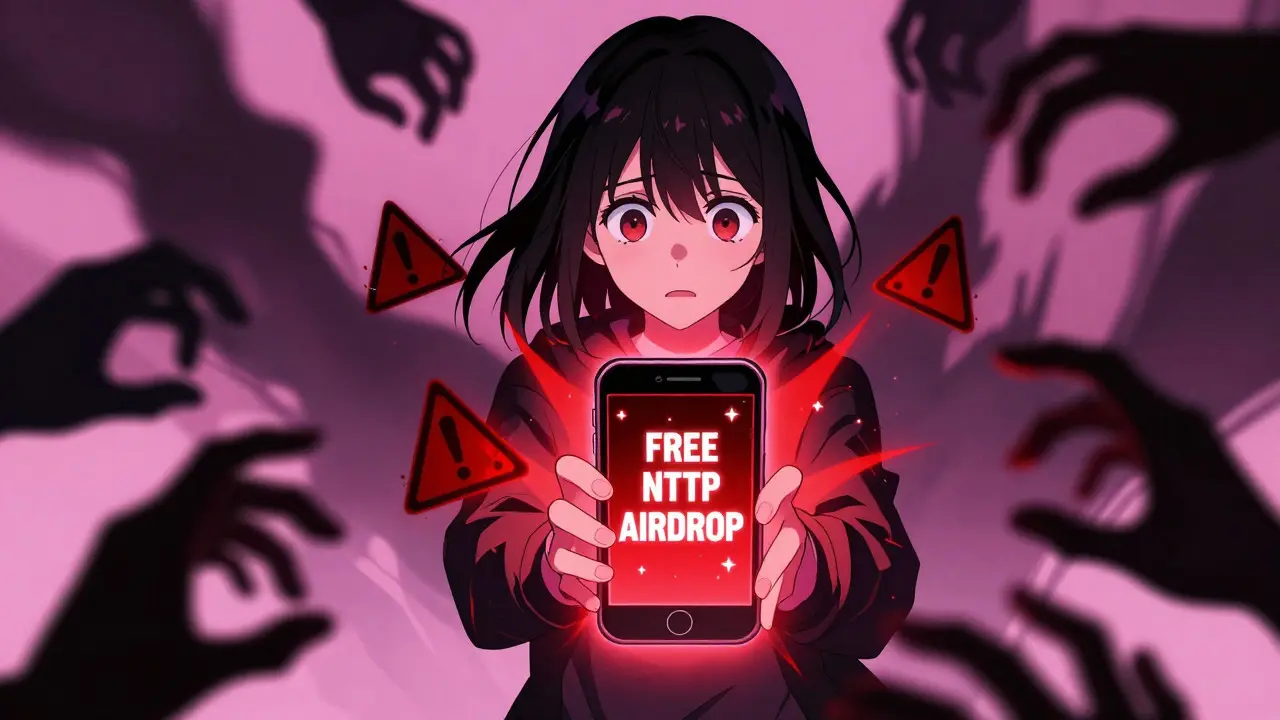
You see a post on Twitter or Telegram claiming you’ve been selected for an exclusive NFTP airdrop on the Heco Chain. It promises free NFTs, huge future value, and easy claims. Before you connect your wallet, stop. Take a breath. This isn’t just another opportunity; it’s likely a trap designed to drain your funds. The reality behind the "NFTP Heco Chain Airdrop" is a mix of misinformation, outdated data, and classic phishing tactics that have wiped out thousands of beginners.
The core issue? NFT Token Pilot (NFTP) is a cryptocurrency token originally launched on the BNB Smart Chain (BEP20), not the Heco Chain. There is no credible evidence of an official NFTP deployment or active airdrop on Heco. When projects move chains or claim multi-chain support without clear documentation, it’s often a sign of confusion-or worse, deception. If someone tells you to interact with a smart contract on Heco to claim NFTP, they are likely trying to trick you into signing a malicious transaction.
The Chain Confusion: Why Heco Doesn't Fit
To understand why this specific airdrop claim is suspicious, we need to look at where NFTP actually lives. The token was built on the BNB Smart Chain (BSC), using the BEP20 standard. Its contract address starts with 0x37b0... and can be verified on BscScan. The Heco Chain (Huobi Eco-Chain), while once popular, has seen a massive decline in activity and developer support since Huobi Global rebranded to HTX and shifted focus. Most legitimate projects migrated away from Heco years ago due to lower liquidity and higher gas fees relative to its utility.
If you search for "NFTP Heco," you’ll mostly find spammy blog posts, fake news sites, or social media bots. These sources often copy-paste generic text about "revolutionary NFT ecosystems" without checking basic facts. They don’t mention that NFTP’s market cap is effectively zero. They don’t mention that trading volume is non-existent. They just want you to click a link. Always verify the chain. If a project says it’s on Heco but all official docs say BSC, assume the worst.
Red Flags in the Tokenomics
Let’s look at the numbers, because they tell a grim story. According to major tracking platforms like CoinMarketCap and CoinGecko, NFTP has a maximum supply of 2 billion tokens. However, the circulating supply is listed as 0. The total supply is also reported as 0 in many places. This creates a mathematical impossibility. How can a token exist if nothing is circulating? It usually means one of two things:
- Data Inaccuracy: The trackers haven’t updated their API feeds, which is common for dead projects.
- Non-Functional Distribution: The tokens were never properly distributed to users, meaning the "holders" might just be dev wallets holding everything.
The price sits at approximately $0.000016 on some obscure exchanges, but on major venues like Binance or Crypto.com, it’s effectively $0. With a fully diluted valuation of only around $32,000, there is no real market depth. You couldn’t sell even 1,000 tokens without crashing the price to zero. This lack of liquidity is a hallmark of abandoned or low-effort projects. Legitimate airdrops happen for tokens with active communities and trading pairs, not for ghosts.
| Feature | Legitimate Project | NFTP Heco Claim |
|---|---|---|
| Blockchain Network | Clearly documented (e.g., Ethereum, Solana) | Conflicting info (Claims Heco, actual is BSC) |
| Trading Volume | Active daily volume ($1M+) | $0 or N/A |
| Community Presence | Active Discord/Twitter with real devs | Silent or bot-filled channels |
| Contract Verification | Verified source code on Explorer | Often unverified or proxy contracts |
| Airdrop Mechanism | Snapshot based on past holdings | Requires connecting wallet & signing unknown tx |

How the Phishing Works
So, how do scammers use the NFTP name? They create a fake website that looks similar to the original nfttokenpilot.com. They buy ads on social media targeting people interested in "free crypto." The flow typically goes like this:
- The Hook: You receive a DM or see an ad saying, "Claim your free NFTP NFTs now! Limited time!"
- The Site: You visit a URL that is slightly misspelled (e.g., nft-token-pilot-airdrop.com). It uses professional-looking graphics.
- The Connect: You are asked to connect your MetaMask or Trust Wallet. Crucially, you are told to switch your network to Heco Chain.
- The Trap: Once connected, you click "Claim." Your wallet pops up with a transaction request. It doesn’t ask for a small gas fee. It asks for an "Approval" or "Sign Transaction" for an unlimited amount of assets.
- The Drain: You sign it, thinking it’s just a signature to prove you’re human. Instantly, the smart contract drains any ETH, HECO, or other valuable tokens from your wallet.
This is known as an "approval scam." The transaction isn’t sending you tokens; it’s giving the scammer permission to take yours. Because NFTP has no real value, the scam doesn’t even bother sending you worthless tokens. They just want what you already have.
Verifying Authenticity: A Step-by-Step Guide
Before participating in any airdrop, especially one involving lesser-known tokens like NFTP, run through this checklist. It takes five minutes and could save you thousands.
- Check the Official Channels: Go to the project’s official Twitter (@NFTPtoken). Do they mention a Heco airdrop? If the last tweet is from 2022, it’s dead. Cross-reference with their official website. Does the site mention Heco? If not, ignore the claim.
- Use Blockchain Explorers: Go to HecoScan (for Heco) or BscScan (for BSC). Search for the contract address provided in the airdrop announcement. Is the contract verified? Does it have transactions? If the address is new and unverified, it’s a scam.
- Analyze Social Sentiment: Search Reddit or trusted crypto forums like Bitcointalk. Are real people discussing this? Or is it just links from accounts created last week? Lack of discussion is a bad sign. For NFTP, there is virtually no community engagement, suggesting the project is dormant.
- Test with a Burner Wallet: Never use your main wallet for airdrops. Use a secondary wallet with minimal funds. If the site tries to drain it, you lose pennies, not your life savings.

The State of NFTP Today
As of mid-2026, NFT Token Pilot appears to be a zombie project. Launched in 2021 during the height of the NFT hype cycle, it failed to build sustainable utility. Many such projects relied on referral schemes and vague promises of "metaverse integration" without delivering any actual product. When the bull market cooled, the developers moved on, leaving the token floating in limbo.
The whitepaper, hosted on Google Drive, outlines ambitious goals for an NFT marketplace and staking platform. However, the website shows little evidence of these features being live or functional. The absence of user reviews on Trustpilot or specialized crypto rating sites further indicates a lack of adoption. In the crypto world, silence is loud. If a project isn’t talking, building, or trading, it’s likely gone.
Experts note that while NFTP had "innovative technology" on paper, its execution failed. Market analysts point out that without liquidity and community trust, even the best whitepaper is worthless. The current ranking of #999999 on tracking platforms confirms its irrelevance in the broader market. Any claim of imminent growth is speculative fiction, not financial advice.
Protecting Yourself from Future Scams
The NFTP situation is a microcosm of larger issues in the crypto space. Scammers exploit curiosity and greed. They use names of real, albeit dead, projects to lend credibility to their fake campaigns. To stay safe:
- Disable Auto-Switch Networks: In your wallet settings, disable the option that allows websites to automatically switch your blockchain network. Force yourself to manually select networks. This prevents scams from forcing you onto Heco or other obscure chains where you can’t easily verify contracts.
- Revoke Permissions Regularly: Use tools like Revoke.cash to check what permissions your wallet has granted to various apps. If you see an old, unused app still has access, revoke it immediately.
- Beware of Urgency: Scams always create urgency. "Claim in 24 hours or lose out!" Real projects give you weeks to claim. If it feels rushed, step back.
- Verify URLs Meticulously: Look closely at the domain.
nfttokenpilot.comis different fromnft-token-pilot-official.com. One character difference can mean the difference between safety and ruin.
In conclusion, the "NFTP Heco Chain Airdrop" is a red flag wrapped in a lie. The token exists on BSC, has negligible value, and no active development. The Heco connection is fabricated to lure users into vulnerable smart contracts. Treat any message about this airdrop as spam. Delete it, block the sender, and keep your keys secure. The crypto space is full of opportunities, but you must filter out the noise to find the signal. Don’t let FOMO cost you your hard-earned assets.
Is the NFTP Heco Chain airdrop real?
No, it is highly likely a scam. NFTP operates on the BNB Smart Chain, not Heco. Claims of a Heco airdrop are inconsistent with official project data and are typical of phishing attempts.
What is the current value of NFTP?
The value is effectively $0. Trading volume is non-existent, and the market cap is negligible. It is considered a dormant or dead token by most analysts.
How can I verify if an airdrop is legitimate?
Check the project's official Twitter and website for announcements. Verify the contract address on a blockchain explorer. Ensure the project has active community engagement and transparent team information.
Why would a scammer use the Heco Chain?
Scammers use less popular chains like Heco because security tools and user familiarity are lower. Users are less likely to recognize malicious contracts on obscure networks compared to Ethereum or BSC.
What should I do if I already connected my wallet to the NFTP site?
Immediately move any remaining funds to a new wallet. Revoke all permissions granted to the site using a tool like Revoke.cash. Monitor your transaction history for any unauthorized transfers.
Is NFT Token Pilot (NFTP) still active?
There are no signs of active development or community engagement. The project appears to be dormant, with no recent updates or trading activity.
Can I recover funds lost to an NFTP scam?
Recovery is extremely difficult in crypto. If you signed a transaction, the funds are likely gone. Report the incident to local authorities and the exchange if applicable, but expect low chances of recovery.
Where can I find the official NFTP contract address?
The official contract is on BNB Smart Chain. You can find it on BscScan by searching for "NFT Token Pilot." Be wary of addresses posted on social media, as these are often fake.
What is an approval scam?
An approval scam tricks you into signing a transaction that grants a malicious contract unlimited access to your tokens. Once approved, the scammer can drain your wallet at will.
Should I invest in NFTP hoping for a revival?
It is highly risky. With zero volume and no active development, the chance of revival is slim. Invest only what you can afford to lose entirely.