How Venezuelans Use Crypto Amid Hyperinflation

Venezuela Currency Converter
How Crypto Saves Lives in Venezuela
"When the bolívar loses 70% of its value in months, you don't wait for the government to fix it. You find another way to eat, pay rent, and send money to family."
When the bolívar loses 70% of its value in just a few months, you don’t wait for the government to fix it. You find another way to eat, pay rent, and send money to family. That’s what millions of Venezuelans did-by turning to cryptocurrency.
Why Crypto Became Necessary, Not Optional
In 2025, Venezuela’s inflation rate hit 229% annually. That means if you earned 1 million bolívares in January, by June, that same amount could barely buy a loaf of bread. The currency didn’t just lose value-it became unusable. People couldn’t save. They couldn’t plan. Even wages paid in bolívares were worthless by the time they hit the bank account. This wasn’t a temporary glitch. It was the result of years of economic mismanagement, sanctions, and collapsing oil revenues. By 2025, the Central Bank’s official exchange rate was a joke. The black market rate was higher. But the real rate-the one that mattered for buying food or paying rent-was the one set by Bitcoin and USDT. People stopped thinking of crypto as something for rich investors or tech geeks. It became a basic utility, like water or electricity. You didn’t choose to use it. You had to.USDT Rules the Streets
While Bitcoin gets all the headlines, it’s USDT-Tether-that keeps Venezuela running. Why? Because it’s stable. One USDT is always worth about one U.S. dollar. That’s it. No guessing. No panic. Most Venezuelans use the TRC-20 version of USDT. It’s cheap to send. A transaction costs less than 50 cents, even during peak hours. Compare that to bank fees, wire transfers, or the black market exchange rates that charge 20% just to convert bolívares to dollars. In Caracas, you’ll see receipts in stores that list prices in both bolívares and "Binance dollars." That’s what locals call USDT because Binance is the main platform they use to buy and sell it. A bag of rice? 15 USDT. A bus ticket? 2 USDT. Rent? 500 USDT. The bolívar might still be printed on the paper, but no one actually pays in it anymore.How People Actually Get Crypto
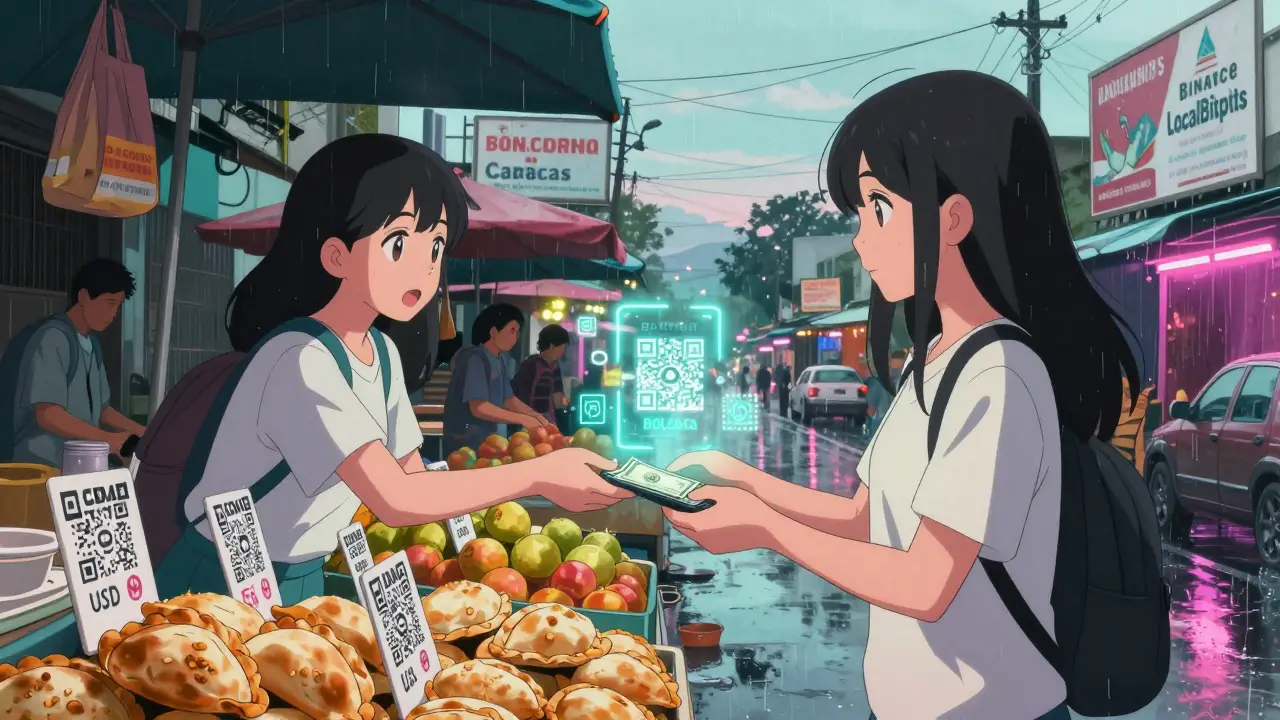
You can’t just walk into a bank and buy Bitcoin in Venezuela. The system doesn’t work that way. Instead, people use peer-to-peer (P2P) platforms like Binance P2P and LocalBitcoins. Here’s how it usually goes:- You find a seller on Binance offering USDT for cash.
- You meet them in a public place-a café, a mall, even a park.
- You hand them cash. They send you USDT to your phone wallet.
From Street Vendors to Universities
Crypto isn’t just for the tech-savvy elite. It’s everywhere. A woman selling empanadas on a corner in Maracaibo accepts Bitcoin through a QR code on her phone. A small clinic in Valencia bills patients in USDT because their bank account got shut down. Even universities in Caracas now let students pay tuition in crypto. One professor told me: "We used to wait weeks for the university to process bolívar payments. Now, it’s instant. No delays. No losses." Small businesses that used to lose 30% of their income to inflation now lock in prices in USDT. They don’t have to raise prices every week. They don’t have to spend hours counting cash. They just scan a code. The informal economy-where most Venezuelans work-has fully adapted. If you’re a mechanic, a cleaner, a tutor, or a delivery driver, you ask for crypto. It’s the new normal.Challenges: Power Outages, Phones, and Trust
It’s not easy. Venezuela’s infrastructure is broken. Power cuts happen daily. Internet service is spotty. Many people can’t afford smartphones. Some rely on borrowed phones or public Wi-Fi spots to complete transactions. There’s also the risk of scams. People lose money to fake sellers or phishing apps. Learning how to secure a wallet takes time. Most users don’t know what a private key is. They rely on apps like Binance that store keys for them-which is convenient but risky. If Binance gets blocked or shuts down, their money could vanish. Still, the learning curve is short. Most people get the basics down in two to three weeks. Community groups, YouTube videos in Spanish, and WhatsApp tutorials have filled the gap left by schools and banks.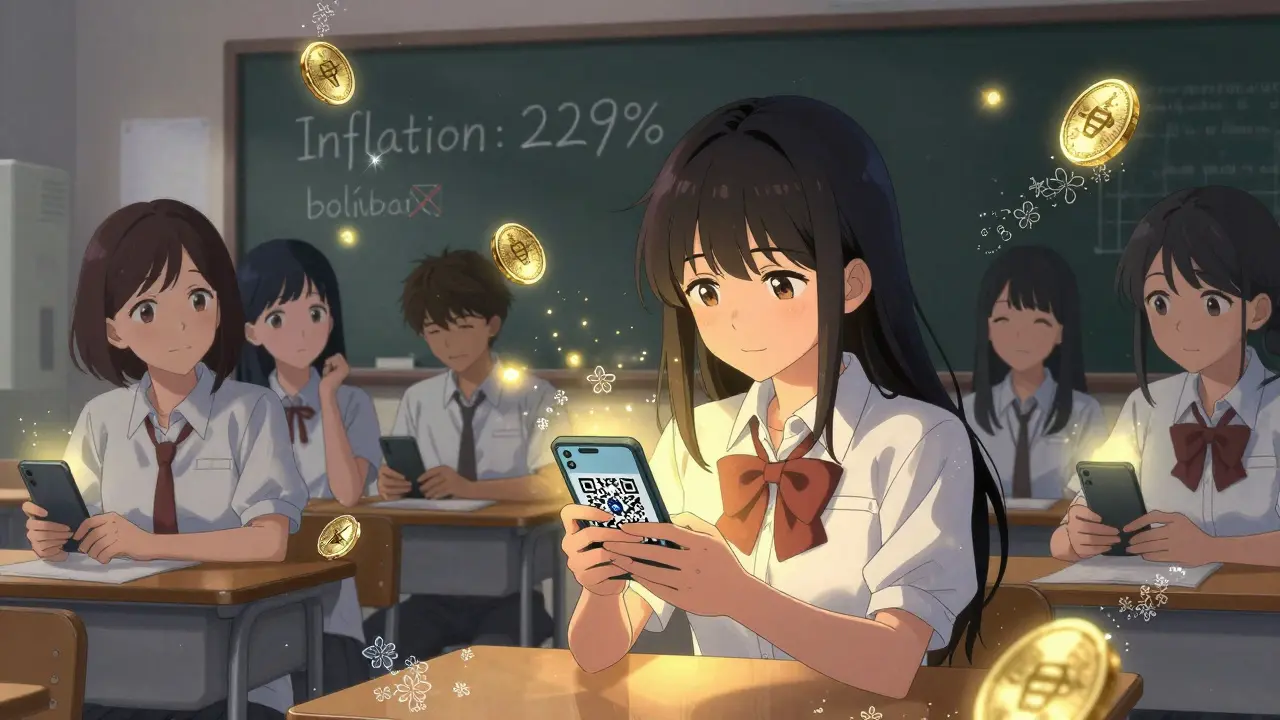
The Government’s Mixed Signals
The Venezuelan government didn’t start this. But they’ve tried to control it. In 2018, they launched the Petro-a state-backed cryptocurrency. It failed. No one trusted it. No one used it. By 2024, the Petro was dead. Now, the government walks a tightrope. They crack down on crypto mining operations, claiming they drain the grid. They occasionally shut down P2P exchanges. But they don’t ban USDT. They don’t arrest people for using Bitcoin. Why? Because they can’t stop it. And they need the flow of dollars that crypto brings in. The result? A gray zone. Crypto isn’t legal. But it’s tolerated. The state turns a blind eye as long as it doesn’t challenge their power. That could change tomorrow. But for now, the people have already moved on.Is Crypto Fixing Venezuela’s Economy?
No. And no one thinks it is. Crypto doesn’t fix corruption. It doesn’t rebuild factories. It doesn’t bring back oil production. It doesn’t lift sanctions. It doesn’t restore confidence in institutions. What it does is give people back control. Over their money. Over their meals. Over their ability to survive. A man named Carlos in Caracas said it best: "I don’t care if Bitcoin is the future. Right now, it’s the only thing that lets me feed my kids without begging." That’s not speculation. That’s survival.What’s Next?
The trend isn’t slowing. More people are getting smartphones. More merchants are accepting crypto. More remittances from abroad are arriving as USDT instead of cash. In 2023, 9% of all remittances to Venezuela came through crypto. That number is growing. Families abroad now send money directly to wallets instead of risking it through Western Union or bank wires. Even if Venezuela’s political situation changes-if Maduro falls or sanctions lift-the damage to the bolívar is permanent. People won’t go back. They’ve seen what happens when you trust a broken system. Crypto isn’t the solution to Venezuela’s crisis. But it’s the only tool that’s working right now. And for millions, that’s enough.Why do Venezuelans prefer USDT over Bitcoin?
USDT is preferred because it’s stable-it holds a value close to $1 USD. Bitcoin’s price swings too much for daily purchases. If you need to buy groceries, you can’t risk losing 10% of your money because Bitcoin dropped overnight. USDT lets people price goods, pay rent, and send money without worrying about volatility.
Can Venezuelans still use traditional banks?
Many can’t. Banks freeze accounts without warning, especially for those receiving foreign currency. Even when accounts are open, the bolívar loses value so fast that deposits become worthless within days. Most people avoid banks entirely and use crypto for all transactions, from wages to bills.
Is using crypto illegal in Venezuela?
It’s not officially legal, but it’s tolerated. The government has cracked down on mining and occasionally shuts down exchanges, but they don’t arrest individuals for using Bitcoin or USDT. They rely on the flow of dollars that crypto brings in, so they turn a blind eye as long as it doesn’t threaten their control.
How do people without smartphones use crypto?
Those without smartphones rely on friends, family, or community centers that have access to devices. Some use shared phones at internet cafes. Others give cash to someone who can send crypto on their behalf. It’s less convenient, but still possible.
What happens if Binance gets blocked in Venezuela?
If Binance is blocked, people will shift to other P2P platforms like LocalBitcoins, Paxful, or even Telegram-based traders. Venezuelans have already built decentralized networks that don’t rely on any single app. The system is resilient because it’s community-driven, not platform-dependent.
Are there risks to using crypto in Venezuela?
Yes. Scams are common. People lose money to fake sellers or phishing apps. Also, if you store crypto on an exchange like Binance, you’re trusting them with your keys-if the platform is shut down or hacked, you could lose everything. The safest option is using a personal wallet, but that requires more knowledge, which many still lack.
How do Venezuelans send money to family abroad?
Many now send crypto directly. Family members abroad buy USDT or Bitcoin and send it to a wallet in Venezuela. The recipient cashes out via P2P platforms. This avoids high fees, delays, and restrictions from traditional remittance services like Western Union, which often block transfers to Venezuela.
Has the Petro cryptocurrency succeeded?
No. Launched in 2018, the Petro was the government’s attempt to create a state-backed digital currency. But it was distrusted from the start. No businesses accepted it willingly, and it lacked real backing. By 2024, it was effectively dead. Venezuelans prefer decentralized options like USDT and Bitcoin because they’re not controlled by the state.
18 Comments
Write a comment




Shane Budge
December 7, 2025 AT 16:49USDT is just digital cash now. No drama.
Regina Jestrow
December 8, 2025 AT 19:15I’ve seen this in Argentina too-people using USDT for groceries, Uber, even paying for Netflix. It’s not crypto as investment, it’s crypto as survival. The fact that this is happening in Venezuela isn’t a tech story-it’s a human one. People aren’t choosing crypto because it’s cool. They’re choosing it because the system burned them so bad, they’d rather trust a QR code than a central bank.
I met a woman in Medellín who keeps her rent money in USDT because her salary gets wiped out by inflation before payday. She said, ‘I don’t care if it’s blockchain or fairy dust. If it keeps my lights on, I’m using it.’ That’s the real story.
Sandra Lee Beagan
December 10, 2025 AT 11:11This is one of the most profound examples of decentralized resilience I’ve ever seen. The fact that a society has collectively migrated from a collapsed fiat system to a peer-to-peer digital economy without top-down coordination is almost anthropological. It’s not just about money-it’s about redefining trust. The state failed. The banks failed. The people didn’t wait for permission. They built an alternative infrastructure with smartphones, WhatsApp, and public Wi-Fi. That’s not just adaptation. That’s civilizational innovation.
And yet, Western media still frames this as a ‘crypto hack’ rather than a grassroots economic revolution. We need to stop romanticizing blockchain and start recognizing the agency of ordinary people.
Nina Meretoile
December 11, 2025 AT 07:37It’s wild how something so simple-like a stablecoin-can be the difference between eating and starving. 🥺 I keep hearing people say ‘crypto is volatile’ like it’s a bad thing. But in Venezuela? Volatility is the bolívar. USDT is the calm in the storm. People aren’t speculating. They’re stabilizing their lives. And honestly? That’s the most beautiful use case for blockchain I’ve ever seen.
Also, the fact that empanada vendors use QR codes now? That’s the future. Not NFTs. Not metaverses. Just people using tech to survive and thrive. I’m not even mad anymore. I’m inspired.
Tom Van bergen
December 11, 2025 AT 21:28So you're telling me the only thing keeping Venezuela from total collapse is a digital dollar that's not even issued by the U.S.? That's not innovation. That's a bandage on a severed artery. The real problem is the state. The state is the cancer. Crypto just lets people bleed slower while the tumor keeps growing.
Also, if you think this is sustainable, you haven't been paying attention. Power outages. Internet blackouts. Phones dying. What happens when the grid fails for a week? You gonna pay your rent with a dead phone and a half-charged battery?
sonia sifflet
December 12, 2025 AT 01:00You people act like this is some miracle. It’s not. This is desperation dressed up as tech. USDT isn’t magic-it’s just another currency controlled by a private company. Tether is a black box. They could freeze your funds tomorrow and you’d have zero recourse. And you’re celebrating this? You’re just trading one authoritarian system for another. The government at least pretends to be accountable. Tether doesn’t even pretend.
Also, how many of you have actually used Binance P2P? I have. I’ve seen the scams. People lose thousands because they don’t know what a private key is. This isn’t empowerment. It’s exploitation.
Renelle Wilson
December 12, 2025 AT 20:00I want to emphasize the quiet dignity in this story. These aren’t crypto bros. They’re mothers, teachers, mechanics, students. They’re not trying to get rich. They’re trying to get through the day. The fact that they’ve created a decentralized, trust-based economy without formal institutions, without legal backing, without international aid-that’s a quiet act of resistance. And it’s happening in real time, in real places, with real people.
It’s easy to dismiss this as a ‘niche workaround.’ But what if this is the future? What if the next generation doesn’t need banks at all? What if trust is no longer institutional but interpersonal? We’re witnessing the birth of a new economic language. And it’s being spoken in Spanish, on WhatsApp, with a QR code.
Barb Pooley
December 13, 2025 AT 19:40Let’s be real-this whole thing is a CIA operation. You think the U.S. government doesn’t love seeing the bolívar collapse? Of course they do. Now they can control Venezuela’s economy through Tether, which is backed by… what? Offshore shell companies? No transparency. No oversight. This isn’t freedom. It’s financial colonization. And you’re all just cheerleading it because it’s shiny and new.
Also, who do you think owns Binance? Hint: it’s not the guy in the hoodie. It’s a network of offshore investors with ties to the same people who profit from sanctions. This isn’t rebellion. It’s a trap.
Elizabeth Miranda
December 14, 2025 AT 20:56I lived in Caracas for a year. I saw people trading USDT at bus stops. I watched a guy pay his daughter’s school fee with a phone scan. No one was yelling. No one was celebrating. It was just… normal. Like brushing your teeth. That’s what’s so powerful. It’s not a protest. It’s just life now.
And the fact that kids are learning how to use wallets before they learn how to use ATMs? That’s the real legacy here. Not the tech. The mindset.
Chloe Hayslett
December 16, 2025 AT 00:34Oh wow, look at the little crypto peasants using their phones to buy rice. How cute. Meanwhile, the U.S. dollar is still the world’s reserve currency. The fact that Venezuelans are clinging to USDT like it’s a magic spell doesn’t change that. They’re not building a new system-they’re just begging for scraps from the same empire that broke them.
And don’t even get me started on Binance. That’s a Hong Kong-based company with zero accountability. You think they care about your empanadas? They care about your transaction fees.
Uzoma Jenfrancis
December 17, 2025 AT 12:53As a Nigerian, I see the same thing here. Naira is garbage. We use USDT too. But we don’t call it ‘resilience.’ We call it ‘surviving the same colonial mess.’ The West breaks economies, then sells us the bandages. Crypto isn’t liberation. It’s just the latest form of extractive capitalism with a blockchain logo.
Ben VanDyk
December 17, 2025 AT 19:38People are using crypto because they have no choice. That’s not a win. That’s a tragedy. And the fact that we’re treating this like some kind of tech success story is just tone-deaf. You don’t celebrate someone using a stick to dig through rubble because their house got bombed. You fix the damn house.
Jonathan Sundqvist
December 19, 2025 AT 06:04Y’all act like this is the future. Nah. It’s the present. And it’s ugly. People are trading cash for crypto in parking lots because their bank froze their account. That’s not innovation. That’s chaos with a Wi-Fi signal.
Also, who’s gonna fix the power grid? Who’s gonna make sure the phones don’t die? You think a QR code is gonna save you when the lights go out for three days?
Adam Bosworth
December 20, 2025 AT 09:16Bro I just saw a video of some dude in Maracaibo crying because his Binance account got flagged for ‘suspicious activity’ and he lost 2 months of rent. That’s not freedom. That’s a nightmare with a mobile app. And now you wanna make this a meme? 😭
Also, I bet half the people using USDT don’t even know what a private key is. They’re trusting Binance like it’s a bank. And when Binance gets hacked or banned? Poof. All gone. This isn’t tech. It’s a Ponzi with a better UI.
Lore Vanvliet
December 22, 2025 AT 00:38THIS IS WHY AMERICA NEEDS TO STOP LETTING THE WORLD USE THE DOLLAR!! 🇺🇸🔥 They’re using USDT because they hate us! It’s a rebellion! And you people are just sitting there saying ‘how cute’ like it’s a TikTok trend?! This is war! Crypto is the new oil and Venezuela just stole it from the U.S.!!!
Also, if you’re not using Bitcoin Cash, you’re part of the problem. USDT is a fiat puppet. REAL patriots use BCH. 🚀
Noriko Robinson
December 24, 2025 AT 00:03I’ve been reading this whole thing and I just want to say-I’m so proud of the people in Venezuela. Not because they’re using crypto, but because they didn’t give up. They didn’t wait for someone to fix it. They didn’t blame each other. They just… figured it out. Together. With phones, cash, and WhatsApp. That’s not tech. That’s humanity. And honestly? We could all learn from that.
Even if the system breaks again tomorrow, they already proved something bigger: that people can take care of each other without permission. That’s the real win.
Brooke Schmalbach
December 25, 2025 AT 07:40Let’s cut through the romanticization. USDT is a corporate stablecoin issued by a company with zero regulatory oversight, backed by opaque reserves, and controlled by a single entity that answers to no one. It’s not decentralized. It’s not transparent. It’s not even technically a blockchain innovation-it’s just a ledger entry. The fact that people are using it as a lifeline doesn’t make it good. It makes the system broken.
And the ‘community-driven’ narrative? That’s just a distraction. The real power is in the platforms: Binance, Paxful, LocalBitcoins. They’re the gatekeepers. They set the fees. They freeze accounts. They dictate the rules. You think a woman selling empanadas has power here? She’s just a node in someone else’s profit pipeline.
Don’t mistake survival for sovereignty. You’re not building an alternative economy-you’re outsourcing your dignity to a for-profit tech firm. And when they decide to shut it down? You’ll be right back where you started. Only now, you’ve forgotten how to trust your own government.
And let’s not forget: Tether’s reserves are still largely unverified. That’s not money. That’s a gamble. And millions of people are betting their meals on it.
There’s a difference between adaptation and surrender. This is surrender dressed in blockchain.
Thomas Downey
December 26, 2025 AT 20:06It is profoundly disturbing to witness the erosion of national sovereignty under the guise of technological progress. The Venezuelan state, however flawed, remains the legitimate representative of its people. To replace its monetary authority with privately issued digital tokens-many of which are subject to extraterritorial jurisdiction-is not liberation. It is neocolonialism rebranded as innovation.
One must ask: who benefits from this decentralized financial architecture? Not the empanada vendor. Not the university student. Not the mechanic. The beneficiaries are the opaque financial intermediaries, the venture capital firms funding P2P platforms, and the regulatory arbitrageurs who profit from the collapse of public institutions.
This is not a grassroots revolution. It is the quiet triumph of market fundamentalism over the social contract. And we, as a global community, have failed to recognize it for what it is: the commodification of desperation.
Let us not confuse survival with justice. Let us not mistake utility for legitimacy. And let us not celebrate the death of the bolívar as a triumph of human ingenuity-when in truth, it is merely the final act of a system that chose profit over people.