How to Legally Use Crypto in Nigeria After the 2025 Regulatory Changes
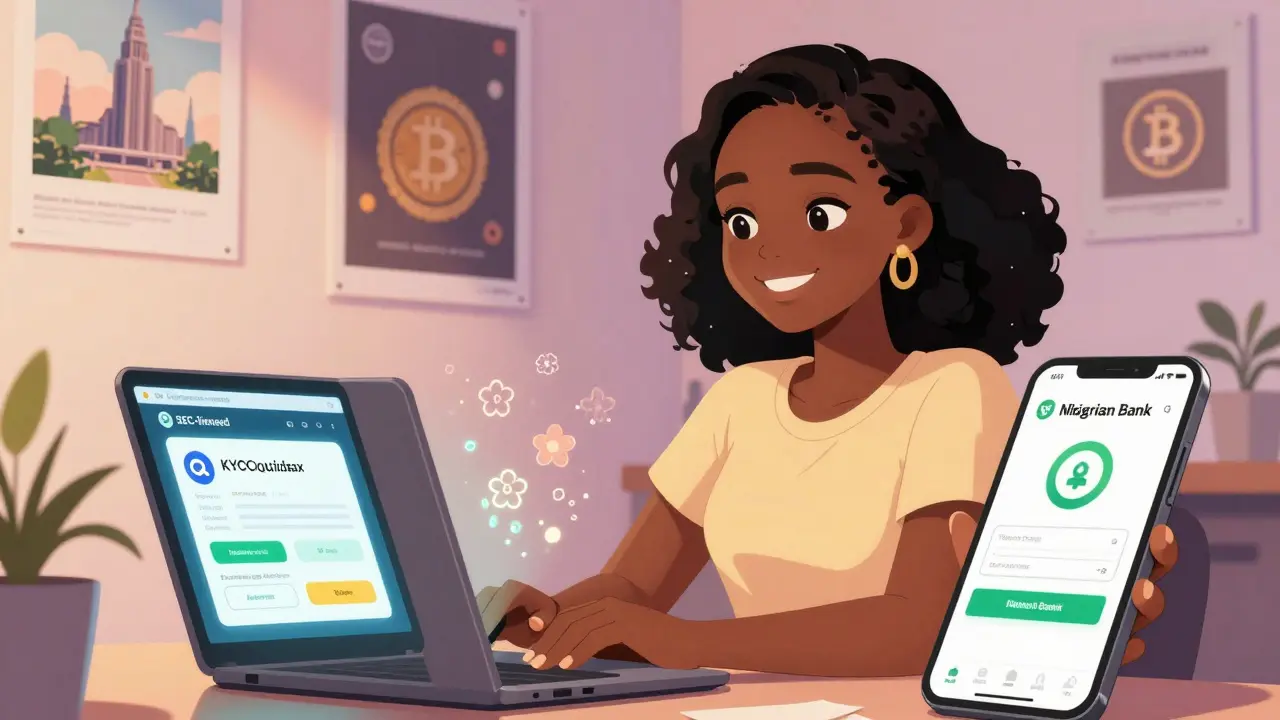
Crypto Tax Calculator for Nigeria (2026)
Calculate Your Crypto Tax Liability
Nigeria's new tax laws effective January 1, 2026 require you to pay tax on cryptocurrency profits. This calculator helps you estimate your tax based on your trading activity.
Enter your values above to calculate your tax liability
Back in 2021, if you owned Bitcoin in Nigeria, your bank could freeze your account. Crypto exchanges were blocked. People relied on peer-to-peer trades, cash deposits, and risky workarounds just to buy or sell digital assets. But that chapter is over. As of March 25, 2025, Nigeria doesn’t want you to avoid crypto restrictions - it wants you to use crypto legally.
The old restrictions are gone - here’s what replaced them
The Central Bank of Nigeria (CBN) didn’t just soften its stance. It completely reversed course. The ban on banks dealing with crypto businesses was lifted in late 2023. Then, in March 2025, President Tinubu signed the Investments and Securities Act (ISA) 2025 into law. This wasn’t a tweak. It was a full rewrite of how digital assets are treated in Nigeria. Now, crypto isn’t illegal. It’s a financial security. That means it’s regulated - not banned. The Securities and Exchange Commission (SEC) is now in charge. If you’re running a crypto exchange, trading platform, or wallet service, you need a license. Quidax and Busha got the first approvals. More are coming. But here’s the key: if you’re just buying, selling, or holding crypto as an individual, you don’t need a license. You just need to know the rules.You don’t need to bypass the system - you just need to use the right tools
Many people still think they need to use VPNs, offshore exchanges, or anonymous wallets to avoid restrictions. That’s outdated thinking. The only thing you need to avoid now is unlicensed platforms. If you use a licensed exchange, you’re not breaking any rules. You’re following them. Licensed exchanges like Quidax, Busha, and others now offer direct bank transfers. You can deposit Naira, buy Bitcoin or Ethereum, and withdraw profits - all through your Nigerian bank account. No more risky P2P deals with strangers. No more cash drops. No more fear of account freezes. The system is built for you now. Here’s how to do it right:- Choose an SEC-licensed exchange. Check the SEC’s official website for the current list - it’s updated monthly.
- Complete full KYC (Know Your Customer) verification. This means uploading your ID, proof of address, and sometimes a selfie. It takes 1-3 days.
- Link your Nigerian bank account. Licensed platforms work with major banks like GTBank, Zenith, and Access Bank.
- Trade only on the platform. Don’t send crypto to unverified wallets or unknown addresses.
- Keep records of all transactions. You’ll need them for taxes.
What about privacy? Isn’t crypto supposed to be anonymous?
Yes, Bitcoin was designed to be pseudonymous. But in Nigeria, you’re not using crypto in a vacuum. You’re using it within a national financial system. That means identity verification is part of the deal - just like opening a bank account or applying for a loan. If you’re worried about privacy, understand this: the system isn’t spying on you. It’s protecting you. The old unregulated market was full of scams. People lost life savings to fake exchanges and rug pulls. The new system gives you legal recourse. If a licensed platform goes rogue, you can file a complaint with the SEC. You can get your money back. You still have control. You can hold your crypto in a hardware wallet like Ledger or Trezor. You can send it to any address you want. The only thing you can’t do is trade on an unlicensed platform and expect protection.The new tax rules - what you need to know before 2026
Starting January 1, 2026, crypto profits are taxable. But it’s not as scary as it sounds. The Nigerian Tax Administration Act 2025 says you only pay tax when you sell or trade crypto for profit. Holding Bitcoin for years? No tax. Selling it for Naira? Tax applies. Here’s how it breaks down:- Individuals: Pay personal income tax on crypto profits - up to 25%, depending on your total income.
- Businesses: Pay 20%-30% corporate tax on crypto earnings, plus 7.5% VAT on transaction fees.
- No tax on buying crypto with Naira or transferring between your own wallets.

What happens if you use an unlicensed exchange?
You won’t get arrested. But you’ll be on your own. Unlicensed platforms have no legal obligation to protect you. If they disappear, you lose your money. No recourse. No refund. No SEC intervention. The government is already cracking down. In August 2025, the EFCC shut down three unlicensed crypto platforms operating under fake names. Hundreds of users lost funds. Those who used licensed exchanges had no issues. If you’re using an exchange that doesn’t show an SEC license number on its website, it’s not safe. Period.Why this matters for everyday Nigerians
Nigeria has one of the highest crypto adoption rates in the world. Over 30% of adults have used crypto. Why? Because the Naira has lost value. Banks are slow. International payments are hard. Crypto isn’t a trend - it’s a tool for survival. Now, with legal access, you can:- Send money to family abroad faster and cheaper than Western Union.
- Invest in global assets without needing a foreign bank account.
- Save in Bitcoin or stablecoins to protect savings from inflation.
- Start a side business selling digital services and getting paid in crypto.
What’s next? DeFi, NFTs, and stablecoins
The ISA 2025 law covers exchanges and investment tokens. But it doesn’t yet fully define DeFi protocols, NFTs used for art, or stablecoins like USDT. That’s coming. The SEC has said it will expand oversight in 2026. For now, artistic NFTs (like digital art or collectibles) are fine. Investment NFTs (those promising returns) are regulated. Stablecoins are in a gray area - use them cautiously. Stick to well-known ones like USDT or USDC on licensed platforms. DeFi lending or yield farming? Not officially regulated yet. Proceed with extreme caution. Don’t put life savings into a protocol with no legal backing.
Final checklist: Are you doing crypto right in Nigeria?
If you’re still worried about restrictions, use this simple checklist:- ✅ I use only SEC-licensed exchanges (Quidax, Busha, etc.)
- ✅ I completed full KYC verification
- ✅ I link my Nigerian bank account directly
- ✅ I keep records of all buys, sells, and trades
- ✅ I don’t use unlicensed platforms or anonymous wallets for trading
- ✅ I’m preparing for 2026 taxes by tracking profits
What if I still want to use an offshore exchange?
You can. But you lose everything the system now offers: bank integration, legal protection, dispute resolution, and tax compliance. Offshore exchanges don’t report to Nigerian authorities. If something goes wrong, you have no one to call. And if the government decides to tighten rules further - which it might - offshore platforms could be blocked at the gateway level. Stick with the local, licensed options. They’re faster, safer, and fully legal.Can I still use P2P platforms like LocalBitcoins in Nigeria?
Yes, but with major risks. P2P trading is not illegal, but it’s not protected. You’re dealing directly with individuals, not regulated companies. There’s no recourse if someone scams you, doesn’t deliver crypto, or reports you falsely to the bank. Licensed exchanges offer built-in escrow, dispute resolution, and customer support. P2P is riskier and slower. Only use it if you fully understand the risks and never send money before receiving crypto.
Will my bank freeze my account if I trade crypto?
No - not if you use a licensed exchange. The CBN lifted its ban in 2023. Banks are now allowed to work with SEC-approved crypto businesses. If your bank freezes your account, it’s likely due to an error or outdated policy. Contact your bank and show them the SEC’s official licensing list. Most banks now have crypto-friendly support teams.
Do I need to pay tax on every crypto trade?
No. You only pay tax when you sell crypto for profit - for example, if you bought Bitcoin for ₦500,000 and sold it for ₦800,000, you pay tax on the ₦300,000 gain. Trading one crypto for another (like BTC to ETH) is also a taxable event. But buying with Naira, holding, or transferring between your own wallets is not taxed.
Can I use crypto to pay for goods and services in Nigeria?
Yes, but it’s still limited. A growing number of online stores, freelancers, and service providers accept crypto. Major retailers like Jumia and Konga don’t accept it yet, but smaller businesses and tech startups do. You can also use crypto debit cards linked to your exchange wallet to spend at any merchant that accepts Mastercard or Visa.
Is it safe to store crypto on a licensed exchange long-term?
It’s safe for short-term trading, but not ideal for long-term holding. Licensed exchanges follow strict security protocols, but they’re still online wallets. For large amounts, move your crypto to a personal hardware wallet like Ledger or Trezor. You keep the private keys. The exchange handles trading. Your wallet handles storage. That’s the safest combo.
Next steps: What to do right now
If you’ve been holding back because of fear of restrictions, here’s what to do today:- Go to the SEC Nigeria website and download the list of licensed VASPs.
- Sign up on one of the top three - Quidax, Busha, or Binance Nigeria (if licensed locally).
- Complete KYC - have your ID and utility bill ready.
- Link your bank account and make your first deposit.
- Buy a small amount of Bitcoin or USDT to test the system.
- Download a free crypto tax tracker and start logging your trades.
21 Comments
Write a comment





Lawal Ayomide
December 3, 2025 AT 16:09Finally! My uncle in Lagos just bought his first BTC through Quidax last week. No more hiding cash under the mattress. 🇳🇬
Murray Dejarnette
December 4, 2025 AT 08:06Yeah right, like the government actually cares about protecting you. They just want to tax you harder now. This is just crypto with a muzzle.
Nancy Sunshine
December 5, 2025 AT 10:18As a financial compliance officer in New York, I must say Nigeria’s regulatory framework is impressively structured. The alignment of SEC oversight with KYC/AML protocols mirrors global best practices. The tax framework, while not novel, demonstrates fiscal maturity rarely seen in emerging markets. This is not merely policy-it’s institutional evolution.
Reggie Herbert
December 6, 2025 AT 13:41Stop drinking the Kool-Aid. If it’s regulated, it’s not crypto. Real crypto is decentralized. You’re just using a bank with a Bitcoin logo now.
Britney Power
December 6, 2025 AT 16:22Let’s be honest-this is a performative liberalization. The SEC’s licensing criteria are opaque, the tax thresholds are arbitrary, and the enforcement mechanisms are untested. This isn’t progress-it’s regulatory theater designed to extract rents from a desperate population. The 25% tax on gains? That’s a capital flight incentive disguised as compliance.
Maggie Harrison
December 7, 2025 AT 18:12This is HUGE 😭 I’ve been holding BTC since 2021 and was scared to touch it in Nigeria. Now I can finally breathe. Thank you for writing this. 🙏
Philip Mirchin
December 9, 2025 AT 11:23Been using Busha since last year-no issues. Bank transfers take 10 minutes now. My cousin in Abuja just sent $200 to his sister in Canada via USDT. Cost $1.50. Western Union would’ve charged $30. This isn’t just convenient-it’s life-changing.
Ann Ellsworth
December 9, 2025 AT 22:16It’s fascinating how the Nigerian state has co-opted the very ethos of decentralization to create a compliant, surveilled financial instrument. The irony is not lost on those who understand the philosophical underpinnings of blockchain. You’ve traded autonomy for access-and called it liberation. How quaint.
Darlene Johnson
December 10, 2025 AT 07:01Wait… if the government can track every transaction, what’s stopping them from freezing wallets? Or worse-using it to target dissidents? This isn’t legalization. It’s surveillance with a crypto coat of paint.
Ziv Kruger
December 10, 2025 AT 12:16If freedom is defined by the ability to transact without permission, then this isn’t freedom-it’s permissioned capitalism. The blockchain was meant to bypass the state. Now the state is wearing the blockchain like a suit. What have we become?
Melinda Kiss
December 12, 2025 AT 04:13Just completed my KYC on Quidax yesterday-took 2 days. Super easy. I was nervous, but the interface felt professional. I’m now holding 0.05 BTC and saving in USDT for my daughter’s education. This actually feels safe.
Heather Hartman
December 12, 2025 AT 04:23Wow. This post gave me chills. I’ve watched Nigerian friends struggle for years. Now they have a real path. Thank you for making this so clear. You’re helping people, not just explaining policy. ❤️
Catherine Williams
December 12, 2025 AT 22:21For anyone thinking P2P is safer-please don’t. I lost $1,200 to a fake seller in 2022. No recourse. No refund. Licensed platforms have escrow. They have support. They have legal accountability. This isn’t just advice-it’s survival.
Paul McNair
December 14, 2025 AT 00:09As someone who’s lived in both Lagos and Atlanta, I can say this: Nigeria’s crypto policy is more progressive than most U.S. states. We’re still arguing about whether crypto is property. They’ve built a legal framework around it. That’s leadership.
Akash Kumar Yadav
December 14, 2025 AT 03:16Why are Americans acting like Nigeria just discovered fire? We’ve been using crypto since 2017 because your banks wouldn’t serve us. You think this is a gift? It’s justice. Stop patronizing.
Jay Weldy
December 14, 2025 AT 10:37I get the fear of regulation, but let’s not romanticize the chaos. The old system was a jungle. People lost everything. This isn’t perfect-but it’s the first time most Nigerians have had legal recourse. That matters.
Christy Whitaker
December 15, 2025 AT 02:52Oh please. The SEC’s ‘licensed’ exchanges are all controlled by the same offshore shell companies. This is just a front for capital flight. You think the government wants you to succeed? They want you to pay taxes while they siphon the liquidity.
Ankit Varshney
December 16, 2025 AT 02:24My brother in Kano just bought his first USDT. He uses it to pay for online courses. No more waiting weeks for international transfers. This is real change.
Ivanna Faith
December 17, 2025 AT 14:37They say no tax on holding but what if they change the law next year? What if they demand wallet access? What if they force you to sell during a crash? This feels like a trap waiting to spring
Sarah Locke
December 19, 2025 AT 13:28Look, I used to think crypto was just for speculators. But seeing how it’s helping single moms in Port Harcourt pay school fees? That’s power. This isn’t finance-it’s equity. And it’s working.
Alan Brandon Rivera León
December 20, 2025 AT 01:53My dad in Ibadan used to send cash to my mom in Lagos through a friend on a bus. Now he sends USDT. It arrives in 7 minutes. He doesn’t have to pay a middleman. That’s dignity.