Decentralized Gaming Platforms: A Real-World Guide to Web3 Games
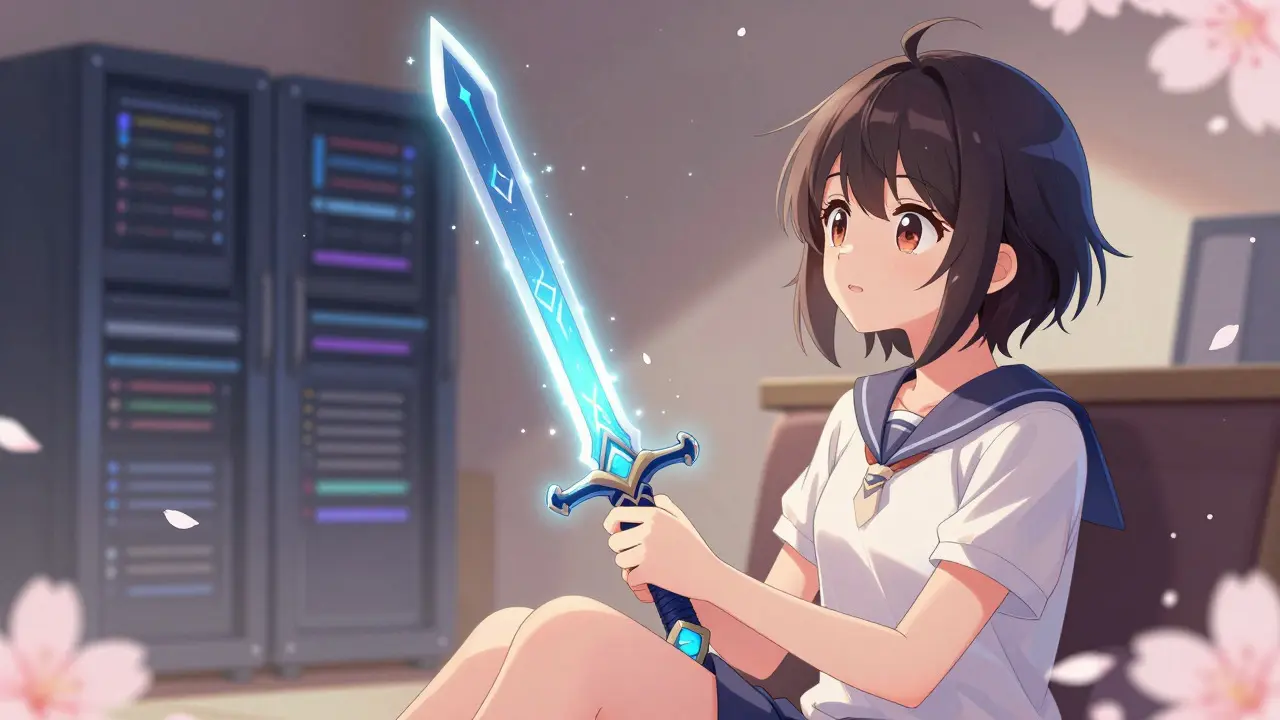
Imagine spending hundreds of hours grinding for a legendary sword in your favorite RPG. You finally get it. It looks amazing. But the moment you try to sell it or move it to another game, you hit a wall. The server says 'Error.' Why? Because you don't actually own that sword. The game company does. You’re just renting it while their servers are on.
That’s the old way of playing. Decentralized gaming platforms are online gaming ecosystems built on blockchain technology that allow players to truly own digital assets as non-fungible tokens (NFTs) and participate in player-driven economies without central corporate control. These platforms flip the script. In this new model, that sword is an asset in your wallet. If the game shuts down tomorrow, you still have the sword. You can sell it, trade it, or even use it in a different compatible game.
This isn’t just hype. The market for these platforms has exploded, growing from $4.6 billion in 2021 to a projected $65.7 billion by 2027. But with great power comes great complexity-and some serious pitfalls. Let’s break down how decentralized gaming works, what you need to start playing, and whether it’s worth your time in 2026.
How Decentralized Gaming Actually Works
To understand decentralized gaming, you first need to drop the idea that a single company runs everything. Traditional games like Fortnite or Call of Duty run on centralized servers owned by Epic Games or Activision. They decide the rules, they hold your data, and they keep your items locked inside their ecosystem.
Decentralized games operate differently. They rely on three core pillars:
- Blockchain Infrastructure: Instead of one central server, the game’s logic and asset ownership records live on a distributed ledger. Most major platforms today run on networks like Ethereum, Solana, or Binance Smart Chain. This ensures transparency-everyone can verify the supply of rare items.
- Smart Contracts: These are self-executing codes that automate game mechanics. When you win a battle and earn a reward, the smart contract automatically sends the cryptocurrency to your wallet. No middleman, no delay, no human intervention.
- NFTs (Non-Fungible Tokens): Your characters, skins, weapons, and land are minted as NFTs. An NFT is a unique digital certificate of ownership stored on the blockchain. Unlike a standard database entry, an NFT exists independently of the game client.
The result is true digital ownership. According to Quantify Crypto’s 2024 analysis, 98% of traditional titles prohibit real-world trading of digital items. In decentralized platforms, that restriction vanishes. You buy an item, it goes into your crypto wallet (like MetaMask), and you control it forever.
The Play-to-Earn Revolution: Is It Sustainable?
The biggest draw for many players entering this space is the ability to earn money. This model, known as Play-to-Earn (P2E), turned gaming into a potential income source for millions, especially in regions like the Philippines and Vietnam.
In 2025, active Web3 gamers reported earning between $50 and $500 monthly through gameplay. Games like Axie Infinity pioneered this during the pandemic, allowing thousands of players to earn supplemental income. However, the economics are tricky. Dr. Michael Johnson from Stanford’s Blockchain Research Center warned in April 2025 that 68% of token economies collapse within 18 months of launch because they rely on a constant influx of new players to pay early adopters-a classic Ponzi-like structure.
So, is it sustainable? Not if it’s purely financial. The most successful modern platforms are shifting toward 'Play-and-Earn' or 'GameFi,' where the fun comes first, and earnings are a bonus rather than the sole purpose. BNB Chain’s 2025 industry report highlights that matured Web3 gaming models focus on long-term engagement rather than quick cash grabs.
| Feature | Traditional Gaming | Decentralized Gaming |
|---|---|---|
| Asset Ownership | Licensed (Company owns it) | Owned by Player (NFTs) |
| Economy | Closed loop (In-game currency only) | Open market (Tradeable for crypto/fiat) |
| Transaction Speed | Milliseconds (10,000+ TPS) | Seconds (15-50 TPS average) |
| Interoperability | Rare (Items stuck in one game) | Possible (Cross-game asset use) |
| Barriers to Entry | Low (Download and play) | High (Wallet setup, gas fees) |
Top Platforms to Watch in 2026
The landscape is crowded, but a few names stand out based on user activity and technological maturity. As of mid-2026, here are the leaders:
- The Sandbox: With over 1.2 million active users, this platform focuses on virtual land and user-generated content. Their recent VoxEdit 3.0 update allows creators to build 3D assets that can be used across multiple metaverse experiences. It’s less about combat and more about creativity and social interaction.
- Axie Infinity: Once the king of P2E, Axie has evolved. After its Origin update in late 2024, transaction costs dropped by 87%, making it accessible again. It remains a staple for players looking to earn while battling creature collections.
- Gods Unchained: Leading the card game genre with 780,000 active users. It offers a familiar experience similar to Hearthstone or Magic: The Gathering, but every card you earn is yours to keep and trade.
Traditional giants are also dipping their toes in. Ubisoft launched the Quartz platform, though adoption has been slow with only 42,000 active users in Q1 2025. Meanwhile, rumors suggest Steam may integrate blockchain features by late 2025, which could bridge the gap between casual gamers and Web3 tech.

The Tech Hurdles: Speed, Costs, and Complexity
If decentralized gaming is so great, why isn’t everyone playing? The answer lies in the technology itself. Blockchains are secure, but they aren’t fast.
Hedera’s 2025 technical benchmarks show that fully decentralized games handle 15-50 transactions per second (TPS). Compare that to traditional gaming servers processing thousands of TPS. For a turn-based strategy game, this lag is invisible. For a fast-paced first-person shooter? It’s a disaster. This is why projects like CryptoShooter failed in 2024-they couldn’t maintain competitive response times.
Then there’s the cost. On Ethereum-based platforms, you often pay 'gas fees' for every transaction. Depending on network congestion, buying a cheap in-game item might cost $5 in fees. While Layer-2 solutions and chains like Solana are reducing these costs significantly, they remain a friction point for newcomers.
Finally, there’s the learning curve. To play, you need a Web3 wallet (like MetaMask or Trust Wallet), some initial cryptocurrency to buy starter assets, and basic knowledge of security. Coinfantasy.io’s 2025 report notes that 67% of negative reviews cite 'wallet connection issues' and 'confusing tokenomics' as primary pain points.
Security Risks: Protecting Your Assets
In traditional gaming, if you lose your password, customer support resets it. In decentralized gaming, if you lose your private key, your assets are gone forever. Worse, if you click a bad link, hackers can drain your wallet.
The security situation is严峻. Dr. Sarah Chen, a blockchain security expert, noted in March 2025 that 78% of decentralized gaming platforms have critical smart contract vulnerabilities. In 2024 alone, exploits cost players $412 million. Immunefi’s annual report found that 42% of these losses resulted from user error-phishing scams, fake websites, and compromised MetaMask extensions.
To stay safe:
- Use a Hardware Wallet: For significant investments, store your keys on a Ledger or Trezor device, not just a browser extension.
- Verify URLs: Always double-check the website address. Scammers create look-alike sites for popular games.
- Revoke Permissions: Regularly check which apps have access to your wallet using tools like Revoke.cash.
- Beware of 'Free' Drops: If a site asks you to connect your wallet to claim free NFTs, it’s likely a scam.
Getting Started: A Step-by-Step Guide
Ready to try it out? Here’s how to enter the world of decentralized gaming safely:
- Choose a Wallet: Download MetaMask (for Ethereum/EVM chains) or Phantom (for Solana). Install it as a browser extension.
- Fund Your Wallet: Buy a small amount of cryptocurrency (ETH, SOL, or MATIC) on a reputable exchange and send it to your wallet address.
- Pick a Game: Start with something low-stakes like Gods Unchained (which has a free-to-play mode) before investing in expensive NFTs.
- Connect and Play: Visit the official game website, click 'Connect Wallet,' and follow the prompts. Read the terms carefully.
- Understand Tokenomics: Learn what the game’s native token does. Is it used for governance? Rewards? Trading? Don’t buy blindly.
The Future: Where Is This Going?
We are currently in the transition phase. The clunky interfaces and high fees of 2021 are fading. By 2027, experts predict that 40% of AAA gaming studios will incorporate blockchain elements, likely hidden behind seamless user interfaces where players don’t even realize they’re using crypto.
The convergence with the metaverse is accelerating. 63% of major decentralized platforms now include virtual land ownership and social hubs. However, Gartner maintains a cautious stance, predicting decentralized gaming will remain under 5% market share through 2030 due to persistent scalability issues. Conversely, Konvoy Ventures believes it will capture 22% of the global market by then.
The truth likely lies in between. Decentralized gaming won’t replace traditional gaming overnight. But for players who value ownership, transparency, and the chance to earn, it offers a compelling alternative. Just remember: do your research, secure your keys, and play for fun first.
What is the best decentralized gaming platform for beginners?
For beginners, Gods Unchained is often recommended because it offers a free-to-play option, allowing you to learn the mechanics without upfront investment. The Sandbox is also good for creative players interested in building worlds rather than competitive battling.
Can I really make money playing decentralized games?
Yes, but it varies. Some players earn $50-$500 monthly, while others lose money on gas fees or asset depreciation. Earnings depend on skill, time invested, and the health of the game's token economy. Treat it as a side hustle, not a guaranteed salary.
Are decentralized games safe to play?
The games themselves are generally safe, but the surrounding infrastructure carries risks. Phishing scams, smart contract bugs, and user errors account for most losses. Use hardware wallets and verify all links to minimize risk.
What happens if a decentralized game shuts down?
Unlike traditional games where your items vanish, your NFT assets remain in your wallet. You may lose the ability to use them in that specific game, but you can often sell them on secondary markets or use them in other compatible games if interoperability standards are met.
Do I need a powerful computer to play decentralized games?
Most current decentralized games are browser-based or lightweight mobile apps, requiring only 8GB RAM and a modern browser. However, upcoming AAA Web3 titles may require higher-end GPUs similar to traditional PC gaming.
23 Comments
Write a comment


amy miranda
July 28, 2026 AT 18:16it is absolutely tragic how the masses are being fed this digital opiate. the concept of 'ownership' in a vacuum is meaningless without physical utility, yet here we are pretending that pixels have value because a ledger says so. it’s a pyramid scheme dressed up as innovation and everyone is too dazzled by the shiny NFTs to see the chains around their ankles.
Pernelia Wahkan
July 29, 2026 AT 20:48I’ve been digging into the technical side of these platforms for months now, and while the hype is certainly loud, the underlying architecture is genuinely fascinating. The idea of smart contracts automating rewards without a middleman isn’t just theoretical anymore; it’s happening in real-time on networks like Solana. I’m particularly curious about how Layer-2 solutions will handle the transaction throughput needed for fast-paced games. It seems like the bottleneck isn’t the concept, but the execution speed. Has anyone actually tried Gods Unchained recently? I’d love to hear if the free-to-play model feels balanced or if it’s just a gateway to spending crypto.
Ed Mitchell
July 29, 2026 AT 23:04The entire premise is a facade designed to siphon liquidity from retail investors into the pockets of venture capitalists who already hold the majority of tokens. They talk about decentralization, but the governance tokens are heavily concentrated among early insiders. It is not a revolution; it is a sophisticated extraction mechanism disguised as gaming. You think you own the sword, but you own nothing but liability when the token price crashes to zero.
Michael Mostyn
July 31, 2026 AT 22:49One must consider the philosophical implications of digital ownership in a post-scarcity environment. If an asset exists solely within a closed ecosystem, even if that ecosystem is decentralized, does true ownership exist? The article suggests that interoperability is possible, yet in practice, few assets move seamlessly between distinct metaverse environments. This raises questions about the nature of value itself. Is the value derived from the utility of the item, or merely from the consensus of its scarcity?
Joshua Hofford
August 2, 2026 AT 07:51Hey there! I think it’s really exciting to see gaming evolve like this. Growing up, we had to trade Pokémon cards at school, and this feels like the natural next step for that kind of social interaction. Plus, for people in developing countries, the ability to earn real income through play is a game-changer. It’s not just about the tech; it’s about economic opportunity. Let’s keep an open mind and support the creators who are building something sustainable!
Marcia Albert
August 3, 2026 AT 18:42I just sit back and watch the cycle repeat. First it’s dot-com, then crypto, now Web3 gaming. Everyone thinks they’re early, but most are just late. The graphics are still clunky, the gas fees are annoying, and half the time my wallet disconnects for no reason. I’ll stick to my Steam library where things just work.
Emma Smith
August 5, 2026 AT 05:28look man you gotta understand the paradigm shift here its not just about playing its about being part of the economy like really truly part of it no more corporate overlords deciding your fate just pure peer to peer interaction with blockchain verification its wild honestly
Erica Johnson
August 5, 2026 AT 12:27You guys are missing the forest for the trees. The security risks mentioned in the article are negligible if you actually know what you're doing. Using a hardware wallet is basic hygiene, not a hurdle. The fact that 42% of losses are due to user error proves that the system works perfectly fine; it's the users who are incompetent. Stop complaining about complexity and start educating yourselves. 🤷♀️
Rita Dutta
August 5, 2026 AT 23:50actually the whole ponzi argument is flawed becasue if the game is fun the token has intrinsic value. i have been playing axie since the begining and yes it crashed but now it is stable again. people just dont want to learn how to manage their portfolios properly. also the interoperability is coming soon trust me.
Paul Smith
August 6, 2026 AT 17:11This is huge! 🚀 I’ve been waiting for Steam to integrate blockchain features. Imagine having your rare skins from CS:GO actually be yours forever. The cultural shift towards digital ownership is inevitable. We’re just living in the early days of a new era. Who else is hyped for the metaverse convergence? 🌐✨
Rodmun Tarnowski
August 8, 2026 AT 07:15It is imperative that we acknowledge the significant strides made in reducing transaction costs. The drop in gas fees on Axie Infinity is a testament to the ingenuity of developers. Furthermore, the emphasis on 'Play-and-Earn' rather than pure 'Play-to-Earn' signals a maturation of the industry. We must remain vigilant against scams, but dismissive attitudes hinder progress. Let us embrace this technological evolution with caution and optimism.
Matthew Smith
August 9, 2026 AT 14:50morality aside the economics make sense. why should a company profit from your labor when you do all the grinding. it is only fair that players retain value. however one must be careful not to let greed corrupt the experience. play for fun first always.
Prudence Flemming
August 9, 2026 AT 18:41the tokenomics are basically a reflection of human behavior patterns. when you remove central control you get chaos but also freedom. most people cant handle the responsibility of securing their own keys so they blame the tech. it is a filter really. only the serious survive.
Carl Michaud
August 11, 2026 AT 07:14The average gamer lacks the cognitive capacity to understand non-fungible tokens, let alone private key management. This technology is being forced onto a populace that barely understands electricity. The 'democratization' narrative is a lie told by elitists to offload risk onto the proletariat. The TPS limits prove that blockchain is fundamentally unsuited for real-time interaction. It is a solution looking for a problem, created by engineers who hate users.
Matt Kay
August 13, 2026 AT 02:08too complicated. just want to play.
Dave Kjendal
August 14, 2026 AT 15:49it’s all hype until the rug pull. i’ve seen it before. the gurus selling courses on how to mint NFTs are the ones making money not the gamers. stay away unless you want to lose cash.
Kat Bennett
August 16, 2026 AT 09:59I find it interesting that despite all the criticism, the market cap keeps growing. There has to be something to it, right? Maybe it’s not for everyone, but for those who enjoy collecting and trading, it adds a layer of depth that traditional games lack. I spent hours yesterday just looking at different sword designs in The Sandbox, and it was genuinely engaging. It reminds me of the old days of trading stickers, but with higher stakes. I think we need to give it more time to mature before writing it off completely.
Candice Cornett
August 16, 2026 AT 22:26everyone says they want decentralization but complains when the interface is bad. you want it both ways. typical. the moral high ground is empty because nobody actually cares about ownership they care about flipping items for quick cash. hypocrites.
Joy Kwant
August 18, 2026 AT 13:27Why am I reading this? My life is already hard enough without worrying about losing my virtual sword to a hacker. It’s exhausting trying to keep up with every new tech trend. Just tell me what’s safe and what’s not, but I doubt anyone knows. I feel drained just thinking about setting up a wallet.
Subhash Kashyap Dm
August 19, 2026 AT 08:34the government will regulate this out of existence within two years. mark my words. they hate that they can’t track every transaction. the whole point of blockchain is privacy and autonomy which threatens the state apparatus. prepare for capital controls on crypto assets.
Billy Cunningham
August 19, 2026 AT 10:44ugh 😩 so much noise. just play the game.
Ken G
August 19, 2026 AT 21:08the elite don’t want you to own anything. they want you renting everything from them. web3 is the only way out of the matrix. wake up sheeple. the simple truth is that centralized servers are prisons for your data.
Lorraine Surringer
August 20, 2026 AT 04:54I mean, it sounds cool and all, but honestly, I just want to relax after work. Do I really need to worry about phishing scams just to play a card game? It feels like homework. But hey, if you guys are having fun, go for it! Just don’t come crying to me when you lose your savings. 😉